
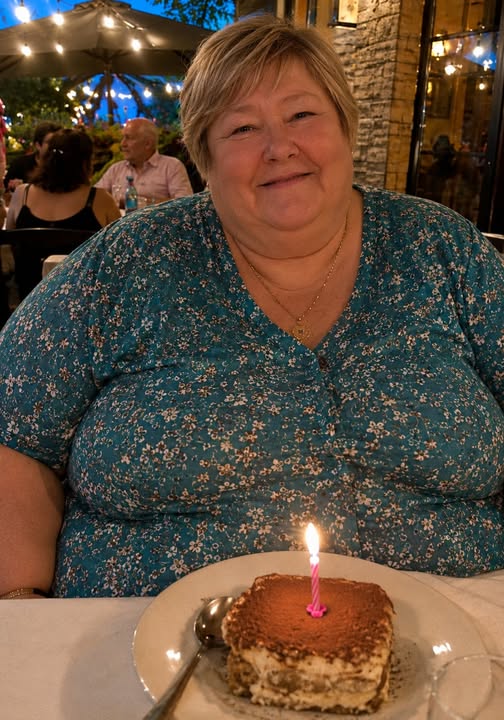
I wanted my mother to have one birthday dinner without feeling watched or judged. A stranger’s cruelty nearly drove her back into hiding – until the chef stepped out of the kitchen and called her by name.
Part One: The Birthday She Almost Refused
By the time my mother turned sixty-five, she had become remarkably skilled at inventing reasons to stay home.
She was too tired. The weather looked uncertain. Her stomach felt unsettled. The restaurant would probably be crowded. Why spend money when we could order something and eat in the living room?
Each excuse sounded harmless on its own. Together, they told a truth she was too proud to say aloud: Molly no longer felt safe eating where strangers could see her.
It had not always been that way. When I was a child, going to dinner with Mom felt like attending a small celebration. She read menus from beginning to end as if she were studying an exciting mystery. She asked servers what they loved, persuaded everyone at the table to share bites, and usually knew half the staff’s life stories before the check arrived. Even a bowl of soup could become an occasion when Molly was there.
Then came the looks.
A glance that lingered too long on her plate. A whisper followed by a laugh. A stranger who believed concern gave them permission to comment on her body. Most people were subtle enough to deny what they were doing, but subtle cruelty still leaves a bruise. Mom heard more than they realized, and every incident took something from her.
First she stopped ordering dessert. Then she stopped trying new restaurants. Eventually, she began refusing invitations altogether.
I watched the bright, social woman who had raised me slowly make her world smaller so that thoughtless people would have fewer chances to hurt her. That frightened me more than I ever admitted.
A week before her birthday, I called her with a decision already made.
“I am taking you out for dinner,” I announced.
The silence on the other end lasted long enough for me to picture her at the kitchen table, turning her favorite coffee mug between both hands.
“Daphne,” she finally said, stretching my name into a warning.
“I recognize that tone, and it is not going to work.”
“I would be perfectly happy eating here.”
“I know. But happy and hidden are not the same thing.”
She exhaled slowly. I immediately worried that I had pushed too hard.
“Restaurants take a lot out of me now,” she said.
“Then we will choose one that gives something back.”
I had already made a reservation at the little Italian place she once loved. It was warm rather than fashionable, with old photographs on cream-colored walls and soft amber lights that made every table feel private. The food was excellent, but more important, the people had always seemed kind.
After several more minutes of bargaining, Mom surrendered.
“All right. But no birthday song.”
“Agreed.”
“And no announcement to the entire room.”
“I said I would skip the song. Let us not renegotiate the whole evening.”
Her laugh came through the phone, quiet but genuine. I held on to that sound all week.
On the night of her birthday, I drove to her house and found her waiting just inside the front door. She wore dark trousers, a powder-blue blouse, a silver necklace, and the pearl earrings my father had given her years before. She had taken great care with her hair and makeup, yet the hands clutching her purse betrayed her nervousness.
“You look beautiful,” I told her.
Her gaze immediately dropped to her blouse.
“You are required to say that. It is in the daughter contract.”
“Actually, the daughter contract requires honesty. You are thinking of the husband contract.”
She laughed again, and for a second I saw the mother I remembered – quick, playful, and unafraid of being noticed.
At the restaurant entrance, however, her steps slowed. Through the glass, we could see nearly every table was occupied. Silverware chimed against plates. Conversation rose and fell in warm waves. The scent of garlic, tomatoes, butter, and fresh bread drifted into the small lobby.
Mom noticed me noticing her hesitation. She straightened her shoulders, lifted her chin, and reached for the door.
“I am sixty-five years old,” she said. “I refuse to be intimidated by pasta.”
“That is the birthday spirit I was hoping for.”
Together, we walked inside.
Part Two: For One Hour, I Had My Mother Back
The first hour was better than I had dared to imagine.
Mom did not merely smile; she relaxed. The tightness around her eyes disappeared. She teased our waiter about his dramatic description of the house sauce, stole a piece of bread from my plate despite having a full basket beside her, and told me a story about a former coworker who once emailed a complaint about the manager directly to the manager.
Her laughter filled the small space between us. Not the careful laugh she had learned to use when she wanted other people to believe she was fine. This one began in her chest, made her shoulders shake, and turned the heads of nearby diners for the right reason.
I had missed that laugh more than I knew.
When our waiter returned to take the rest of our order, Mom closed the menu with sudden resolve.
“I would like the tiramisu first.”
He paused, certain he had misunderstood.
“Before your entree?”
“Exactly. I have spent sixty-five years following sensible rules. Tonight, dessert gets promoted.”
I lifted my water glass in a toast.
“Finally, a birthday policy I can support.”
The waiter grinned and promised to make it happen.
When the tiramisu arrived, Mom took one bite and closed her eyes. The pleasure on her face was so simple and unguarded that emotion caught me by surprise.
“As good as you remember?” I asked.
She considered the question with mock seriousness.
“Better. Either the recipe improved, or I have developed excellent taste with age.”
“Obviously the second.”
For a while, I forgot why getting her there had felt like such a victory. We talked about ordinary things – a neighbor’s noisy puppy, a television show she had become obsessed with, the herbs she wanted to plant in spring. She sampled my appetizer without asking and made plans to teach me her tomato sauce even though both of us knew I would never make it exactly the way she did.
She looked comfortable. She looked alive. Most of all, she looked like herself.
At one point, she leaned back and let her eyes travel around the dining room. A young couple shared spaghetti near the window. An older man cut his wife’s food into smaller pieces without interrupting their conversation. At the bar, two friends laughed over glasses of red wine.
Mom’s expression softened.
“Maybe I should come out more often,” she said.
The words pressed against my heart. I wanted to reach across the table, squeeze her hands, and tell her how long I had been waiting to hear them. Instead, I kept my voice light. Too much excitement might make her feel as though she had revealed how much she had been struggling.
“I happen to know a devoted daughter who would encourage that.”
She pointed her fork at me.
“A devoted daughter with expensive preferences.”
“Those qualities can exist in the same person.”
We were still laughing when I noticed the woman at the next table.
She had been sitting there for most of our meal, but I had barely registered her. Now she was watching my mother with a hard, assessing stare. Her eyes moved from Mom’s face to the dessert plate, then back again.
The warmth in my chest turned cold.
I knew that look. I had seen versions of it in grocery stores, waiting rooms, and family restaurants. It was the expression of someone who had already reduced my mother to a body and appointed herself the judge of it.
Mom had not noticed. I silently begged the woman to look away.
She did not.

Part Three: The Sentence That Silenced the Room
The woman tilted her head, looked directly at Mom’s plate, and spoke loudly enough for several tables to hear.
“Maybe dessert is the thing you should skip.”
The restaurant did not become quiet gradually. It stopped.
A fork hovered halfway to a man’s mouth. Our waiter froze beside the service station. Even the laughter near the bar seemed to vanish in the space between one breath and the next.
Mom’s smile disappeared.
That was the part that hurt most. One second earlier, joy had softened her whole face. Then a stranger delivered twelve careless words, and I watched my mother retreat behind the walls she had spent years building.
Her shoulders folded inward. She set down her fork with exaggerated care, as though making any sudden movement might draw more attention. Then she reached for her purse.
“Daphne, I think I would like to go home.”
Anger hit me so sharply that my hands began to tremble beneath the table.
This was exactly why she had resisted coming. This was why a simple birthday dinner had required a week of persuasion. This was why she had spent months eating takeout in her living room while pretending it was her preference.
Before I could answer, the woman gave a small laugh.
“You may not appreciate it now, but someone had to say it.”
I pushed back my chair and stood.
“No. No one had to humiliate a stranger during her birthday dinner.”
Mom caught my wrist.
“Please, Daphne.”
Her touch asked me not to make the scene larger. Her face asked me not to let the moment swallow her. I did not know how to honor both requests.
The woman rolled her eyes as if we were being unreasonable.
“People are too sensitive. I was only being honest.”
“Honesty is not a license for cruelty,” I said.
She opened her mouth to answer, but a sudden movement behind us interrupted her.
The double doors to the kitchen swung open.
A man in a white chef’s coat stepped into the dining room. I recognized him from the name printed beneath the restaurant logo on the menu: Chef Alaric. He was not carrying a plate, and there was no practiced hospitality in his expression.
He walked past the service station and came straight toward our table.
At first, I assumed he had heard the commotion and intended to calm everyone down. Then he saw my mother clearly, and the color drained from his face.
He stopped beside her chair.
For a long second, no one spoke.
Then he turned to the woman who had insulted her.
“Your dinner here is over,” he said. His voice was controlled, but there was steel beneath it. “Please collect your things and leave.”
The woman stared at him, offended by the very idea that her behavior might have consequences.
“And who are you to order me out?”
“The owner.”
A murmur traveled through the room.
Alaric nodded toward the host at the front. The young man moved closer, ready to escort her out, but the woman remained planted in her chair.
“This is unbelievable,” she snapped. “She is the one making a scene.”
“She was eating dessert with her daughter,” Alaric replied. “You created the scene.”
Then, without waiting for another argument, he turned back toward my mother.
His expression changed completely. The anger remained, but beneath it was something softer – disbelief, recognition, and a kind of grief that made me feel I had stepped into the middle of a much older story.
“Molly?” he whispered.
Mom went perfectly still.
Her purse slipped from her hand and struck the side of the chair.
“Alaric?”
The way she said his name told me they had not met that night.