
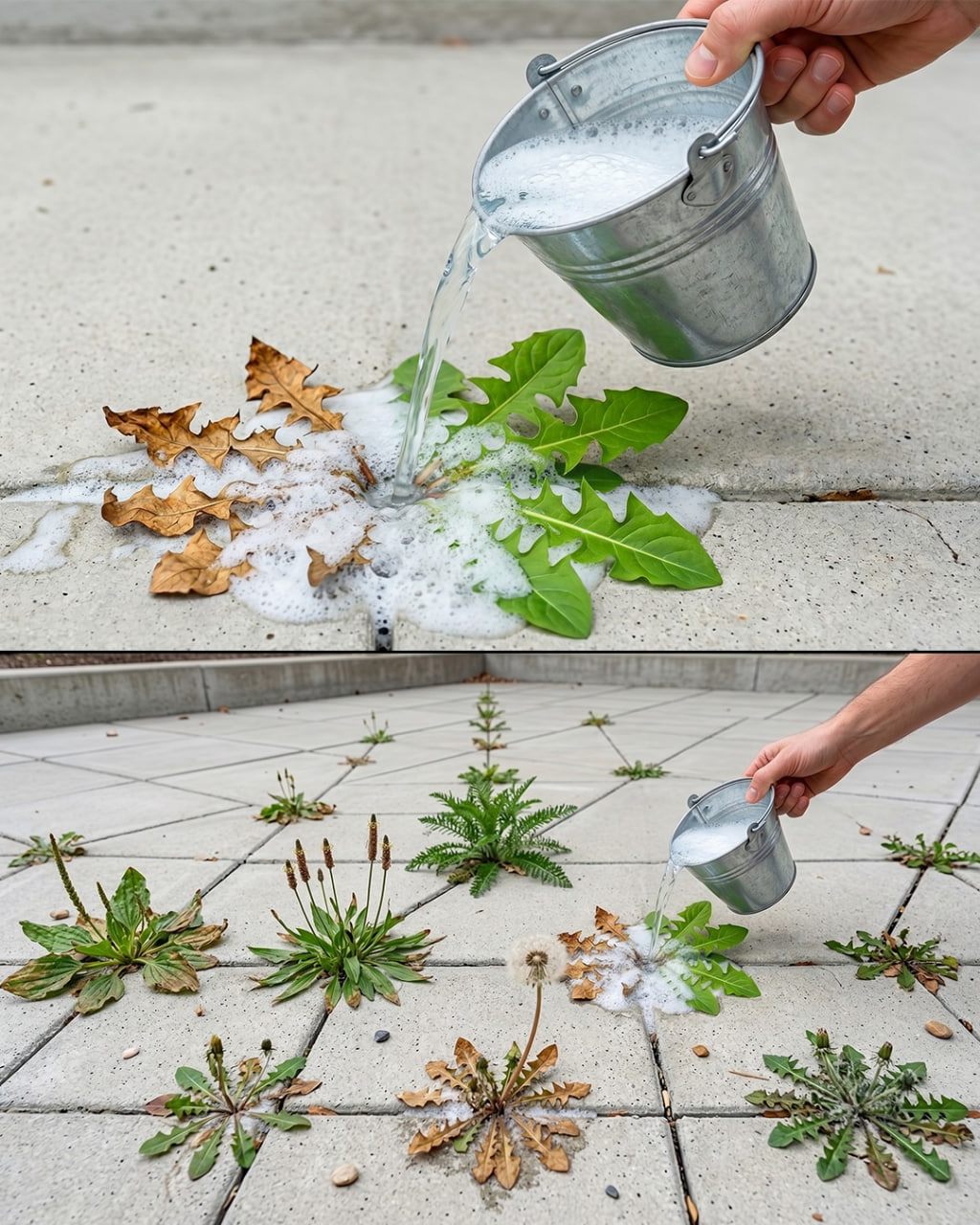
Weeds often seem to grow exactly where they’re least wanted. Unwanted plants constantly appear between patio slabs, on garden paths, or along the driveway, spoiling the overall appearance of a well-kept garden. Many gardeners are therefore looking for simple alternatives to conventional products and are increasingly turning to home remedies that can be made with just a few ingredients.
Weeds are one of the most annoying problems for anyone who maintains a garden, patio, or driveway. They seem to grow everywhere and spoil the neat appearance of outdoor spaces. Many people resort to chemical sprays, but these commercially available products can be harmful to beneficial insects, pets, and the environment.
That’s why more and more people are looking for a safer, homemade solution. With simple kitchen ingredients, you can create an effective, natural weed killer. This homemade mixture is extremely effective at eliminating weeds, works incredibly fast, and is very inexpensive to make.
However, to use it correctly and responsibly, you need to understand exactly how it works, its limitations, and how to protect your soil from lasting damage.
The Ingredients and Their Effects
Here is a detailed breakdown of the main ingredients and why this homemade solution is so effective:
White Wine Vinegar: The main effect comes from the vinegar. It contains acetic acid, which aggressively attacks the weed leaves. It burns the plant’s outer protective layer, causing it to dry out quickly.
Table salt: Salt is an incredibly effective way to inhibit plant growth. It draws water from the weeds from the inside out, forcing them to dry out completely.
Citric acid: This natural acid, commonly found in citrus fruits, further enhances the destructive effect. It quickly damages plant tissue on contact.
Liquid dish soap: Plant leaves often have a waxy coating that causes liquids to simply bead up and roll off. Dish soap dissolves this waxy layer, allowing the vinegar, salt, and citric acid to adhere firmly to the leaves and take effect.
How it actually works: The reality check
While this mixture is very effective, it’s important to understand its scientific limitations to avoid disappointment with the results.
It’s a contact insecticide: This spray only destroys the green parts of the plant it comes into direct contact with.
Roots can survive: Unlike some aggressive chemical weed killers, this natural mixture doesn’t penetrate deep into the root system. It burns and completely kills the above-ground parts of the plant, but resilient weeds with deep, established roots may still produce new green shoots.
Repeated treatments: Because the deep roots may survive the first treatment, you will need to spray stubborn weeds several times throughout the season to completely weaken and kill the plant.
What you need
Making this effective spray is easy. You will need the following common household items:
300 milliliters of regular tap water
1 heaped tablespoon of citric acid
200 milliliters of plain white vinegar
1 heaped tablespoon of regular table salt
1 tablespoon of liquid dish soap
1 additional liter of water (for dilution)
Preparing the mixture
Follow these simple steps to assemble the weed-control mixture:
Mix the base: First, add the citric acid, white vinegar, salt, and liquid dish soap to 300 milliliters of water.
Let it stand: Allow the liquid to stand undisturbed for a few hours. This gives the solid components, such as salt and citric acid, enough time to dissolve completely.
Filter the liquid: If your salt or citric acid was coarse and did not dissolve completely, pour the mixture through a thin cloth or a kitchen sieve. This will prevent small, undissolved pieces from clogging your spray bottle.
Add the remaining water: Mix the strained liquid with the additional liter of water.
Fill the sprayer: Pour the remaining liquid into a plastic spray bottle, which is now ready for use in the
garden.
Important rules for safe use:
This mixture is extremely harmful to plants. It cannot be used to protect against weeds. Click on the photo to view the full article.