
My name is Avery. I am eighteen years old and live in a quiet suburb.
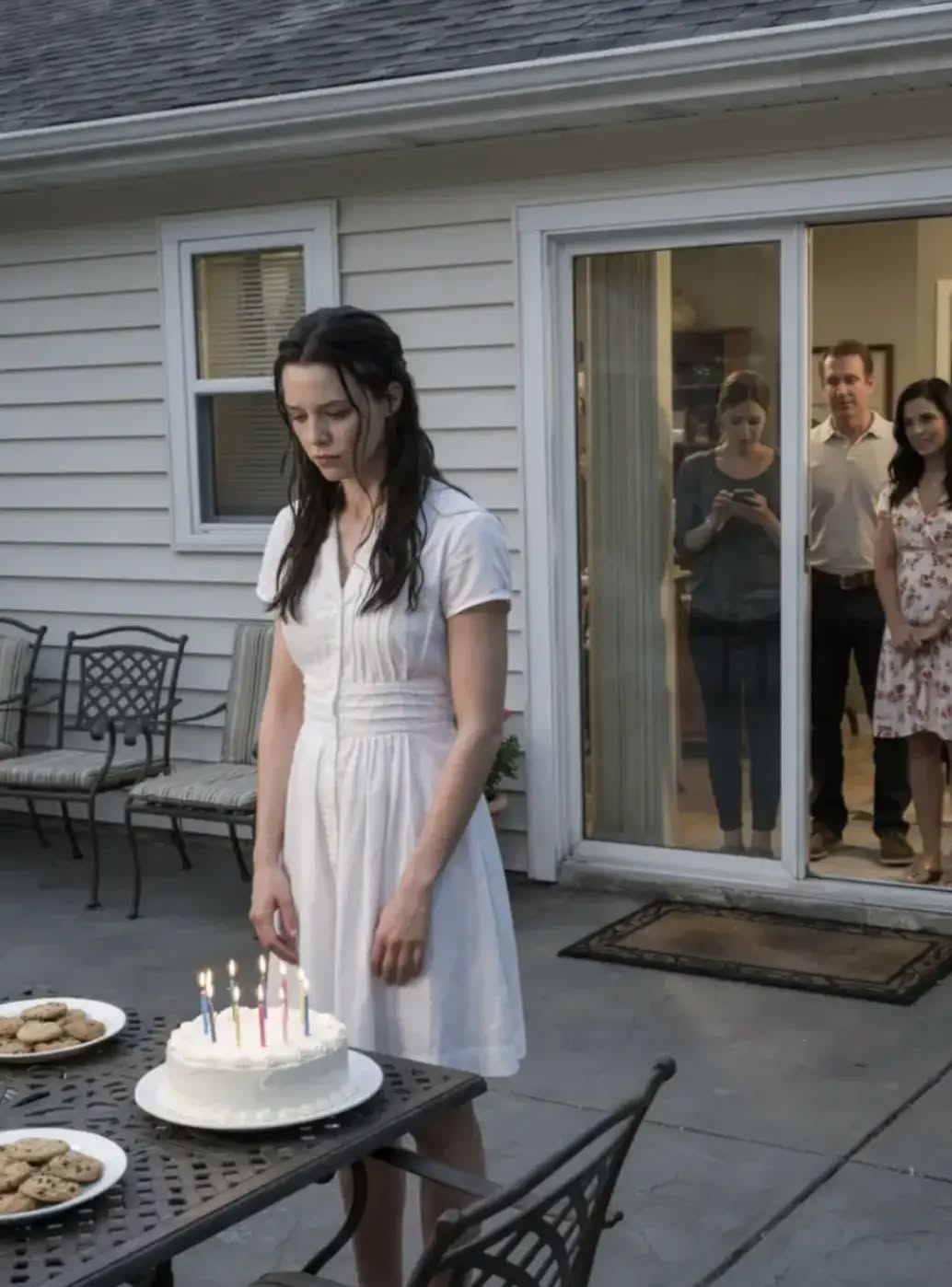
It was seven o’clock in the evening. The sun was setting behind the house. I stood in the backyard, gazing at the string lights I had hung up earlier that day.
Half of them were glowing steadily, while the other half flickered above the gray fence. On the table sat a plate of cookies I had baked that morning. They had long since gone cold. No one had touched them.
The sliding door opened. My mother, Elise, stepped outside. She didn’t look at the lights or the cookies; her eyes were fixed on her phone.
“We’ve cancelled your birthday, Avery,” she said indifferently. “Your sister is having a rough day. Miranda needs some quiet.” No apology. No suggestion of celebrating later. She simply turned around and went back inside.
That was my eighteenth birthday.
I had bought myself a small cake. I lit the candles and blew them out—one by one, as if extinguishing something inside myself.
In that moment, I realized: I would never truly belong. There was an unspoken rule in our family: Miranda came first.
She was “the sensitive one.” If she cried over ice cream, everyone came running. If she was stressed, the whole house came to a standstill. I was “the strong one.” The one who understood. The one who asked for nothing.
When money was tight, Miranda got tutoring—I went without. When she wanted new clothes, it was urgent—I wore her hand-me-downs.
When I succeeded, my parents merely nodded absently. When she got mediocre grades, there was a celebration.
Over time, I became invisible. Yet, for my eighteenth birthday, I had planned a small celebration. I saved up, cooked, and invited friends. Everything was ready.
But that morning, no one said, “Happy Birthday.” And in the evening, my mother simply said:
“There is no celebration. Miranda isn’t well.”
It was decided.
Even my friends were lied to—they were told I was sick. I stood alone in the garden and realized: in this house, my life would always come second.
When I said I’d had enough, no one listened. Until my grandfather arrived. He saw at once that something was wrong. The cake. The empty garden. Me.
“Is this your birthday?” he asked.