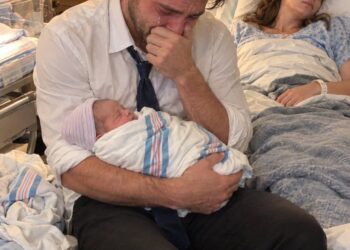
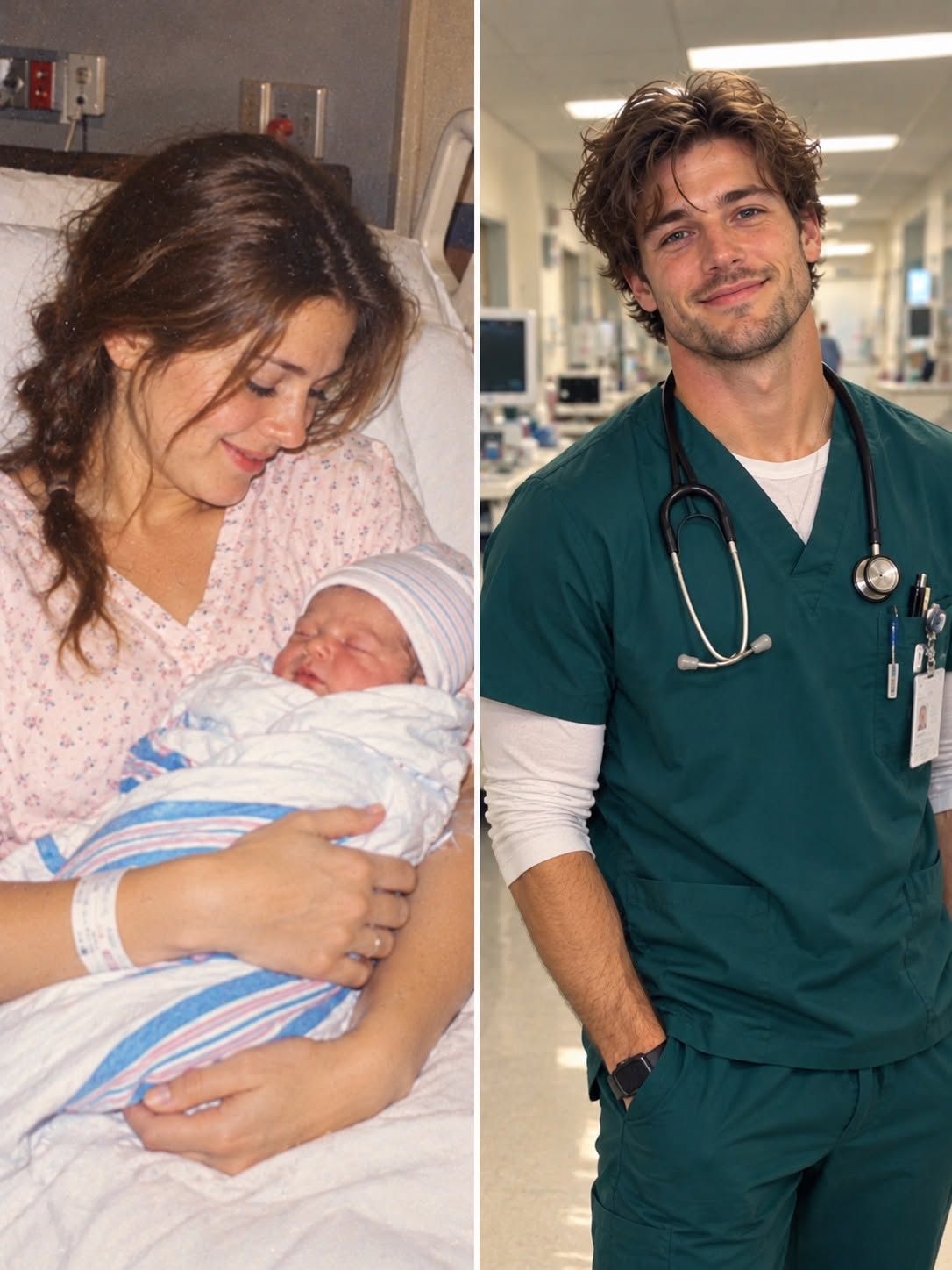
Instead, my parents came in with a folder.
“What’s that?”
“Adoption papers,” Dad said.
I laughed, because it made no sense. “You promised to help me.”
“This is the help,” Mom said.
I stared at them. “You never really changed your minds, did you? It was a trick.” I bit my lip as tears sprang to my eyes. “I’m not signing anything.”
Dad placed the folder on my lap. “Sign them or don’t come home.”
I looked at Mom. “You cleared his drawer. We folded his clothes together.”
“You need to think about your future.” She pointed at the papers. “Sign them.”
“I did think about it. That’s all I’ve been doing.”
I clenched the hospital sheet in my fingers. My heart was breaking, but for one stupid moment I glanced at the door, hoping Graham would walk in and save us.
He didn’t.
“Give me a month,” I said. “I’ll work. I’ll pay you something.”
“And who watches the baby?” Mom asked.
“Please. Just until I can arrange something.”
Dad shook his head and held out the pen. “You sign, or you’re out on the street.”
I signed.
My name barely looked like mine. Anyone reading it would think I’d wanted to, and I couldn’t bear that thought.
Later, Mom told me Gideon had gone to an adoptive family. She wouldn’t say where. Nobody had even taken a photograph of me holding him. It was as if he had never existed.
I went home to the empty drawer. The booties were still in my hospital bag. I put one in my purse and left the other beside his clothes.
As soon as I could, I moved out and began searching for my son. I contacted agencies, searched records, and hired investigators. One told me he couldn’t match my papers to any placement at all.
For thirty-one years, I kept trying. My parents never changed their story, and eventually I stopped speaking to them altogether.
Gideon’s bootie traveled from purse to purse. Once a bottle of nail polish broke in my bag and nearly ruined it, so after that I kept it in a little plastic bag. Some days I held it before answering a call about another possible lead.
Then, at forty-nine, I collapsed at work with terrible stomach pain and was rushed into emergency surgery.
The next afternoon, my surgeon came to check on me. As he leaned over my chart, a silver cross slipped from his collar. I saw the nick on one arm, and my heart monitor started beeping wildly.
The doctor frowned. “Are you okay, ma’am?”
I pointed at the cross. “Where did you get that? I put that cross in my son’s blanket the day he was born.”
His hand went to it.
“Did they ever tell you what really happened to him?”
“They said he’d been adopted.”
He pulled the chair closer. “I was that baby. My father raised me.”
“Graham?” I struggled to sit upright. “How is that possible? He abandoned us.”
His eyebrows lifted. “He’s not the parent who left me…”
Those words cut deep.
“I never had a choice,” I said. “I don’t know what Graham told you, but he was wrong.”
Gideon shook his head. “You signed papers giving me up. What’s there to be wrong about?”
“My father said I couldn’t come home with you. I’d just given birth. I had nowhere to go.”
I waited for the question I’d asked myself for years: why hadn’t I refused anyway?
Gideon nodded slowly. Maybe I could still prove I was telling the truth.
“I searched for you,” I said. “I thought they’d changed your name. I didn’t know your father had you.”
He stood abruptly. “None of this makes sense. I need to step outside and make a call…”
“Wait! Could you pass me my purse, please?”
He fetched it from the cupboard, then stepped into the hall, already dialing.
I rummaged through my things. The paperwork I’d gathered over the years was at home, useless to me now, but I had one thing I could show him. I found the plastic bag with the bootie in it.
It looked terrible. The yarn was faded and fraying, bright red nail polish covered the heel, and it had collected a few other stains over the years. I’d been afraid to wash it thoroughly in case the whole thing fell apart.
I folded it between my hands and started to cry. How could I offer him this stained old scrap as proof of my love? Graham had fed him, taken him to school, and sat beside him when he was sick.
I had carried a bootie.
Gideon came back in. “What is that?”
“Something I made before you were born. I wasn’t very good.”
I held out my hands. He lifted the plastic bag and stared at the contents.
“You kept it with you all this time?”
I nodded.
A look crossed his face that I couldn’t decipher. He swallowed hard.
Then someone knocked on the door. Gideon answered it.
“I’m glad you could come,” he said. “You really need to hear this.”
He stepped aside, and an older man entered the room. Decades had passed since I last saw him, but I recognized him instantly.
Graham.
“You,” I said. “You came back all those years ago, took our son, and left me behind?”
Graham looked at me, then at the bootie. His hand tightened on the doorframe.
“I came for both of you.”
“Then why did you disappear in the first place? Not even a note. I thought you’d abandoned us.”
“I told my parents about the pregnancy and our plan. They moved us out of state so you and the baby wouldn’t ‘ruin my life.’” He glanced at Gideon. “I’d already saved most of the deposit. Once I had enough for the room, I moved out and came back.”
“You should have come to me.”
“I tried. Then your parents told me you called our son a mistake.” His expression hardened. “They said you wanted to forget all of it. Me too.”
“I never said that.”
“They showed me the papers. Your signature. They said I could take responsibility for him or the adoption would go ahead.”
“You knew what my parents were like,” I said. “Why would you believe them?”
Graham opened his mouth, then closed it. “I thought you must have changed your mind. Your signature was there. I was scared they’d send him away before I could stop it.”
“So you took him. I understand taking him. But after that?”
He looked at the floor. “I should have come back.”
“I was waiting for you. Even after they said he’d gone, I thought you might come and help me find him.”
He covered his mouth.
I had spent too many years imagining this conversation to make it easier for him now.
“I believed you’d rejected us,” he said. “I was hurt, and raising him was hard. I let that become my reason not to ask again.”
“They threatened to make me homeless. After helping me prepare his clothes. After promising I could bring him home.” The tears came too fast to stop. “They tricked me into trusting them.”
Graham sat down when his knees met the chair.
“I wanted him,” I said. “I searched for him. Whatever you thought of me, you should have let me tell you that.”
He looked at our son. “I hear you now.”
The signature I had hated for thirty-one years had convinced him I’d chosen this. My parents had made the threat, then hidden it from everyone who mattered.
I put the bootie in Gideon’s hand. “You were never a mistake. Not for one minute.”
“Neither was bringing you home,” Graham said to him. “But I was wrong about your mother.”
Gideon crouched beside my bed. When I reached for him, he put his arms around me, and I held the son I had last held as a newborn.
“You don’t have to call me anything,” I said. “I don’t expect you to feel what I feel yet.”
He squeezed my fingers. “Could we start with you staying in touch after you leave here?”
“Yes,” I said, before he’d finished asking. “We can do that.”
Graham waited until we drew apart. “Can you ever forgive me?”
“I don’t know yet. But you can stay. Tell me what he was like.”
A few weeks later, they came over for soup. Graham brought photographs. Gideon showed me a gap-toothed boy holding his first fish.
“Dad claims he caught it. I did.”
“I held the net,” Graham said.
I looked from the photograph to my son’s face. There would be other questions, and anger I hadn’t finished with. But they were here to answer.
“What happened next?” I asked.
Part 3
Gideon answered my question over the soup, slowly, the way you tell a story you’ve told yourself many times but never out loud.