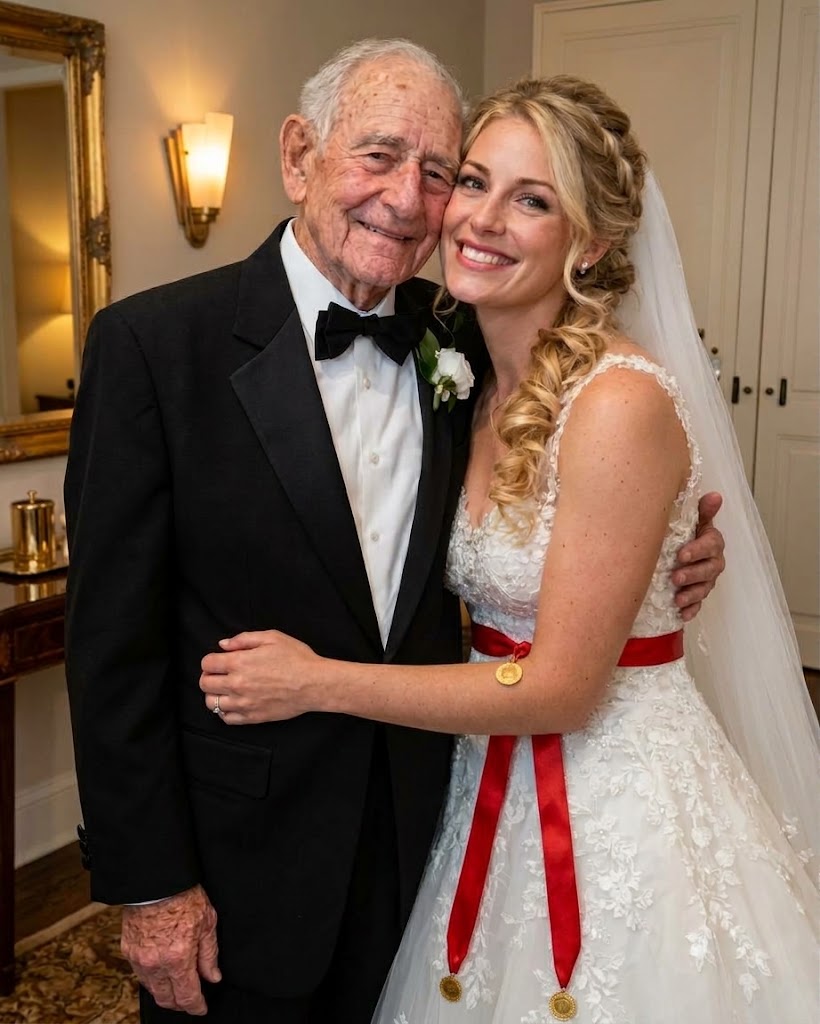
“You… you have to sign it!” Arthur stammered, stepping toward me with shaking hands. “I gave my word to the hospital board! There’s a wing named after me! The press has already covered the donation!”
I looked up at him, offering the sweetest, most breathtaking smile I had ever produced in my life.
“I am a gold-digger, Arthur,” I said, dropping the sweet, innocent persona entirely, letting him see the cold, brilliant steel underneath. “You were right about me. I married you for your eighty million dollars, your Bentley, and your mansion.”
Arthur gasped, gripping the back of the sofa for support. “You… you monster! You lied to me!”
“You lied to an entire room of people today just to humiliate me and feel like a saint!” I countered, my voice hardening. “You wanted a fairytale, Arthur. You wanted to play the grand, noble patriarch testing the greedy young girl. Well, congratulations. The test is over. And now it’s time to negotiate.”
FINAL PART
The formal library of the Vance Estate in Westchester was silent save for the ticking of a grandfather clock in the corner.
sunlight poured through the floor-to-ceiling stained-glass windows, illuminating the intricate mahogany woodwork, the Persian rugs, and the velvet armchairs.
Marcus, Arthur’s chief legal counsel, sat behind the heavy oak desk, looking thoroughly exhausted. Beside him sat Arthur, looking ten years older than he had on our wedding day, wearing a sharp suit that seemed to hang loosely off his fragile frame.
I sat across from them in a tailored ivory pantsuit, sipping black coffee from a porcelain cup.
“Let us review the terms once more, Mrs. Vance,” Marcus said, rubbing his temples.
“Ms. Vance,” I corrected smoothly. “I am keeping my maiden name for professional purposes.”
Marcus sighed, opening a thick leather folder. “Under the proposed marital agreement, you agree to sign the spousal consent waiver releasing sixty percent of the liquid investment portfolio—approximately forty-eight million dollars—to the Children’s Hospital Foundation as originally planned.”
“Correct,” I nodded. “The hospital gets their new wing. Arthur gets to keep his public legacy as a grand philanthropist. Everyone wins.”
“And in exchange?” Marcus asked, glancing nervously at his client.
“In exchange,” I said, setting my coffee cup down with a soft clink, “the Westchester mansion, the vintage car collection, and the remaining thirty-two million dollars in liquid capital are placed into a joint marital trust. I am designated as the primary trustee with sole operational control over property management, staff hiring, and financial distributions.”
Arthur slammed his hand against the mahogany armrest. “It’s extortion! She’s holding my legacy hostage!”
I looked over at my husband with calm, unbothered eyes.
“You wanted to live in a modest two-bedroom rental apartment, Arthur,” I reminded him gently. “You told two hundred people that you wanted a simple, authentic life free from the burdens of wealth. If I don’t sign that waiver, the entire transfer fails, the hospital sues you for breach of pledge, the press uncovers that your grand gesture was a legal disaster, and the entire eighty million dollars goes into a public court battle that will last longer than your remaining life expectancy.”
Arthur’s mouth snapped shut. His chest heaved as he stared at me, realizing with absolute, terrifying clarity that he had constructed his own trap.
“You have two choices, Arthur,” I continued, leaning forward. “Option one: we go public. You admit to your board members that you failed to execute your trust properly, the charity loses forty-eight million dollars, and your name is dragged through every tabloid in the country as a senile billionaire who got outsmarted on his wedding day.”
Arthur winced.
“Option two,” I said softly, “we sign this agreement. You get your public sainthood. The hospital gets its funding. You move back into this magnificent mansion with full access to your private chef, your groundskeepers, and your medical team. And I manage the estate as your devoted, brilliant wife.”
Marcus looked at Arthur. “Arthur… legally speaking… it is the cleanest resolution available. If this goes to probate litigation, the legal fees alone will consume millions, and the publicity will be catastrophic.”
Arthur looked around the grand library he had built over fifty years—the books, the art, the legacy he had tried so desperately to control. Then he looked at me.
He didn’t see an innocent, starry-eyed young girl anymore. He saw an equal. A predator who had recognized his game and played it better than he had.
Slowly, reluctantly, Arthur reached for the fountain pen resting on the desk.
“You’re a terrifying woman, Vanessa,” he muttered, his hand trembling as he brought the nib to the paper.
“I’m a woman who knows what she’s worth, Arthur,” I replied smoothly. “You taught me that yourself.”
He signed his name on the dotted line with a heavy, sharp stroke. Marcus immediately stamped the document with his notary seal, sliding the second copy toward me. I picked up a pen and signed my name right beside his with a flourish.
Six months later, the afternoon sun cast a warm, golden glow across the manicured gardens of the Westchester estate.
I stood on the stone terrace wearing a simple silk dress, holding a glass of chilled champagne. Below, a team of landscapers was trimming the rose bushes while the head butler coordinated preparations for an upcoming charity gala we were hosting for the hospital.
Behind me, the soft sound of a wheelchair rolling across the flagstones echoed through the open French doors.
Arthur rolled out onto the terrace, wrapped in a soft cashmere blanket. His health had declined slightly over the winter, but his eyes were clear, sharp, and strangely at peace.
“The roses look good this year, Vanessa,” he observed softly, looking out over the estate.
“I had the head gardener replace the soil mix last month,” I replied, walking over and standing beside his chair. “It’s making a world of difference.”
Arthur looked up at me, a faint, wry smile touching his thin lips.
“Do you know what the funny thing is, my dear?” he asked quietly.
“What’s that, Arthur?”
“My first three wives… they spent all my money on jewelry, clothes, and trips to Europe,” he chuckled weakly. “They nearly ran my accounts dry before I divorced them. But you… you’ve actually increased the trust’s net yield by four percent since taking over the portfolio.”
I smiled, taking a sip of my champagne. “I told you, Arthur. I don’t like trapped desk jobs. But I am very good at executive management.”
Arthur let out a soft, genuine laugh—a sound free of the arrogance and theatrics that had defined him on our wedding day.
“I suppose I got what I asked for,” he murmured, watching the sun dip behind the rolling green hills of our estate. “I asked for a woman who would stand by me when the money was gone.”
“And I stood by you,” I reminded him gently, laying a soft hand on his shoulder. “I just brought the money back with me.”
Arthur reached up, placing his fragile, spotted hand over mine, squeezing it with a quiet, mutual respect born from two players who had survived the game.
“Yes, you did, Vanessa,” he whispered, turning his gaze back to the golden horizon. “Yes, you did.”