
I sat with the phone against my ear, and I thought about the past 12 years.
I thought about the mortgage I had carried alone when Daniel’s work dried up the first time.
I thought about the month I quietly paid my in-laws’ heating bill in January because they called Daniel and told him they were cold, and Daniel came to me, and I wrote the check without comment because that’s what you do for family.
I thought about every birthday, every holiday, and every quiet sacrifice I had made for people who were at this exact moment asking me to fund a funeral for a man who had spent 2 and 1/2 years lying to my face.
“I need a few days,” I said.
“The deadline is tomorrow,” my mother-in-law said.
“Then you’ll need to cover it, and I’ll reimburse you,” I said.
Silence.
“You know, we don’t have that kind of money available,” she said.
“I know,” I said. “I’m sorry. I need a few days.”
I hung up and sat in the quiet of my living room, the living room of the house I had purchased, in the neighborhood I had chosen, with the furniture I had picked out and paid for.
And I made a decision.
Not out of cruelty, not out of anger exactly, though the anger was there underneath, steady and clean.
I made it out of clarity.
Something had come into focus that had been blurred for a very long time.
I called Patricia again the next morning.
I told her I wanted to review everything.
The joint accounts, the house title, the car registrations, the credit cards.
I wanted to understand exactly what was mine, what was ours, and what was his.
I wanted that picture completely clear before I made any further decisions about the funeral or anything else.
She had the summary to me by end of day.
The house was in my name.
I had insisted on that when we bought it, a small instinct I had never fully examined, but had followed anyway.
The joint checking account had about $6,000 in it.
The savings, substantial, accumulated carefully over 10 years, was a solo account in my name.
The credit cards were mine.
Daniel had been an authorized user on two of them, but the accounts were mine.
I read through the summary twice.
Then I removed Daniel’s name from the authorized user accounts.
It took about 4 minutes on the bank’s website.
I sat there waiting for something dramatic to happen, some alarm, some resistance.
There was none, just a confirmation screen, just a change in a database somewhere.
I closed the laptop and went to make coffee.
My brother-in-law called that afternoon, angrier than I had ever heard him.
“She tried to use the card,” he said. “My mother tried to pay a deposit and the card was declined.”
“She’s not an authorized user,” I said.
“She’s been using that card for years.”
“As a courtesy,” I said. “A courtesy that I extended and have now ended.”
“You can’t just—”
He stopped, restarted.
“Daniel just died. You’re doing this right now.”
“I’m protecting my financial assets during a period of legal uncertainty,” I said, which was what Patricia had told me to say. “If your family wants to make funeral arrangements, they’re welcome to use their own funds, and I will contribute what I determine is appropriate once I have a clearer picture of the estate.”
He called me several things after that.
I let him finish.
Then I said, “I’ll be in touch,” and ended the call.
My hands were shaking slightly when I put the phone down, but it was the kind of shaking that comes after you do something hard, not the kind that comes from fear.
There’s a difference, and I was just beginning to learn it.
Renee sent a certified letter 2 weeks later, her attorney’s letterhead.
It stated that she had been in a long-term committed relationship with Daniel Marsh and that she had a reasonable expectation of certain considerations given representations he had made to her during their time together.
I read it three times.
Then I forwarded it to Patricia with a single sentence.
Please respond accordingly.
Patricia’s response, which I was copied on, was three paragraphs of very precise legal language that essentially communicated: there is no legal basis for any claim, and any further correspondence of this nature will be treated as harassment.
I never heard from Renee again.
I sold the house four months later.
It wasn’t a snap decision.
I had lived in that house for 7 years.
I had painted every room myself, one summer weekend at a time.
I knew which floorboard creaked near the top of the stairs and which window stuck in humid weather and where the light fell in the kitchen on Sunday mornings in a way that made everything look softer than it was.
But I also knew what had happened inside those walls.
I knew the conversations we’d had in that kitchen that had felt like intimacy but were, I now understood, performance.
I knew the bedroom where I had slept next to someone who was living a second life.
And I knew that no amount of repainting or rearranging would make me forget that.
The market was good.
I sold for well above what I had paid.
After costs, I walked away with enough to start over in a way that felt intentional rather than desperate.
I found an apartment on the west side of the city.
Smaller, quieter, a building where nobody knew my name or my story or the specific shape of the year I had just survived.
I painted the bedroom a color I had always wanted and never chosen because Daniel said it was too bold.
It’s a deep greenish blue, the color of deep water, and every morning I wake up to it and something in me settles.
My in-laws moved in with my brother-in-law.
I understand it was an adjustment for everyone.
I did not contribute to the moving costs.
I did not field the calls asking me to reconsider.
Patricia handled one strongly worded letter from their side, and that was the end of it.
What I did do was write my mother-in-law a personal check for 3 months of what I calculated I had been contributing to their expenses annually, divided by four.
It was less than she expected.
It was more than I was legally obligated to give.
I sent it with a brief note that said I hoped they would use it to establish more stable footing.
She never thanked me.
That was fine.
I didn’t send it for the thanks.
I went to therapy.
I want to say that plainly because I think people sometimes treat it as an aside, something you mention quickly and move past.
I don’t want to do that.
I sat across from a woman named Dr. Okafor every Tuesday for seven months, and I told her things I had never said out loud.
And she helped me understand something that I think is important.
The betrayal wasn’t only that Daniel had been unfaithful.
The betrayal was also that I had arranged my entire life to support and protect a situation that was not what I thought it was.
And in doing so, I had made myself smaller in ways I hadn’t noticed until there was space to look.
The financial dependence my in-laws had developed wasn’t something Daniel had built accidentally.
He had allowed it, encouraged it even, because it kept me obligated.
It kept me too busy, too responsible, too needed to look too closely at anything else.
When you take away the structure built to keep you from seeing, you have to decide what to do with the view.
I kept my job.
I got a promotion, actually, 8 months after Daniel died.
I had been passed over for it twice before.
Once when I took a reduced schedule during a difficult quarter to manage some of his family obligations.
Once when I had to decline a travel opportunity for similar reasons.
This time, there was nothing in the way.
I took the role.
I took the travel.
I sat in meetings in cities I had never visited, and I made decisions, and I was good at it.
And I let myself know that I was good at it, which is a smaller and harder thing than it sounds.
My sister calls me every Sunday.
My friends, the ones I had slowly let drift during the years of managing everything, have mostly drifted back.
It turns out that when you stop being exhausted, you become someone people want to spend time with again.
I am not a cautionary tale.
I don’t want to be one anyway.
What I want to say, what I keep coming back to, is something simpler than that.
Know what is yours, not just financially, though that matters enormously.
Know what is yours in terms of time, energy, attention, care.
Know when you are giving those things freely and when you have been arranged into giving them.
Know the difference between love and infrastructure.
I know the difference now.
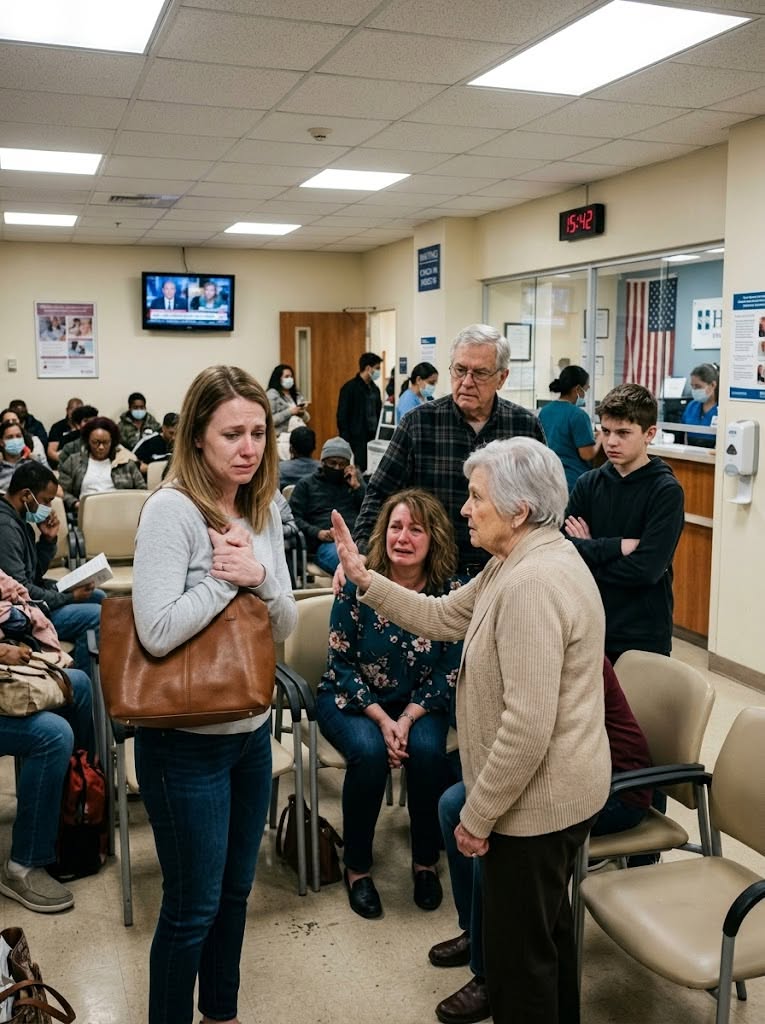
I learned it the hard way in a hospital waiting room at 4 in the morning, watching my husband’s other life rearrange itself around his absence and expecting me to pay for the arrangements.
I didn’t pay.
I built something new instead.
That, I think, is the better investment.
Disclaimer : This content may be created by AI for entertainment purposes. Any resemblance to real persons, events, or places is coincidental.