
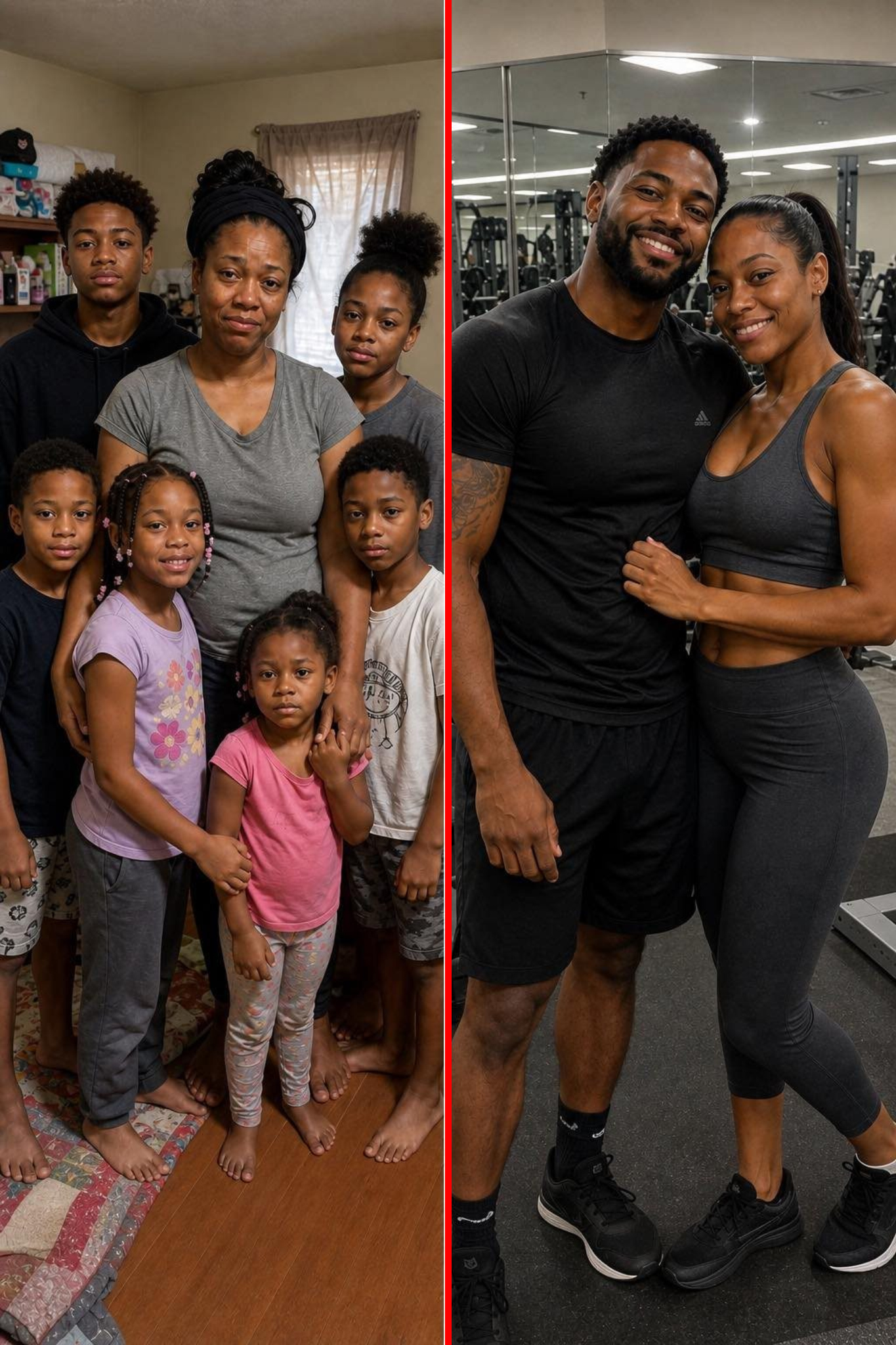
He walked out, the hallway lights flickering as he passed, and the sound of the lock clicking shut sounded like a gunshot in the quiet house. I heard the kids’ footsteps as they shuffled into their rooms, the soft thuds of little bodies collapsing onto mattresses.
That night, I sat at the kitchen table, the light above me buzzing faintly, the hum of the refrigerator louder than ever. My eyes were red, the tears having dried into crusted lines. I stared at the empty chair across from me, the one where Cole used to sit with his elbows propped on the table, his coffee steaming.
Every time the house creaked, I thought it was him returning. Every time a car passed outside, I imagined it was his, the headlights catching the porch light. I kept reaching for something—any sign that maybe this was a mistake, a miscommunication. But there was none. The silence was complete, oppressive, and I felt my chest tighten with a grief that was both for me and for the children who would wake up to an empty side of the bed.
Sleep didn’t come. I lay on the couch, the kids’ blankets tangled around my legs, the TV casting a low glow. I could hear Maya’s soft breathing from the next room, a tiny rhythm that reminded me of how fragile life could be. I whispered into the darkness, “I’m sorry.” Not to Cole, not to anyone—just to the emptiness that had settled in the house.
When morning finally broke, the sun filtered through the curtains, painting the kitchen in a soft gold. I forced myself to stand, to pull the curtains back, to make coffee for the kids. I told myself that I would be strong, that I would protect them, that Cole would get what he deserved. It was a promise I made to the empty air, a vow that felt both hollow and necessary.
Mark’s Call
It was about an hour after I’d managed to get the kids fed and dressed. I was wiping syrup off Luis’s cheek when the phone rang. The number was familiar—Mark’s. He was a friend from the office, someone who’d shared lunch breaks and occasional after‑work drinks. He’d always been the sort of guy who could read a room, who could tell you when something was off before you even realized it yourself.
“Hey, Jess,” he said, his voice louder than usual, “you need to hear this.”
I could hear the background hum of his car, the faint click of the turn signal. He sounded urgent, breathless even.
“Grab your jacket—just get in the car and come to the office right now. YOU WON’T BELIEVE WHAT’S HAPPENING TO COLE!”
His words slammed into me like a wave. I stared at the phone, my mind trying to process the absurdity of it. My heart hammered, a sudden rush of adrenaline flooding my veins. I could almost hear the kids’ chatter behind me, the clatter of their shoes on the tile as they moved about.
“What?” I asked, my voice shaking.
“He’s… he’s been arrested. Something about fraud. The police just came in. He’s being taken away right now. I saw it with my own eyes, Jess. He’s… he’s not walking out of that office. He’s being led out in handcuffs.”
The words hung in the air, heavy and surreal. My throat tightened, and a strange, cold laugh escaped me, half‑laugh, half‑sob.
“Are you serious?” I whispered, feeling the absurdity of the situation. “Cole? He—”
“He’s in the lobby, they’re loading him into a cruiser. I’m still here. I don’t know the details yet, but it looks like the whole thing was a scam. He was siphoning money from the company. It’s… it’s huge.”
My mind raced. The image of Cole, handcuffed, being led away was so vivid I could almost see the badge glinting under the fluorescent lights, could almost hear the murmurs of coworkers. I imagined the kids watching from the doorway, their faces blank, not understanding why their father was being taken away.
“Mark, I—” I tried to speak, but the words tangled. The only thing that came out was a strangled, “Thank you.” I could hear the kids in the background, the faint whine of Maya’s baby monitor, the clink of a spoon against a bowl.
I hung up, grabbed the jacket that lay draped over a chair, and rushed out the front door. The air outside was crisp, the early autumn wind tugging at my coat. I could see the office building in the distance, its glass façade reflecting the pale sky.
When I arrived, a crowd had gathered. Police tape fluttered in the wind, and a few officers stood guard. Mark was there, his jaw set, his eyes scanning the scene. He caught my gaze and gave me a small, reassuring nod.
“They’re taking him to the station. He’s… he’s not going to be able to touch us anymore,” he said, his voice low.
Behind me, I could hear the distant sound of children’s laughter from the park across the street, a reminder that life kept moving, even when the world seemed to collapse around you.
After the Storm
The next few days were a blur of paperwork, police reports, and endless questions from the kids. I tried to keep my voice steady when I told them that their dad was in trouble, that he had made a mistake. I could see the confusion in Priya’s eyes, the way she clutched her stuffed rabbit tighter, as if it could protect her from the unknown.
At night, I would sit on the couch, the kids’ heads resting on my lap, and try to explain the concept of “karma” without sounding like a sermon. I told them stories of cause and effect, of how actions have consequences, but the words felt hollow. I was more concerned with the way the house felt empty, how the hallway echoed without Cole’s footsteps.
Mark showed up at our doorstep a few times, bringing groceries and a few cans of soup. He would sit at the kitchen table, his hands wrapped around a mug, and listen as I vented, as I cried, as I tried to make sense of the sudden, brutal shift in our lives.
“You did good, Jess,” he said one evening, after I’d broken down in front of the kids. “You’re holding it together for them. That’s more than most could do.”
I wanted to believe him, to cling to that small piece of validation. I wanted to think that maybe, just maybe, the universe was balancing the scales, that Cole’s betrayal would not go unanswered.
But the nights were long. I would lay in bed, the sheets cold, and listen to the soft whir of the ceiling fan. I could hear the faint sound of a car passing by the street, the same route Cole used to take to the gym. My mind would drift back to that text from Alyssa, the way the word “sweetheart” had cut through the silence like a knife.
One morning, while I was folding laundry, I found a small envelope tucked behind the dryer. Inside was a receipt from a hotel by the lake, dated for the upcoming weekend. The name on the reservation was “Alyssa.” My hands trembled as I read the details—room number, dates, a note that read “See you soon.”
I stared at it, the paper crinkling under my fingertips, and felt a surge of something that wasn’t quite rage. It was a cold, sharp realization that the betrayal had been planned, that the “sweetheart” message wasn’t a spur‑of‑the‑moment fling but a calculated exit strategy.
In the weeks that followed, the kids adjusted. Their routines shifted, new patterns formed. We moved some furniture around, created a new space for Maya to read, turned the spare bedroom into a small office where I could work from home. The house felt different, but it was still home.
Mark kept in touch, his calls becoming a lifeline. He would sometimes say, “You’ll get through this,” and I would nod, even if I didn’t fully believe it. I tried not to think about the future, to focus on the present—on making breakfast, on getting the kids ready for school, on being the mother they needed.
And then, one night, as I was tucking the kids into bed, I heard a soft knock on the front door. I opened it to find a courier holding a small, battered box. The label read “Alyssa.” My heart leapt, a strange mixture of curiosity and dread.
Inside the box was a single envelope, sealed with a pink sticker that read “For your eyes only.” I hesitated, then opened it. The letter inside was from Alyssa, addressed to Cole, but the words were meant for me.
Dear Cole,I’m sorry it had to end like this. I never wanted to hurt anyone. But you left me for a life that wasn’t yours to begin with. You promised me the lake, the fresh air, the freedom. You promised yourself a second chance, but you left a family behind.
I hope you find whatever you were looking for, but know that the world has a way of balancing things out. Karma is a quiet thing, Jess. It’s not loud or dramatic. It’s a whisper that follows you home, a scent that lingers in the kitchen after you’ve left.
Take care, Alyssa
I stared at the words, the ink smudged slightly where the courier’s fingers had pressed. The letter was addressed to Cole, but the closing—“Karma is a quiet thing, Jess”—was unmistakable. My breath caught, and the room seemed to tilt.
It was then that the truth hit me: the “sweetheart” text, the hotel reservation, the whole affair had been a set‑up. Alyssa wasn’t just a fitness trainer; she was someone who had known Cole’s financial misdeeds, someone who had orchestrated his downfall. The police had been tipped off, perhaps by her, perhaps by Mark. The “karma” that Mark had spoken of wasn’t a vague cosmic force; it was a deliberate plan.
My mind raced back to the first night I’d found the receipt. I had thought it was a clue of betrayal. Now I realized it was a clue of retribution. The universe hadn’t simply balanced the scales—it had been manipulated, a chess game where I was a pawn, and I had never seen the board.
And as I stood there, the night thick around me, I heard the faint sound of a car pulling away down the street, its headlights disappearing into the darkness. I wondered if Alyssa was still out there, watching, waiting for the next move.
My heart hammered, not with anger this time, but with a cold, sharp clarity. The story I’d told myself—of betrayal, of loss, of eventual justice—was incomplete. The real twist was that the justice I’d thought was inevitable had been engineered, and I had been a silent witness to its execution.
All the pieces fell into place, and the silence that followed was louder than any scream.