”Chapter 3: The Hostage in the Ivory Tower
I sat bolt upright, the California moonlight pooling on my bedsheets. I didn’t think; muscle memory took over. I dialed Brianna’s number. It rang four times before she answered, her breath coming in ragged, shallow hitches. In the background, I could hear the muted, rhythmic beeping of medical machinery.
“Where are you?” I demanded, abandoning any pretense of pleasantry.
“Mass Gen,” she whispered, her voice trembling violently. “They brought me in through the private garage. Julia… I’m terrified.”
“Why did Constance take your passport?”
A wet sob crackled through the speaker. “She said if the babies die, she won’t let me flee the state with Richard’s money. She threatened to lock me in a legal battle until I rot. Richard left to get coffee three hours ago and never came back to the ward.”
The sheer, suffocating familiarity of it hit me like a physical blow. The Hollis family playbook: isolate, intimidate, and vanish when the reality becomes unmanageable.
“Listen to me very carefully,” I said, my voice hardening into steel. “Constance has no legal authority over you or your medical decisions. You are the patient. Press the call button. Tell the attending nurse you want security to restrict your mother-in-law’s access to your room immediately.”
“I can’t… she’s paying for the VIP suite…”
“Brianna, you are carrying humans, not currency! Press the damn button!”
I heard a rustle of fabric, then a faint click.
“Julia?” she murmured a minute later, sounding incredibly small. “Can I ask you something awful?”
“What.”
“When your pregnancy… when it ended. Did it hurt?”
I closed my eyes, the phantom cramps tearing through my abdomen, the memory of the sterile bathroom floor cold against my cheek. “Yes,” I said softly. “It felt like my body was trying to turn itself inside out.”
“Richard told me about your injections. Your surgeries.” Her breath hitched again. “Were you afraid?”
“Every time I opened my eyes.”
Silence stretched across the country.
“One of the girls has to come out tonight,” Brianna confessed, the words spilling rapidly now. “Caroline is okay, but Rose… her heart rate is decelerating. Richard keeps quoting the hospital’s mortality statistics like he’s reading a prospectus, but he won’t look at me. Constance told the doctor this is happening because I insisted on eating carbohydrates.”
I rubbed my temples, fighting off a migraine. “Are you hooked up to fetal monitors? Is the obstetrician in charge?”
“Yes.”
“Then you tune Constance out as background noise. She is irrelevant. Your physician is your god tonight.”
She let out a long, shuddering exhale. “Do you hate me, Julia?”
I looked out the window at the black expanse of the Pacific Ocean. “I despise the choices you made. You waltzed into my sanctuary, draped yourself in my jewelry, and sat at my table acting as if you had conquered a kingdom.”
“I thought I had won the prize.”
“You won a mirage,” I corrected harshly. “You didn’t win Richard. You inherited every single emotional deficit he refused to fix while he was with me. He is a coward hiding inside a custom suit.”
More tears. “What do I do?”
“You survive tonight. You protect those little girls. The second you are discharged, you separate your finances. You maintain your professional network. You were an independent woman before you were Richard’s mistress, and you had better remember how to be one again, because the Hollises will eat you alive the moment you stop being useful.”
Before I disconnected, a tiny voice floated through the earpiece.
“I am so sorry, Julia.”
I didn’t offer forgiveness—it wasn’t mine to give yet—but I hung up believing the apology was finally real.
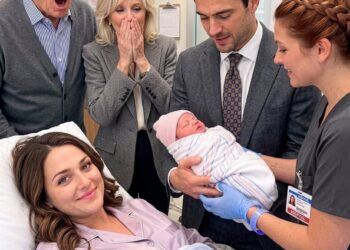
Sixty hours later, my phone pinged. An anonymous number texted a brief update. The twins had been delivered via emergency cesarean. Caroline was small but breathing room air. Rose was in the NICU, fighting an uphill battle in an incubator.
Later that week, an email arrived from Richard’s private address.
I stood outside the neonatal window for nine hours last night. I was too terrified to touch the glass. For the first time in my life, I am surrounded by my family, and I have never felt so completely, utterly alone.
I stared at the screen for a long time. Then, I typed a single sentence in reply.
Then you must ensure Brianna never feels that way again.
I blocked his email address. The umbilical cord to Boston was finally severed.
I took a deep breath of salt air and threw myself into the earth. Using a fraction of the severance money, I signed the lease on a dilapidated, charming former stationery shop off State Street. The floorboards groaned, the electrical wiring was a fire hazard, and the sea breeze rattled the windowpanes like a poltergeist.
I loved every broken inch of it.
I named it Mercer Story Spaces. I began consulting on spatial design for independent museums, historical societies, and boutique public libraries. Thomas practically lived at the site during the renovation, wielding a sledgehammer, rewiring the lighting grids, and bringing me tacos at midnight when I was buried in blueprints.
When the doors officially opened, I slid a contract across his drafting table, offering him a forty-percent equity stake in the firm.
He slid it right back, unsigned.
“Why?” I demanded, frustrated by his stubbornness.
“Because this territory needs to belong entirely to you,” he said, wiping drywall dust from his forehead. “You need to own your kingdom before you invite anyone else to govern it.”
One rainy afternoon in late November, while hunting for a specific pantone swatch in Thomas’s office, I knocked over a stack of architectural digests. A faded Polaroid slipped out from between the pages.
I picked it up. It was me, twenty-two years old, sitting on the concrete steps of our Chicago campus in a torrential downpour, laughing while Thomas held a broken yellow umbrella over my head.
The door creaked open. Thomas froze in the doorway, spotting the photo in my hand.
“You kept this?” I asked, my voice barely above a whisper.
He leaned against the doorframe, crossing his arms. “I forgot it was in that specific folder.”
“The folder is labeled Julia – Do Not Discard.”
A slow flush crept up his neck. “Alright. I’m a terrible liar. I kept it.”
I looked from the boy in the photo to the man standing before me. “Thomas… were you in love with me back then?”
He didn’t move. He looked at me with an intensity that made the air in the room feel heavy. “Would the retroactive truth alter our current reality?”
“I don’t know.”
“Then I refuse to weaponize my past feelings to put pressure on your present.”
“That is an evasion, not an answer.”
He sighed, a long, weary sound. He walked over, gently taking the photograph from my trembling fingers. “Yes, Julia. I loved you. With everything I had. But you looked at Richard and saw the sun, so I taught myself how to survive in the shade. I learned how to care for you from a respectful, non-lethal distance.”
“And now?” I challenged, my heart hammering against my ribs.
“Now?” He stepped back, putting three feet of agonizing space between us. “Now you are reconstructing your architectural anatomy. I will not turn your newfound freedom into another emotional obligation.”
He turned to leave. Panic flared in my chest. I reached out, grabbing the rough denim of his sleeve. “Thomas… I don’t know what I’m capable of offering you right now.”
He looked down at my hand, then back up to my eyes. His expression was impossibly tender.
“I am not asking you for a goddamn thing, Julia.”
That answer terrified me more than any demand ever could. Because for the first time in my life, I felt completely, dangerously safe.
By the following spring, Mercer Story Spaces had landed five major contracts. Ironically, one of the most lucrative referrals came from Brianna. She had legally separated from Richard, retained custody of the girls, and launched her own crisis management firm for boutique hoteliers. Our emails were strictly professional, sterile, and mutually respectful.
Then came the invitation that would detonate the uneasy peace.
A prominent national morning show anchor had read an op-ed I wrote on architectural psychology and wanted to interview me. The producer wanted to frame the segment around women rebuilding their identities and careers after catastrophic life pivots—touching on financial independence, emotional neglect, and overcoming infertility trauma.
The catch? The studio was in Boston.
I flew back east wrapped in invisible armor. The interview was raw, terrifying, and exhilarating. I spoke about the insidious nature of domestic silence, the trauma of carrying a partner’s shame, and the liberation of designing your own life.
When the cameras stopped rolling, I felt like I had excised a tumor.
I walked out the rear exit of the studio, breathing in the humid city air, ready to hail a cab to the airport.
A sleek black town car sat idling by the curb. The rear door opened, and a man stepped out into the harsh afternoon light.
I stopped dead.
It was Richard. But the man standing before me looked like a ghost. His bespoke suit hung loosely on a frame that had lost fifteen pounds. The silver at his temples had aggressively claimed the rest of his hair. His arrogant posture was gone, replaced by a hollowed-out slouch.
He didn’t move toward me. He just stared.
“You knew,” he finally said, his voice cracking on the first syllable.
I gripped my leather briefcase tightly. “Brianna talked.”
“No,” he corrected, his eyes shining with unshed tears. “I went back to the townhouse. I tore my mother’s study apart looking for financial records. I found the ashes of the genetic report in her fireplace grate. I hired an investigator to pull the medical clinic’s backup files.”
He took one trembling step forward.
“I know what you went through, Julia. I know what my genetics did. I know that while you were bleeding in that hospital… I was buying Brianna diamond earrings.”
“And what do you want from me, Richard? Absolution?”
He dropped to his knees right there on the Boston pavement.
Chapter 4: The Confession and the Cornerstone
The sight of Richard Hollis, the prince of Boston real estate, kneeling in the grit of a studio alleyway was so profoundly unnatural it made my stomach turn.
“Get up,” I ordered, my voice cracking like a whip. “Do not humiliate us both with theater.”
He slowly rose, brushing dirt from his thousand-dollar trousers, his eyes raw and desperate. “I thought if Brianna gave me perfect, healthy children, it would mathematically prove that I wasn’t broken. That my blood was clean.”