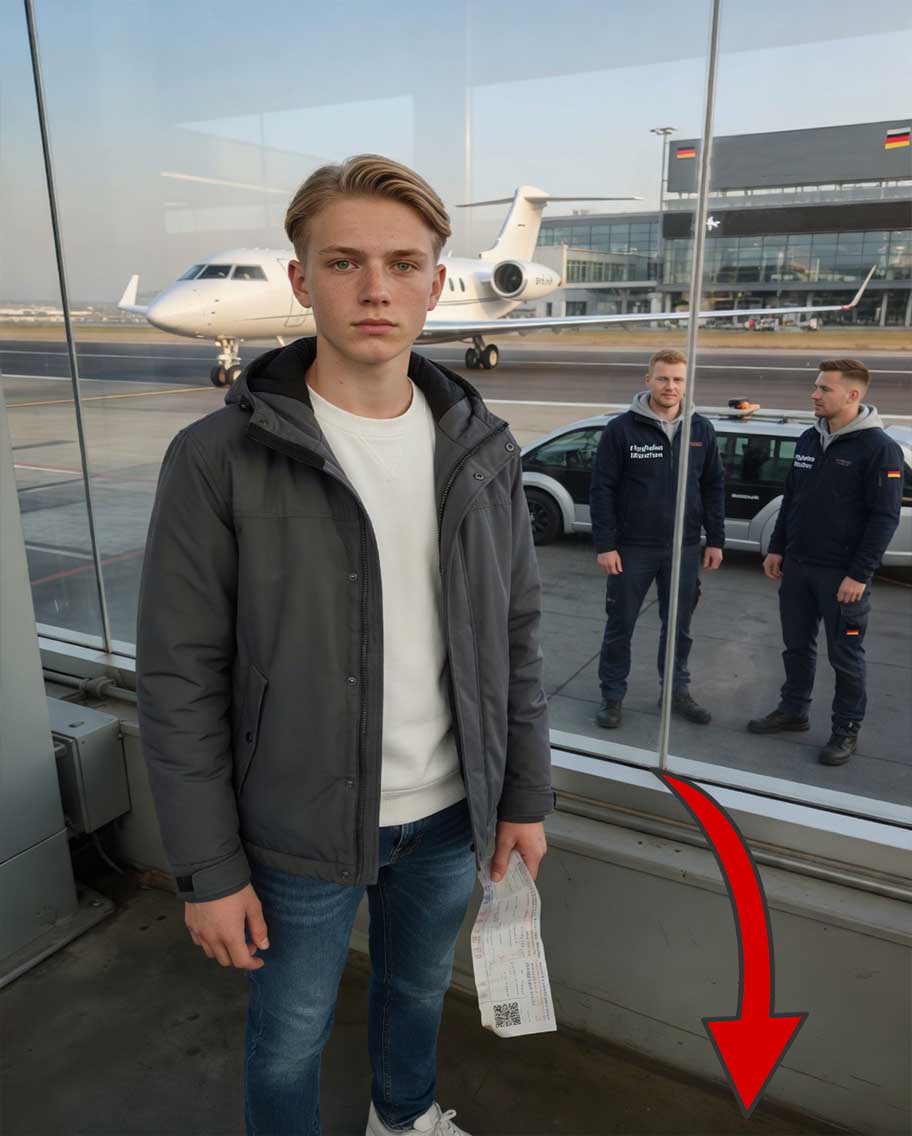
She spoke to me like an adult, not a child. “Camilla, what your mother did is considered severe neglect in the context of parental care. This doesn’t automatically mean prison, but it justifies immediate protective measures and the possible removal of custody,” she explained. “Your father can apply for sole custody and restrict contact to supervised visitation.” My stomach clenched. “I… I don’t want a war,” I said. Fernanda looked at me firmly. “This isn’t a war when it comes to your safety. And you have a right to be safe.” My father listened in silence. When Fernanda finished, he placed another document on the table: a copy of an old agreement. “This,” he said, “is what your mother had me sign years ago to keep me from ‘interfering’: a partial waiver of visitation rights in exchange for her not reporting me for things I never did. She blackmailed me with your picture.” I felt my world completely rearrange itself. “So… you weren’t ‘absent’ by choice at all?” I asked. My father finally looked at me, and in his eyes I saw something that hurt: shame. “I was weak,” he said. “I thought if I withdrew, you’d have some peace.” He swallowed. “I was wrong.” The legal strategy was implemented quickly and efficiently. They filed an emergency motion with the family court. They included the airport security footage, the ticket, my mother’s messages (“You’re old enough now, stop bothering me”), and a brief psychological evaluation: acute trauma due to abandonment. Meanwhile, my father did something else: He sent a notary to my mother’s house in Frankfurt to officially document the condition of my room and secure my personal belongings. “I don’t want her destroying anything,” he said. I didn’t know what to feel. Part of me wanted to shout, “Finally, someone has chosen me!” and another part was afraid of being used as leverage. Two days later, we received the news: The court had granted my father temporary custody pending review of the case. My mother knew nothing yet. She was lying on a beach in Mallorca, toasting her “perfect family.” And for the first time, I had something like power: the ability to simply disappear from her story. My mother returned from her vacation a week later—tanned, carefree, believing the world had stood still for her. She went into the house with her suitcases and called my name out of habit, the way you check if a piece of furniture is still in its place. “Camilla?” she called down the hall. “We’re back.” Silence. She went upstairs and found my bedroom empty. Not “tidy”—empty.
No clothes, no photos, no books. As if I had never existed there. On the bed, instead of my blanket, lay an envelope with an official government stamp. The notary had left the protocol. And the court order. “Temporary order regarding custody. Court summons. No contact with the minor.” According to what Luzia told me later, my mother stood there motionless for several minutes. Then she started screaming. She called my old number. Dead. She called my friends. No answer. She called my school. They told her I was under “provisional guardianship” and that they weren’t allowed to give her any information. That completely drove her crazy. Two hours later, she called my new cell phone with a blocked number. I hesitated. My father looked at me from across the table. “You decide,” he said. I answered. “Where are you?” my mother barked at me without a greeting. “What’s going on? What have you done?” I took a deep breath. I wanted to say, “You left me stranded at an airport.” I wanted to say a thousand things. But I chose the simplest sentence. “I went with Dad.” Silence. Then a sharp laugh. “Dad?” she said. “Now this man is suddenly useful to you?” “He was useful when you abandoned me,” I replied, my voice steady. Suddenly, she changed her tone, the way manipulators do when anger isn’t getting them anywhere. “Camilla, it was a misunderstanding. I just wanted you to learn independence.” She whispered, “Come back, and we’ll talk calmly.” All I felt was disgust. Not just for her. But for myself, for having accepted this logic for so many years. “I’m not coming back,” I said. My mother exploded again. “You’re letting him use you! This man only wants to hurt me!” I looked at my father. He wasn’t smiling. He wasn’t celebrating. He was simply ready. “Mom,” I said, “you’ve already hurt me. And you called it ‘parenting.’” I hung up. The court case dragged on for weeks.
My mother appeared with her husband, Richard, wearing the smile of a victim. She claimed I was “difficult,” that I made things up, that my father was “unstable.” But the judge saw the footage from the airport. She saw the news reports. She saw the ticket. She saw that I was a minor. And for the first time, she wasn’t the one calling the shots. The judge ruled: Primary custody went to my father, and supervised visitation was ordered for my mother until a family psychological evaluation was available. It wasn’t a perfect ending. It was a completely new beginning. After the hearing, in the courthouse hallway, my mother approached me, her eyes burning. “You’ll regret this,” she whispered. My father stood in front of me. “Not another word. Everything here will be documented.” My mother froze. Because she understood what I had already understood at the airport: When someone stops being afraid of you, you lose all your power. That night, I looked in the mirror in my new bedroom and thought about the 16-year-old girl who had stood there with a ticket in her hand. I wanted to hug her. I wanted to tell her, “You’re not alone—you just didn’t know it yet.” My mother left me at the airport like a handbag. But in doing that, she unintentionally handed me back to the only adult who came to pick me up. And that pickup… changed my life. At 16, all alone at an airport… who would you call? Tell me honestly: Does a mother who does something like that deserve a second chance?