
PART 3
My lawyer, Patricia Holloway, had a sharp eye and a calm demeanor that kept panic at bay. Before even touching a document, she asked, “Have you told anyone?” I said no. “Good,” she replied. “Keep it that way.” Within a few days, the trust had been established, the anonymous claim settled, and all account authorizations severed. Every piece of paper Daniel might have thought he could one day get his hands on was now walled off.
Then I found the house. Four bedrooms. An east-facing sunroom. A proper garden. A quiet street. Shade trees. A patio wide enough for morning tea. It was exactly the kind of house Daniel and Renate used to describe when talking about their “next chapter.” I viewed it alone at 10:05 a.m. The hallway smelled faintly of cedar and lemon oil. Sunlight warmed the old wooden floorboards. A brass key lay on the sideboard for the viewing. I touched it with two fingers and remembered who I had been before grief taught me to ask for permission.
The next morning, I submitted a full-price cash offer through the trust. A clean purchase. No Daniel. No Renate. No explanation. When the offer was accepted, I sat in a supermarket parking lot and laughed until I had to press a napkin under my eyes. Not because I had defeated them, but because, for the first time in two years, I could imagine a morning that belonged entirely to me.
Towards the end of that week, breakfast was on the table before I even asked for it. Renate smiled far too warmly. Daniel asked if I needed anything from the drugstore. The grandchildren were encouraged to spend more time with Grandma. Kindness that appears too suddenly usually has paperwork behind it. I didn’t know what they had discovered, but I knew they had stumbled upon something.
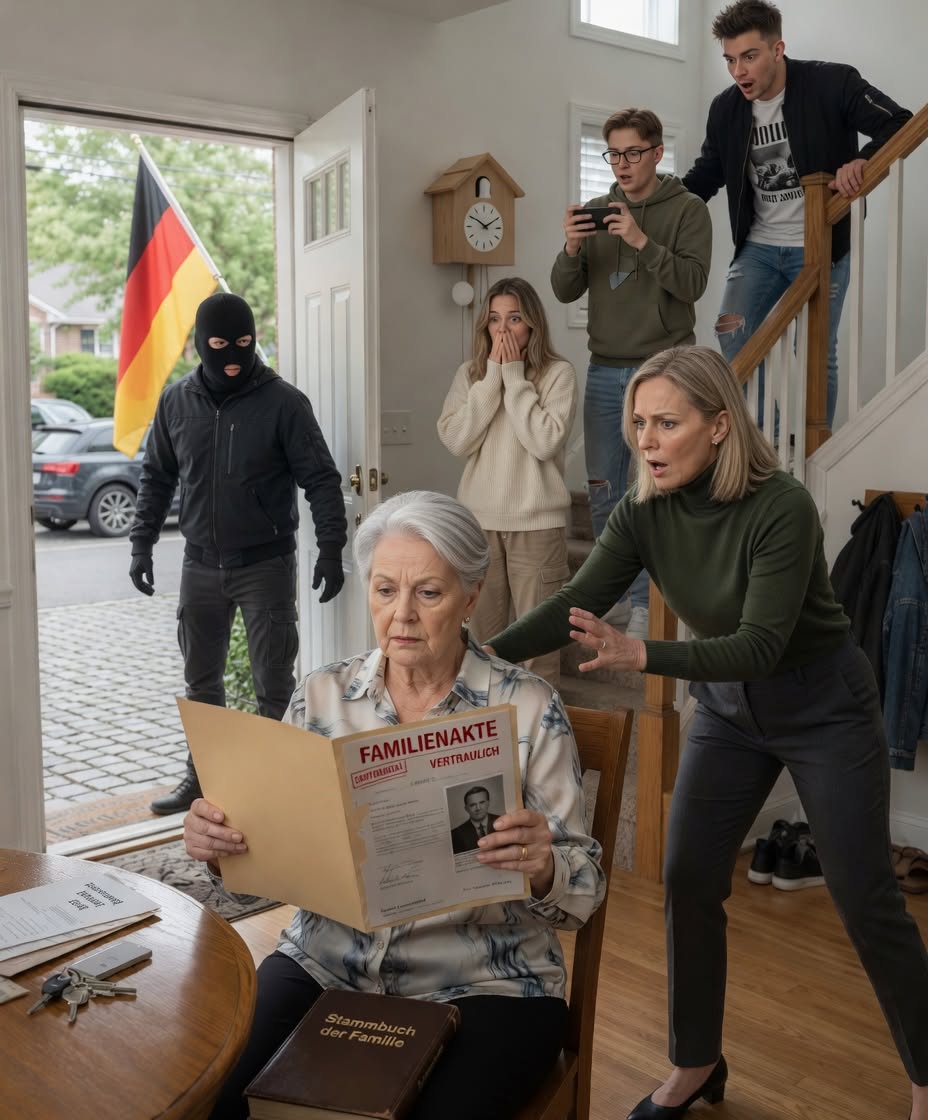
On Saturday at 8:11 a.m., Renate walked into my room without knocking. Her gaze immediately fell on the envelope on my dresser. The brass key was half-hidden beneath my Bible. “You bought a house?” she asked. Then the doorbell rang. Standing on the porch was a man in a suit, holding a folder with Renate’s name on it. Daniel came down the stairs barefoot. The man opened the folder and revealed just enough: my maiden name, the name of the trust company, and a delivery confirmation timestamped 8:11 a.m.
Daniel looked from the folder to the key. “Mom,” he asked quietly, “whose house did you buy?” I stood up slowly. The room fell into the kind of silence I had longed for over the past two years. Not the silence of people ignoring me, but the silence of people realizing that the woman they had dismissed had been making decisions all along—while they underestimated her. “The one you wanted,” I said. The color drained from Renate’s face. “You bought our house?” she whispered. “No,” I said. “I bought my house.”
Daniel wanted to speak right then, but there had been plenty of opportunities for conversation over the last two years. There had been chances when Renate called me an “overhead cost,” when I ate lunch alone in a kitchen I had just cleaned, and when Daniel told me to leave in front of his children. “I did speak,” I said. “You just didn’t listen.” When Daniel finally asked where I’d gotten the money, I knew what mattered most to him at that moment. Not whether I was hurt. Not whether I was okay. The money.
I moved out three days later. No shouting. No drama. Daniel later apologized on my new patio, and part of that apology was sincere. Another part was fear. People are rarely just one thing. I listened, then told him: “I love you, but you will never again decide where I sleep.” That wasn’t forgiveness yet. But it was a start.
In the months that followed, I learned to live in a home where I didn’t have to be useful to be welcome. I bought a porch swing, planted roses that Harald would have pruned poorly, and invited my grandchildren over for dinner every other Sunday. My grandson put his phone away while we ate. My granddaughter helped me pick out the curtains for the sunroom. Slowly, the house became more than just quiet. It became my home.
The 89 million euros changed my bank accounts, my address, and the way certain people smiled when they learned I had choices. But the real change happened at 6:18 p.m. at a polished table, with chicken and garlic beans going cold. That was the moment my son showed me what my silence had cost me. And that was the moment I stopped paying the price.
I still love Daniel. A mother doesn’t simply switch off love. But love without self-respect becomes a room that someone else can rename. For two years, Renate called mine the guest room. Now I have a home, a terrace, a brass key, and a sunroom bright enough for morning tea. Every time I turn that key in the lock, I remember the lesson Harald taught me over forty-seven years: caring isn’t what people say when they want something. Caring is what they do when they believe you have nothing left to give.