
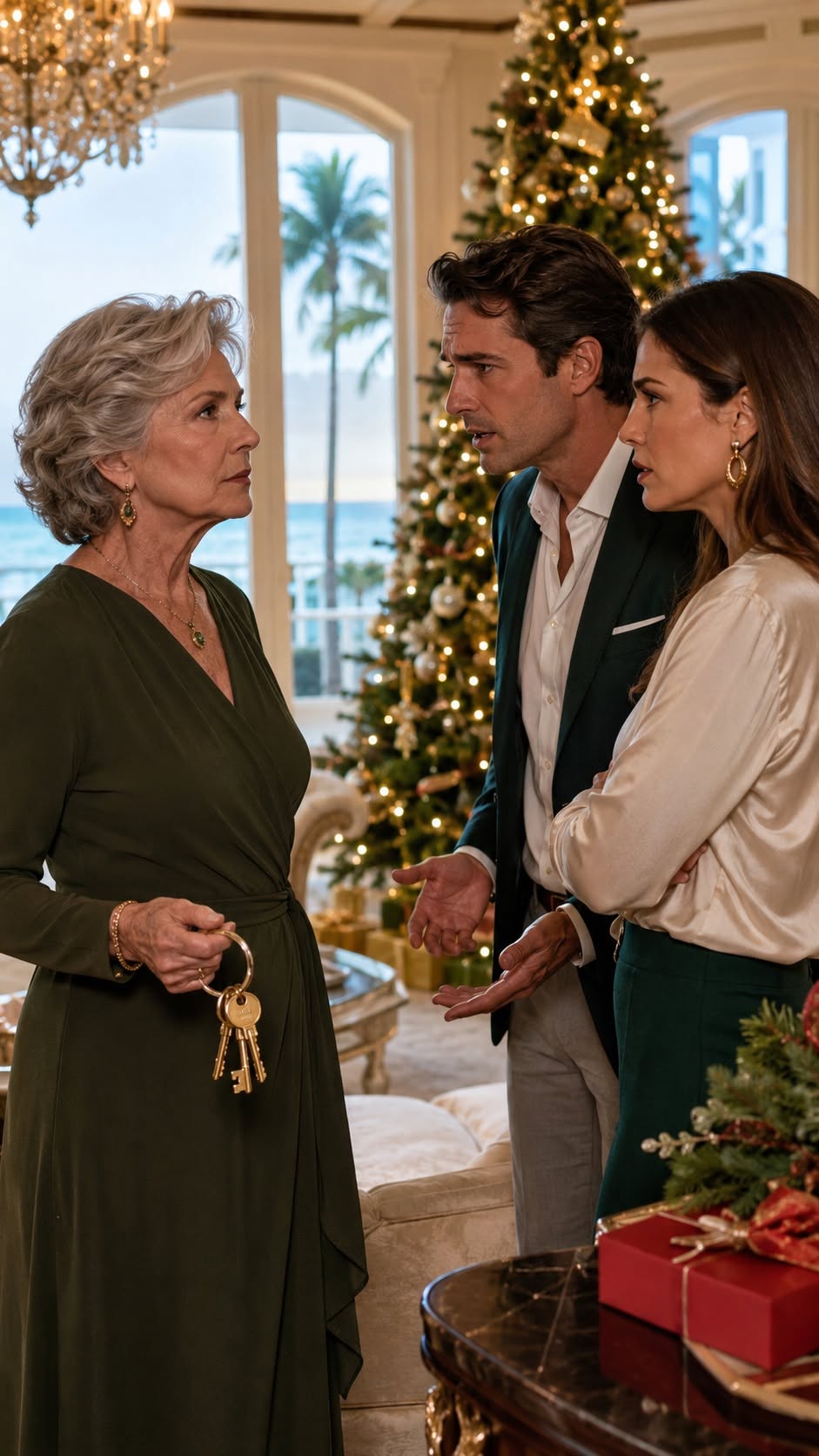
“I was ashamed of your apartment, your clothes, and the way you spoke about money.”
Ethan looked uncomfortable.
She continued.
“I treated those things as evidence that you lacked taste.”
“Did you believe that?”
“Yes.”
The honesty surprised me.
“I also thought your relationship with Noah competed with my parents’ relationship with him.”
“Why?”
“You understand him easily.”
“That tends to happen when people listen.”
Her face tightened, but she kept going.
“My parents show love through expensive things. When Noah preferred your guitar to their gifts, I felt judged.”
“I did not judge them.”
“I know now.”
“Do you?”
“I’m trying.”
She looked toward the house.
“When we learned about the estate, I immediately imagined hosting my family here.”
“I noticed.”
“That was ugly.”
“Yes.”
She accepted the word.
“I’m sorry.”
“Thank you.”
“Does that mean we can come tomorrow?”
“No.”
Her expression changed.
I continued.
“An apology should not function as an admission ticket.”
She looked away.
“That’s fair.”
It was the first time she said those words without sounding resentful.
They left after an hour.
Noah hugged me twice.
“When can I sleep here?”
“We’ll arrange something after the holidays.”
“Can I pick a room?”
“Yes.”
“The one facing the ocean?”
“If you can wake up before the sun.”
“I can.”
Bianca smiled slightly.
“He cannot.”
Christmas Eve arrived warm and bright.
By noon, the estate was full.
Rosa’s family came first.
Then the staff who had chosen not to work.
Several neighbors arrived with food.
My attorney brought his husband.
A retired teacher from my apartment building flew down after I invited her.
The night security guard brought his adult daughter, who had recently divorced and did not want to spend Christmas with people asking questions.
Nobody wore formal clothing.
I wore the moss-green dress Bianca had seen three years in a row.
The chef placed bowls directly on the table rather than arranging plated courses.
Children moved between rooms.
Someone spilled juice near the piano.
Nobody died.
At six, a vehicle stopped outside the gate.
The guard called.
“Your son and his family are here.”
I closed my eyes.
“Did they call?”
“No.”
“Are Bianca’s parents with them?”
“Yes. Two additional vehicles.”
Of course.
The exclusive Christmas dinner had moved.
They had arrived with Bianca’s entire family, probably expecting the estate to replace their original plan.
Rosa stood beside me.
“What do you want to do?”
I thought of Noah.
Then of the guests already inside.
People invited because they expected no performance.
I could not let Bianca’s family enter and transform the evening into another hierarchy.
“Ethan, Bianca, and Noah may come in,” I said. “Nobody else.”
The guard relayed the message.
Several minutes passed.
Ethan called.
“Mom, Bianca’s parents are here.”
“I know.”
“They brought dinner.”
“We have food.”
“They thought we could combine celebrations.”
“They were not invited.”
“That’s embarrassing.”
The word again.
“For whom?”
“Everyone is waiting at the gate.”
“They may return to your house.”
“Mom, please.”
“No.”
Bianca’s voice entered in the background.
Then she took the phone.
“My parents canceled their chef because Ethan said we were reconciling.”
“I did not invite them.”
“They came in good faith.”
“They came after seeing the estate.”
“That is insulting.”
“It may also be accurate.”
Her voice sharpened.
“You are using the house to humiliate us.”
“No. I am refusing to let you use it to replace the dinner from which you excluded me.”
Silence.
Then Ethan returned.
“What about Noah?”
“He may enter.”
“We won’t send him in alone.”
“You may come with him.”
“Without Bianca’s parents?”
“Yes.”
“That puts us in an impossible position.”
I looked around the great room.
People laughing.
A child asleep on a sofa.
My old friend arranging cookies beside a florist she had met that morning.
“No,” I said. “It gives you a choice.”
He became quiet.
For years, I had been the person expected to absorb impossible positions so others could avoid choosing.
Not this time.
“We’ll leave,” he said.
My chest hurt.
“That is your choice.”
“Tell Noah I’m sorry.”
“No. You tell him.”
I ended the call.
The vehicles remained outside for five more minutes.
Then drove away.
I went upstairs and cried in the bathroom where no one could hear.
Boundaries do not always feel empowering.
Sometimes they feel like closing a door while someone you love stands on the other side.
The fact that the door needs closing does not remove the pain.
Rosa found me afterward.
She did not ask whether I was okay.
She handed me a towel.
“Your mascara.”
“I’m not wearing any.”
“Then your face is naturally dramatic.”
I laughed despite myself.
We returned downstairs.
Dinner continued.
At eight, Ethan sent a message.
Noah is crying. Bianca’s parents are furious. I don’t know how we fix this.
I read it twice.
Then replied.
Begin by telling Noah the truth. You chose not to enter without the people who had excluded me. Do not tell him I rejected him.
No response came.
On Christmas morning, I woke before sunrise.
I walked barefoot through the house and opened the terrace doors.
Cool air moved in from the ocean.
For the first time in forty-two years, I was not preparing breakfast for Ethan.
I thought that would feel freeing.
It felt empty.
At nine, Noah called from his tablet.
His face appeared too close to the screen.
“Grandma?”
“Merry Christmas.”
“Merry Christmas.”
His eyes looked swollen.
“Dad said everyone made mistakes.”
“That is true.”
“Did I?”
“No.”
“Did you not want us?”
“I wanted you.”
“Did you want Mom and Dad?”
I chose the answer carefully.
“I wanted them to come without bringing people who had helped exclude me.”
He frowned.
“Grandpa Russell said you were being selfish.”
Bianca’s father.
“I’m sure he believes that.”
“Are you?”
“Sometimes. Not about wanting respect.”
Noah became quiet.
“Can I visit next week?”
“Yes.”
“Even if Mom comes?”
“Yes.”
“Even if Grandpa comes?”
“No.”
He considered.
“Okay.”
Children often accept boundaries more easily than adults when the reason is clear.
Before ending the call, he held up his guitar.
“I changed the strings.”
“Already?”
“Dad helped.”
That small detail gave me hope.
Not reconciliation.
Hope.
The weeks after Christmas were not dramatic.
No frantic legal war.
No immediate family collapse.
Just discomfort.
Ethan called more often.
At first, every conversation returned to the estate.
Taxes.
Security.
Maintenance.
Potential uses.
I stopped him.
“If you want to discuss our relationship, call. If you want to discuss property, speak to my attorney.”
“That makes me sound greedy.”
“I’m allowing you to demonstrate otherwise.”
He did not like the sentence.
Still, over time, he changed the subjects.
He asked about my health.
My apartment.
The people at Christmas.
He listened when I described them.
Bianca remained distant for several months.
Then she began joining Noah’s visits.
She never arrived empty-handed at first.
Flowers.
Wine.
Desserts.
Eventually, she came with nothing.
That felt more genuine.
One afternoon, she watched me make sandwiches in the estate kitchen.
“You still use coupons,” she said.
“Yes.”
“You don’t need to.”
“Need is not the only reason to avoid waste.”
She nodded.
“My mother says rich people should never appear concerned about small amounts.”
“Why?”
“She thinks it signals insecurity.”
“I think ignoring small amounts creates large insecurity.”
Bianca smiled.
“That sounds like something you’d say at dinner.”
“It probably is.”
She became serious.
“I was cruel.”
“Yes.”
“I thought class was something you could measure through habits.”
“Many people do.”
“I’m not asking you to excuse it.”
“Good.”
She helped cut tomatoes.
The conversation ended there.
Change often appears in ordinary tasks before it appears in speeches.
A year after the exclusion, I created the family-use trust.
Not as generous as the original plan.
Ethan, Bianca, and Noah received scheduled access to the estate. They could use it for vacations and small family gatherings.
They could not host large events without approval.
Bianca’s parents had no automatic access.
The house could not be sold, borrowed against, or treated as marital property.
Noah would gain expanded rights as an adult, provided he completed financial education and agreed to the trust terms.
Ethan read the document.
“You don’t trust us.”
“Trust is not the absence of rules.”
He looked at me.
“Did your attorney write that?”
“No. Life did.”
He signed.
Bianca signed.
Neither complained again.
The next Christmas, dinner took place at the estate.
Fewer than thirty people attended.
My old apartment friends.
Rosa’s family.
Ethan, Bianca, and Noah.
Bianca’s parents were invited for dessert only.
Not as revenge.
As a gradual boundary.
They arrived at seven wearing formal clothes.
Everyone else wore sweaters and loose dresses.
Bianca’s father looked around the mixed gathering with visible discomfort.
A child from Rosa’s family asked whether his shoes hurt.
He said no.
She asked why he walked like they did.
Nobody rescued him.
Later, he approached me.
“This is a remarkable property.”
“Thank you.”
“You’ve maintained it well.”
“Rosa and the staff have.”
He glanced toward the living room.
“This is an unusual guest list.”
“It is my guest list.”
He understood.
For once, he did not challenge it.
Noah played guitar after dinner.
The instrument still had the small scratch near the sound hole.
Bianca’s mother listened closely.
When he finished, she said, “That was beautiful.”
Then she looked at me.
“Was that the secondhand guitar?”
“Yes.”
She nodded.
“I may have misunderstood its value.”
It was not an apology.
It was enough for the moment.
Years passed.
The estate became what I had originally hoped, though not in the way I imagined.
Noah spent summers there.
He learned to surf badly, improved at guitar, and brought friends who left wet towels everywhere.
Ethan occasionally worked from the library.
Bianca hosted one charity luncheon after asking permission and agreeing that invitations would not describe the estate as hers.
She even invited Rosa as a guest rather than treating her as staff.
That mattered.
My apartment remained mine for three more years.
People asked why I kept it.
Because the estate was beautiful.
The apartment was home.
Eventually, climbing four flights became difficult.
I sold it and moved permanently to Palm Beach.
The chipped coffee mug came with me.
It sits in the estate kitchen beside imported ceramics and hand-painted porcelain.
The crack has widened.
I no longer drink from it.
I keep it because love and usefulness are not identical.
Some things deserve a place after their original function ends.
Ethan once picked it up.
“You still have this?”
“Yes.”
“I made it.”
“I know.”
“It’s terrible.”
“It is.”
He laughed.
Then became quiet.
“I’m sorry about that Christmas.”
“You have apologized.”
“I know. Sometimes I remember the phone call.”
“So do I.”
“I called you embarrassing.”
“You implied it.”
“That’s worse.”
I looked at him.
“You were trying to please your wife.”
“That doesn’t excuse it.”
“No.”
“I thought you would always be there.”
The sentence held more truth than cruelty.
Children often imagine their mothers as permanent structures.
Like roads or walls.
Always available.
Never requiring maintenance.
“I am here,” I said.
“But differently.”
“Yes.”
He nodded.
“Maybe that was necessary.”
“It was.”
When Noah turned eighteen, I gave him a copy of the trust documents.
He read them at the kitchen island.
“Why are there so many rules?”
“Because money can make families forget how to speak plainly.”
“Did Dad?”
“Yes.”
“Did you?”
“Sometimes.”
He looked surprised.
“When?”
“I almost gave your parents access to this house because I wanted gratitude.”
“That sounds normal.”
“It can still be dangerous.”
He continued reading.
“Can I bring friends here?”
“Yes.”
“Can Grandpa Russell come?”
“With permission.”
He smiled.
“You still don’t like him.”
“I like him in controlled quantities.”
Noah laughed.
By then, the story of the exclusive Christmas had become part of family history.
Not a joke.
A reference point.
Whenever plans became uneven, someone asked, “Are we creating another exclusive Christmas?”
Usually Bianca.
She had learned to identify the pattern before it became behavior.
That mattered more than apologizing forever.
I never transferred the estate to Ethan.
People assumed I would eventually.
I did not.
After my death, the house will remain in trust for family use and charitable retreats.
Part of the year will be reserved for families caring for seriously ill children who need a place near the ocean.
Noah helped design the program.
Ethan supported it.
Bianca organized donor partnerships without putting her name on the building.
Growth does not erase the person someone once was.
It proves they are not trapped there.
I think often about the morning my son called.
The apartment kitchen.
The gray parking lot.
The gold keys.
The phrase more intimate.
At the time, I imagined the estate would become my answer.
They reject the poor-looking mother.
She reveals wealth.
They panic.
She wins.
Real life was less satisfying and more useful.
The house did not make me worthy.
It exposed how differently they behaved once they knew I possessed something valuable.
Then it gave us a controlled space in which they could either change or lose access.
That distinction matters.
If I had revealed the estate immediately and welcomed everyone without conditions, they might have become more polite without becoming more respectful.
Politeness follows wealth easily.
Respect requires seeing value when wealth is invisible.
I needed Ethan to understand that the woman in the cramped apartment and the woman holding a fifteen-million-dollar deed were the same person.
The moss-green dress fit the same.
The coffee mug still had a crack.
I still used coupons.
The numbers changed.
My dignity did not.
Christmas exclusion hurt because it came from my son, not because I lacked somewhere grander to go.
The estate gave me options.
It did not numb the rejection.
That is one of the truths people misunderstand about money.
Money can provide shelter from dependence.
It cannot prevent someone you love from making you feel unwanted.
What it can do is make it easier to refuse humiliation as the price of connection.
Before the inheritance, I might have begged.
I might have offered to cook, arrive early, leave before Bianca’s parents came, or bring no gift.
I might have made myself smaller because being alone frightened me.
The estate did not make me brave.
It reminded me I had choices.
And once I recognized that, I could no longer pretend exclusion was generosity.
The first Christmas at the estate ended with strangers becoming friends beneath a tree decorated with paper chains and a plastic dinosaur.
The second included my son.
The third included his wife’s parents for dessert.
By the fifth, nobody mentioned the vibe.
They discussed food, music, travel, and whether Noah should be allowed to play the same song four times.
The gathering became imperfect enough to feel like family.
That was all I had wanted originally.
Not marble.
Not a private path.
Not proof that I could buy a table larger than Bianca’s.
I wanted a place where nobody needed to earn an invitation by matching someone else’s idea of refinement.
The estate eventually became that place.
But first, I had to close the gate.
My son once believed excluding me would protect the quality of his Christmas.
He discovered that quality without kindness is only presentation.
I once believed giving him access to wealth would repair our closeness.
I discovered that generosity without boundaries is only another way of asking to be loved.
We both learned slowly.
Painfully.
In ordinary conversations after the dramatic part had ended.
On the morning I received the phone call, Ethan asked whether I understood.
I said yes.
At the time, he thought I meant I accepted his decision.
I did not.
I meant I finally understood my place in the family structure they had built.
Useful.
Available.
Quiet.
Welcome only when convenient.
Once I saw it clearly, I could decide whether to remain there.
I did not.
That was why, by Christmas Eve, they were calling repeatedly and standing outside a locked gate.
Not because I wanted them frantic.
Not because I wanted revenge.
Because for the first time, access to me was no longer automatic.
They had to knock.
They had to ask.
And eventually, they had to change.