
I stared at the dark screen of my phone. For Dad. That was the only reason. Perhaps he had left me this land for a reason none of us understood yet.
I packed boots, gear, and enough supplies for several days. The Bundeswehr had taught me how to survive on very little, so a remote cabin didn’t scare me.
The drive to the Harz mountains took hours. The roads wound through forests and tiny villages that seemed frozen in time. With every kilometer, the tension from Kassel faded a little more.
When I finally turned onto the dirt track leading to the property, my headlights picked out the outline of a sagging roof. My chest tightened. So this was it—my worthless inheritance.
I parked and turned off the engine. The silence outside was overwhelming—the kind of silence that presses heavily against your ears. I stepped out and looked at the dark log cabin. It wasn’t exactly impressive. But it was mine.
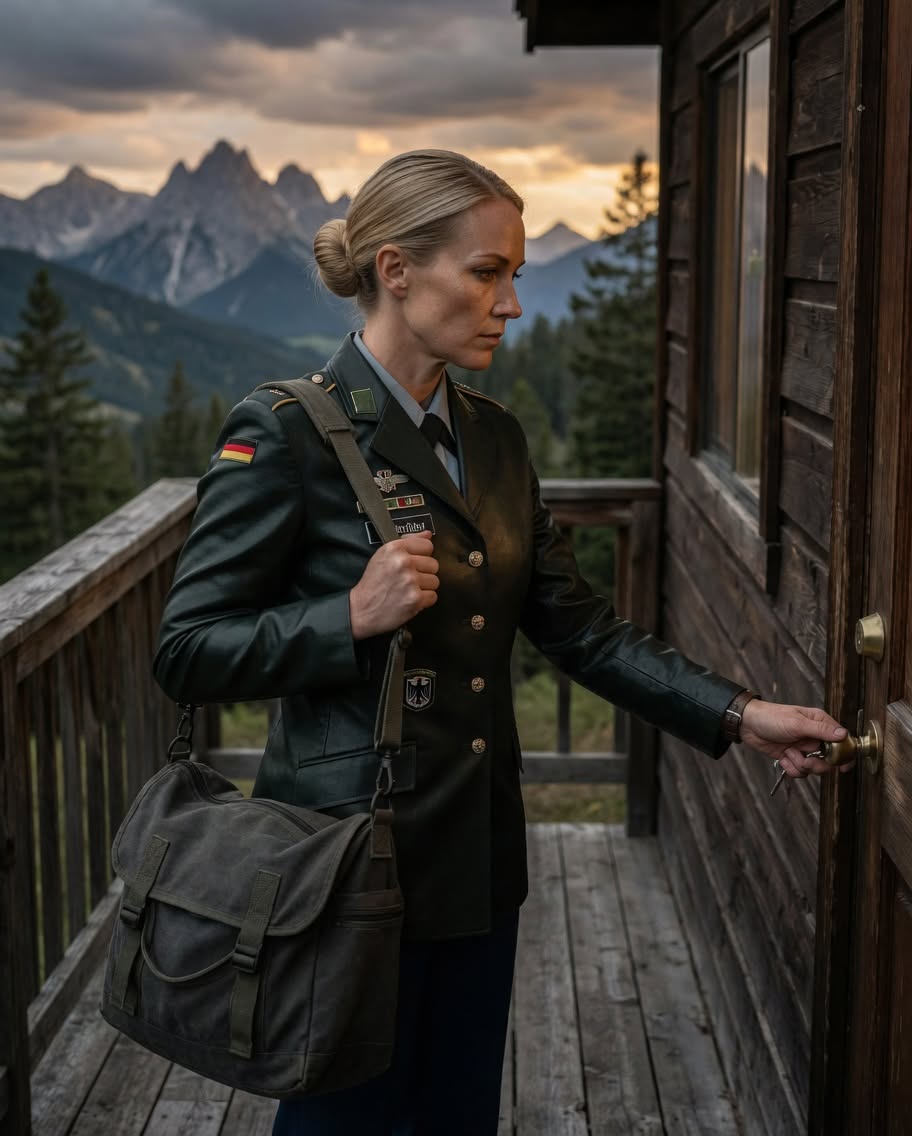
The porch creaked under my boots as I climbed the steps. The lock looked ancient, yet the key turned surprisingly easily. I had braced myself for mold and dust. Instead, the cabin smelled of pine wood and old leather.
I flipped the light switch, and warm light filled the room. Someone had clearly kept the place up. The wooden floors gleamed. The furniture looked well-maintained. Fresh firewood was neatly stacked beside the fireplace. I slowly closed the door behind me.
Then my gaze fell on a framed photo above the mantelpiece. I stepped closer.
It showed my father as a young man, standing beside an older woman in front of this very cabin. On the back, he had written:
“With Grandma Adelheid, 1962. The place where it all began.”
I froze. My father had never mentioned anyone named Adelheid. He had always claimed there was no family left. I studied the woman’s face. Her eyes seemed warm, yet strong enough to put anyone in their place.
Suddenly, a knock rattled the front door. My body reacted instantly; my hand shot to where my service weapon usually sat before I remembered I wasn’t on duty. I looked through the window. An older man was standing outside, carrying a casserole dish.
“Ms. Ronja?” he called out.
I opened the door cautiously.
“Captain Ronja,” I corrected him. “Who are you?”
He smiled warmly.
“Hagen Meyer. I live two cabins down.”
“I’m a retired Paratrooper Captain,” he added. “Your father asked me to check on you when the time came.”
His military background instantly explained his ramrod-straight posture. He held out the casserole. “Beef goulash. I figured you’d be hungry after the drive.”
I hesitated for a moment before taking it. “You knew my father?”
Hagen nodded. “Well enough. He was here a week before he died and spent three days getting everything in order.”
“He told me his daughter might show up here one day, feeling like the whole world had turned against her,” Hagen said. “He also asked me to remind you that the most valuable things are usually hidden where no one is willing to look.”
My throat tightened. “He really said that?” “Crystal clear,” Hagen replied. Then he added casually, “Oh, and he said you should look under the kitchen floorboard whenever you’re ready.”
He touched the brim of his cap and walked away before I could stop him.
I stood there in silence, holding the warm goulash in my hands. My father had known. He had prepared for this moment.
I carried the mold into the kitchen and dropped to my knees beside the floorboards. A plank shifted slightly under my fingers. Using my pocketknife, I pried it open to reveal a metal box wrapped in oilcloth.
I carried it to the table and opened it carefully. Inside lay photographs, documents, and a letter addressed to me in my father’s handwriting. But the geological report at the very bottom made my blood run cold. Words like “granite” and “high yield” leapt out at me. Estimated commercial value: substantial.
Svenja thought I had inherited useless land. Instead, I was sitting on vast mineral deposits worth millions. I sank into a chair and stared at the documents. Dad hadn’t left me scraps. He had left me power.
With trembling hands, I opened the letter.
“My dearest Ronja, if you are reading this, then I was right about your sister’s greed.”
Tears immediately blurred the text on the page.
He explained that Adelheid had taken him in when he had nothing. The land had originally belonged to her, and she had guarded the secret for decades.
“She knew what lay beneath this soil,” he wrote. “Protect it until the family truly needs strength and security.”
I looked at the old photograph again. Survey markers were faintly visible in the background. Adelheid had known the truth all along.
My phone buzzed. Svenja.
“How’s the dump? Does it still smell like mold?”
I stared at the message and laughed softly. If she had even the slightest inkling of what lay beneath this land, she would already be racing toward this cabin at full speed. I spent the night going through every single document in the box. Land registry records. Bank statements. Engineering notes. The deeper I looked, the clearer everything became. This wasn’t just any piece of land. It was leverage. It was protection.
Around midnight, I finally ate the goulash Hagen had brought me. I sat quietly at the table, staring at the papers. For the first time all week, I felt something new. Not anger. But a sense of purpose.
As I drifted off to sleep on the sofa later that night, one final thought crossed my mind: my father hadn’t left me in the lurch with a dilapidated wreck. He had handed me the chance to finally stand on my own two feet.