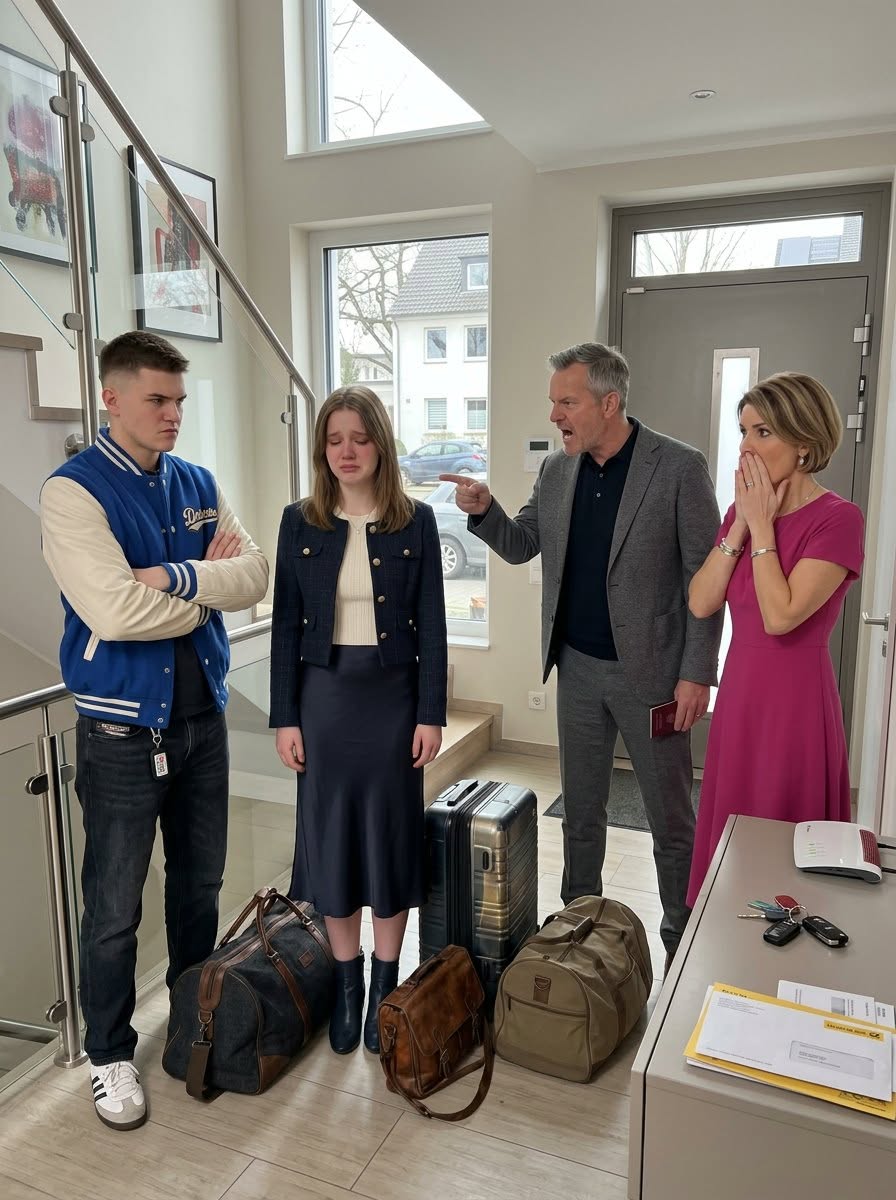
After that, the end came in installments. The house was put up for sale in January. My mother moved into an apartment owned by one of her sisters. My father rented a place near his office, although rumors said his company wouldn’t survive the year. Gregor’s girlfriend Paula disappeared from his social media channels within the week after the restaurant closed.
I started my studies in the spring instead of autumn. I chose the University of Frankfurt because it was close enough to my apartment and far enough away from the girl I used to be. I studied economics first because I wanted to understand every single word that had once been used to confuse me. Later, I added political science because numbers explain systems, but politics shows who gets left behind in those systems.
I didn’t become completely fearless. That would be a lie. There were nights when I stood in my kitchen with my phone in my hand, on the verge of calling my mother just to hear her voice. There were mornings when I missed the illusion of family so painfully that it hurt physically. I missed the shared birthday breakfasts, even though I now knew they had been staged. I missed the Christmas photos, even though everyone in them had only been playing a role.
But missing something doesn’t mean it’s safe to go back.
Nora became far more than just my lawyer. She became the person who taught me to ask questions without apologizing for them beforehand. She taught me that signatures are binding, that silence can be a strategy, and that people who profit from your ignorance will often call your clarity cruel.
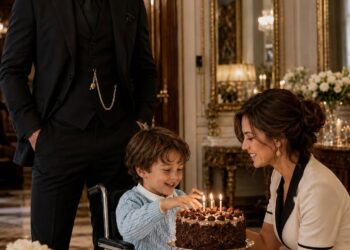
On my nineteenth birthday, there was no celebration in a grand ballroom. I went to dinner at a small osteria – together with Nora, my roommate Alisa, and Markus, a research assistant who had helped me with statistics tutoring and had since become one of my closest friends. There were no speeches about family loyalty. No photographers. No champagne pyramid. Just pasta, lots of laughter, and a chocolate cake that Alisa carried to the table with off-key singing, far too loud.
After dinner, Nora handed me a small envelope. “Your grandfather asked me to give you this exactly one year after the foundation was established,” she said. I opened it carefully. Inside was another note.
Lotte, one year of freedom. Now make it two. Your Grandpa
I laughed and cried at the same time.
Years later, I was still occasionally asked whether I regretted putting the money into the foundation. Most people asked very cautiously, as if expecting a highly complex answer. As if losing my parents somehow outweighed the fortune I had saved. But I never saw it that way.
The foundation didn’t cost me my family. It only revealed what I had secretly always been worth to my family.
That was the bitterest truth, but also the most liberating one.
At twenty-five, I had completed my studies, started working at a nonprofit organization that counsels young adults on financial abuse, and bought myself a modest condominium with funds properly disbursed from the foundation. I keep my grandfather’s note framed next to my desk.
One afternoon, after a workshop, a seventeen-year-old girl stayed behind. Her eyes glistened, and she clutched a folder tightly against her chest. “My aunt says I’m being dramatic,” she whispered. “But my stepfather keeps asking me about the compensation money from my accident.”
I saw myself in the way she held that folder like a shield.
I didn’t tell her what to do. I didn’t promise her everything would be fine. I gave her the address of a legal counseling center, explained which questions she needed to ask, and told her to keep copies of every document in a safe place.
Before she left, she asked me: “Does it always make people angry when you protect yourself?”
I thought about my father in the breakfast room. About my mother’s icy eyes. About Gregor’s accusations. About Nora at the front door. About my grandfather’s careful handwriting.
“Not always,” I told her. “Just the people who were counting on you not to.”
That night, I went home, unlocked my apartment, and placed my key in the blue ceramic bowl by the door. The city lights glowed beyond the windows. My life was quiet, ordinary, and entirely my own.
At eighteen, I thought I had merely moved money around. What I had actually moved was the boundary between the future they wanted to take from me and the future I was finally allowed to shape for myself.