Michael’s hand tightened into a fist on the table.
Kara said, “That poor thing. Mom must be so scared.”
“She’s unconscious.”
“Right. I know. I meant… spiritually.”
Spiritually.
I nearly laughed again.
Then she said, “Have the police said anything?”
“Not much.”
“Did they ask about me?”
There it was.
I made my voice small. “Why would they ask about you?”
“I don’t know. They’re asking everybody things, right? I mean, I’m out of town, so it’s annoying.”
“Where are you?”
“Columbus.”
“With Ryan?”
“Obviously.”
Her husband.
Ryan. Quiet, exhausted Ryan, who worked construction and always looked like he was apologizing for taking up space. He had spent ten years married to Kara and five years trying to leave her without being destroyed.
“What friend are you visiting?” I asked.
“What?”
“You said friends in Columbus.”
She laughed. “Why are you interrogating me?”
“I’m not.”
“You sound like you are.”
“I’m just trying to think about normal things.”
“Well, don’t. Nothing is normal.” Her voice sharpened. “And don’t let the police pressure you. They love twisting families apart.”
My pulse pounded in my ears.
“Kara.”
“What?”
“Did you talk to Mom or Dad Monday night?”
Silence.
It stretched so long that even the rain seemed to hush.
Then Kara said, “Why would you ask me that?”
“I don’t know. I just wondered if Mom had sounded sick.”
“I told you, I wasn’t there.”
I had not asked if she was there.
Michael closed his eyes.
Detective Harris’s voice came softly through Michael’s phone. “Good. Keep her talking.”
I forced air into my lungs.
“I didn’t say you were.”
“Well, your tone did.”
“I’m tired.”
“We’re all tired, Emily.”
There she was.
The old Kara.
The Kara who could make even attempted murder about her own inconvenience.
“I should go,” I said.
“Wait.”
My hand froze.
“What?”
“If Mom wakes up, call me before you tell the police.”
My blood turned cold.
“Why?”
“Because she’ll be confused. You know how Mom gets. She could say anything. Medicine messes with people.”
“Kara, what would she say?”
“I don’t know. That’s the point. She might say nonsense, and then cops will run with it.”
“Kara.”
“What?”
“What do you think Mom would say?”
The silence returned.
Then she laughed once, too loud.
“You’re being weird. I have to go.”
She hung up.
For a long moment, nobody moved.
Then Detective Harris said through Michael’s phone, “Emily, you did very well.”
I didn’t feel well.
I felt contaminated by her voice.
“What happens now?” Michael asked.
“We verify her alibi. We locate her husband. We pull traffic cameras. We subpoena purchase records. And Emily?”
“Yes?”
“Do not be alone.”
I looked toward the dark window.
For the first time in my life, I was afraid of my sister.
Not annoyed.
Not wounded.
Afraid.
The next morning, the investigation moved faster.
By noon, Detective Harris called.
Kara was not in Columbus.
Her husband Ryan was not with her.
Ryan had been staying at a motel near Dayton for four days after a fight so bad the neighbors called police. He had told officers he was trying to file for separation but was scared of what Kara would do.
When detectives found him, he cried before they finished the first question.
He said Kara had been desperate for money.
He said she had opened credit cards in his name.
He said my parents had refused to give her another loan.
He said my father had discovered she had forged Mom’s signature on an old home equity document that never went through because the bank flagged it.
And then he told them about the will.
Kara had known.
Not guessed.
Known.
My parents’ attorney had mailed a confirmation letter to the house. Kara had intercepted it during one of her visits. She had screamed at Ryan that “Emily was stealing everything” and that our parents were punishing her for being honest about needing help.
Honest.
That was what Kara called theft.
That was what Kara called manipulation.
That was what Kara called a lifetime of taking until the people around her had nothing left to give.
By late afternoon, Detective Harris came to our house in person.
He brought another detective with him, a woman named Alvarez, whose expression looked carved from stone.
“We have enough to bring Kara in for questioning,” Harris said. “But before we do, there’s something you need to know.”
I sat beside Michael on the couch.
My fingers were locked together so tightly my knuckles hurt.
Detective Alvarez opened a folder.
“Your father’s folded receipt was from a small market on Pine Street. It shows the purchase of two containers of prepared mushroom gravy, a loaf of bread, and a bottle of sparkling cider. The timestamp is Monday at 6:12 p.m.”
“My father bought that?”
Harris shook his head. “No. Security footage from the store shows your sister making the purchase.”
My stomach twisted.
“She brought them dinner.”
“Yes.”
“But the paper bag on the porch…”
“Contained those items, as far as we can tell. Your parents’ dishes tested positive for the same harmful substance detected in their bloodwork.”
Michael’s voice went low. “Can you prove she added it?”
Alvarez said, “We found residue in a travel-size container recovered from a trash can behind a gas station two miles from your parents’ house. Traffic camera footage places Kara’s car there at 9:31 p.m. Monday.”
I pressed a hand to my mouth.
Harris leaned forward. “There’s more.”
I didn’t want there to be more.
There was always more.
“Kara purchased the substance online under Ryan’s name,” he said. “But Ryan was at work during the delivery window, and the package was received at their house by Kara. We have the delivery photo.”
Michael stood up and walked to the window.
His shoulders were rigid.
My sister had planned this.
Not in a moment.
Not during a fight.
Not after being insulted.
She had searched. Ordered. Received. Purchased food. Delivered it. Waited. Lied. Then sent me to find the bodies.
Bodies.
She had expected them to be bodies.
That thought broke something in me.
“Why send me?” I asked.
Detective Harris didn’t answer immediately.
Alvarez did.
“Because she needed a witness who would contaminate the emotional scene but not the physical one. You were safe. You loved them. You would call emergency services immediately. You would also be too traumatized to notice details.”
I stared at her.
“She used me.”
“Yes.”
The word landed with no softness.
No comfort.
Just truth.
“She used my love for them.”
Harris looked down.
“Yes.”
For the first time since finding my parents, I cried without sound.
Michael sat beside me again and pulled me into his arms. I didn’t collapse dramatically. I didn’t scream. I simply folded inward while the detectives waited with the respectful stillness of people who had seen evil before and knew there was no sentence that could make it smaller.
That evening, Kara was arrested.
Not quietly.
Not privately.
Not in a place where she could control the story.
She was arrested outside a bank.
Detective Harris later told me she had gone there trying to withdraw the remaining cash from a joint account she shared with Ryan. She screamed that her parents were dying and that she had rights. She shouted that I had brainwashed everyone. She demanded to call our mother.
When officers placed her in handcuffs, she cried so convincingly that a woman in the parking lot yelled at the police to leave her alone.
Then Kara saw Detective Harris holding the evidence bag with the memory card.
And she stopped crying.
Just stopped.
Like someone had turned off a faucet.
Her face went empty.
That was the detail that haunted me later.
Not the poison.
Not the lies.
Not even the video.
The switch.
The instant she understood she had been seen, and the performance was no longer useful.
At the hospital, my parents remained unconscious.
Machines breathed rhythm into the room. Tubes ran from their arms. Their faces looked smaller, stripped of all the everyday expressions I had taken for granted.
My mother was always moving.
Stirring sauce. Folding towels. Touching my shoulder as she walked by. Tucking receipts into drawers. Waving from windows.
Now she lay still.
My father was always making noise.
Coughing. Laughing. Muttering at the news. Tapping a spoon against his coffee mug. Calling me “kiddo” even though I was thirty-four.
Now the only sound around him came from machines.
I sat between their beds and held one hand each.
Michael stood behind me, his palms resting gently on my shoulders.
“I’m sorry,” I whispered to them.
I had said it a hundred times.
Sorry I missed visits.
Sorry I didn’t answer Mom’s last voicemail.
Sorry I laughed at Dad’s cheap-butter joke instead of staying longer.
Sorry I had not seen Kara clearly enough.
Sorry love had made us all slow.
The nurse came in to check monitors. Her name was Denise, and she had kind eyes.
“Talk to them,” she said. “Even if they don’t answer.”
So I talked.
I told Mom her African violet was still alive.
I told Dad Michael had finally fixed the loose cabinet hinge.
I told them Kara had been arrested, but I didn’t say her name loudly. It felt dirty in that room.
Then, just before midnight, my father’s fingers moved.
At first, I thought I imagined it.
Then they moved again.
“Dad?”
Michael leaned forward.
The nurse turned from the monitor.
My father’s eyelids fluttered.
His mouth opened slightly around the oxygen tube.
“Don’t try to talk,” Denise said gently. “You’re safe.”
His eyes opened.
Cloudy.
Confused.
Alive.
I sobbed so hard my chest hurt.
“Dad, it’s me. It’s Emily.”
His gaze drifted until it found my face.
Recognition took a moment.
Then his eyes filled with tears.
My father, who had once carried me on his shoulders through a Fourth of July parade, cried without sound in a hospital bed.
I leaned close and pressed my forehead to his hand.
“You’re safe,” I said. “You and Mom are safe.”
His eyes shifted toward my mother.
“She’s here,” I whispered. “She’s fighting.”
His fingers twitched again.
Writing.
He wanted to write.
Denise brought a clipboard and thick marker. His hand shook badly, but he gripped the pen with stubborn determination.
The first letters were crooked.
K.
A.
R.
I tried to take the clipboard. “Dad, we know.”
But he kept writing.
Not Kara.
Not just Kara.
He wrote three words.
Kara said sorry.
I froze.
Michael took the clipboard from the edge before it slipped.
“What does that mean?” he whispered.
My father’s eyes filled with terror.
He tapped the words.
Kara said sorry.
Then he pointed weakly toward my mother.
The room fell cold.
“She said sorry before they got sick,” Michael said.
My father blinked once.
Yes.
My stomach dropped.
That was worse somehow.
Not an accident.
Not rage.
Not a mistake she regretted after.
She had apologized first.
She had known what the food would do.
She had watched them eat.
She had said sorry.
And then she had left.
The next morning, my mother woke up.
She woke with confusion, pain, and a raspy whisper that broke my heart.
“Did I burn the soup?”
That was her first question.
Did I burn the soup?
Not Where am I?
Not What happened?
My mother woke from attempted murder worried she had ruined dinner.
I cried and laughed at the same time.
“No, Mom,” I said, holding her hand. “You didn’t burn anything.”
Her eyes moved around the room.
Then she saw my father in the next bed.
“Richard?”
He turned his head slightly.
They looked at each other across the narrow space between hospital beds, both weak, both bruised by tubes and medicine and betrayal.
My mother’s face crumpled.
My father lifted two fingers.
A tiny wave.
She tried to lift hers back.
For one minute, nobody spoke.
No one needed to.
Their marriage had survived bills, illness, bad roofs, lost jobs, family fights, and now the worst thing a child could do.
They were still there.
They were still choosing each other.
By afternoon, detectives took their statements.
I was not allowed in the room for most of it, but afterward Detective Harris found me near the vending machines.
His face told me enough.
“They confirmed she brought dinner,” he said.
I gripped my coffee cup.
“Did she say why?”
He hesitated.
“She told them she was sorry they had made her do this.”
The cup slipped from my hand and burst open on the floor.
Hot coffee spread across the tile like a stain.
Detective Harris stepped closer, voice low.
“Emily, listen to me. People like your sister build worlds where every consequence is someone else’s cruelty. Your parents did not make her do anything.”
I knew that.
I did.
But some part of me still heard Kara’s voice from childhood.
You always get everything.
Mom loves you more.
Dad thinks you’re perfect.
Nobody understands me.
That voice had trained us all.
It had trained Mom to apologize.
Dad to pay.
Me to step back.
Ryan to hide.
Everyone to give Kara more room until there was no room left for anyone else.
Not anymore.
Three days later, the prosecutor filed charges.
Attempted murder.
Aggravated assault.
Forgery.
Financial exploitation.
Evidence tampering.
Identity theft.
Kara’s mugshot appeared on the local news before dinner.
I stared at it for longer than I should have.
She looked smaller than I expected.
No makeup. Hair flat. Eyes hard.
The headline called her a “local woman accused of poisoning parents.”
Local woman.
As if she had no history.
As if she had not been the little girl who sat beside me in matching Christmas pajamas.
As if she had not once fallen asleep on my shoulder during a thunderstorm.
As if evil arrived fully grown instead of being fed, excused, protected, and renamed for years.
My phone exploded with messages.
Cousins.
Old neighbors.
People from church.
Some asked if it was true.
Some said they were praying.
Some wanted details dressed up as concern.
One aunt wrote, I know Kara has problems, but there are two sides to every story.
I stared at that message until my vision blurred.
Then I typed back one sentence.
There are not two sides to attempted murder.
I blocked her.
It felt good.
Terrible.
But good.
The trial did not happen quickly.
Nothing in the justice system moved the way grief wanted it to. Grief wanted doors kicked open. Grief wanted truth shouted from rooftops. Grief wanted a gavel within days.
Reality gave us hearings, motions, continuances, evidence lists, medical reports, psychiatric evaluations, and months of learning how long a family can bleed without dying.
My parents came home after twenty-three days.
They were weaker.
My father used a walker.
My mother’s hands shook when she cooked, so she stopped cooking for a while. That broke her almost as much as the attack. Food had always been her language. She fed people when she was happy. Fed them when she worried. Fed them when she forgave.
Now a pot on the stove made her stare too long.
Michael and I moved into their guest room temporarily.
I said it was to help with appointments.
That was true.
But it was also because none of us wanted to be alone after sunset.
For weeks, my father woke from nightmares shouting my mother’s name.
My mother cried the first time a delivery driver knocked.
I checked locks until Michael gently took my hands and said, “Em, the door is locked.”
And I would say, “Check again.”
He always did.
Love is not always knowing the right thing to say.
Sometimes love is checking the lock again.
Ryan filed for divorce from Kara and cooperated fully with police. He came to see my parents once, standing awkwardly in the doorway with a grocery bag full of things he remembered they liked.
He looked thinner.
Ashamed.
“I should’ve told someone,” he said.
My father studied him from his recliner.
“Did you know?”
Ryan’s face crumpled. “No, sir.”
“Then stop carrying what isn’t yours.”
Ryan cried harder than I expected.
My mother motioned him closer and took his hand.
Even after everything, she still had softness left.
But it had changed.
It had edges now.
“I hope you get free,” she told him.
He nodded.
“I’m trying.”
The house changed too.
Not physically at first. Same curtains. Same couch. Same porch light.
But the feeling inside it shifted.
Secrets had lived there for years. Not criminal secrets. Family secrets.
The kind that sat under the table during holidays.
The kind that made everyone speak carefully around Kara.
The kind that taught me to be grateful for crumbs because my sister always needed the whole loaf.
After the attack, we stopped protecting the wrong person.
My parents met with their attorney again.
This time, they asked me and Michael to drive them.
Their lawyer, Ms. Patel, was a sharp-eyed woman with silver hair and a voice that could slice paper.
She had known my parents for fifteen years.
When my mother apologized for “all the trouble,” Ms. Patel leaned back in her chair.
“Mary,” she said, “your daughter tried to kill you. We are past the era of you apologizing for paperwork.”
My father made a sound that was almost a laugh.
The will was updated.
Kara was disinherited completely.
A protective trust was created.
Medical directives were clarified.
Financial powers of attorney were removed and rebuilt from the ground up.
Forgery protections were added.
Passwords changed.
Accounts frozen and reopened.
Every old crack Kara had used was sealed.
For once, the family did not whisper around her potential reaction.
For once, nobody said, “But she’ll be upset.”
For once, her feelings were not more important than everyone else’s survival.
The trial began eleven months after the night I found my parents.
By then, my mother could cook again, though she no longer accepted food from anyone except Michael and me.
My father walked without the cane on good days.
I had gone back to work, but I was not the same person.
I noticed exits.
I watched people’s hands.
I saved voicemails.
I loved harder and trusted slower.
The courthouse smelled like floor polish and old paper. Kara sat at the defense table in a navy blazer, her hair neatly brushed, her face pale and composed.
When she saw me, she smiled.
Not warmly.
Knowingly.
As if we were still girls and she had stolen something from my room.
As if she expected me to react.
I didn’t.
Michael held my hand.
My parents sat in the front row.
My mother wore a soft blue cardigan. My father wore the old baseball cap until the bailiff gently asked him to remove it.
He did, grumbling under his breath.
For some reason, that nearly made me cry.
The prosecutor opened with the video.
The courtroom went silent as Kara appeared on my parents’ porch carrying the paper bag.
My mother lowered her head.
My father stared straight ahead.
Kara watched herself on screen without expression.
But when the video showed her looking into the camera, the jury changed.
I felt it.
Everyone did.
There are looks people can explain away.
Fear.
Confusion.
Shock.
But satisfaction has a shape.
The jury saw it.
The prosecutor built the case piece by piece.
The purchase records.
The delivery photo.
The store footage.
The gas station trash can.
The toxicology report.
The forged signature.
The intercepted attorney letter.
Ryan’s testimony.
My phone call with Kara asking whether Mom had woken up.
Then my father testified.
He moved slowly to the witness stand, one hand on the rail, the other gripping his cane. My mother watched him like she could hold him upright with her eyes.
The prosecutor asked him to describe Monday night.
My father’s voice was rough but steady.
“Kara came by with dinner. Said she wanted to make peace.”
“Did that surprise you?”
“Yes.”
“Why?”
“Because she was angry about the will.”
Kara looked down.
“What did she bring?”
“Gravy. Bread. Cider. Said she knew Mary was tired and wanted to help.”
“And did you eat it?”
“Yes.”
“What happened then?”
My father looked at Kara.
For a long moment, he said nothing.
Then he turned back to the jury.
“My daughter apologized while we were eating.”
The prosecutor stepped closer.
“What did she say?”
My father’s jaw tightened.
“She said, ‘I’m sorry you made me feel invisible.’”
The courtroom was so quiet I could hear my mother breathing.
“Then what happened?”
“My wife said, ‘Honey, what does that mean?’ Kara started crying. I thought it was another argument. I told her we loved her but we weren’t changing the will. She said it didn’t matter anymore.”
His voice cracked.
“She kissed her mother on the forehead. Then she left.”
My mother began to cry silently.
The prosecutor waited.
My father took a breath.
“After that, I got dizzy. Mary dropped her mug. I tried to reach the phone, but my legs didn’t work.”
He looked at me then.
“I remember thinking Emily would come. I don’t know why. I just thought, Emily will come.”
My heart broke open.
I had come.
Late.
Terrified.
But I had come.
When my mother testified, Kara finally cried.
Big tears.
Pretty tears.
Useful tears.
My mother watched her for a few seconds, then looked away.
That small movement meant more than any speech.
Kara’s attorney tried to suggest she had been overwhelmed, unstable, manipulated by debt, emotionally neglected.
My mother’s answer was quiet.
“Pain explains pain,” she said. “It does not excuse poison.”
The jury heard that too.
I testified last.
The prosecutor asked me about finding them.
I described the stale air.
The lamp.
The mugs.
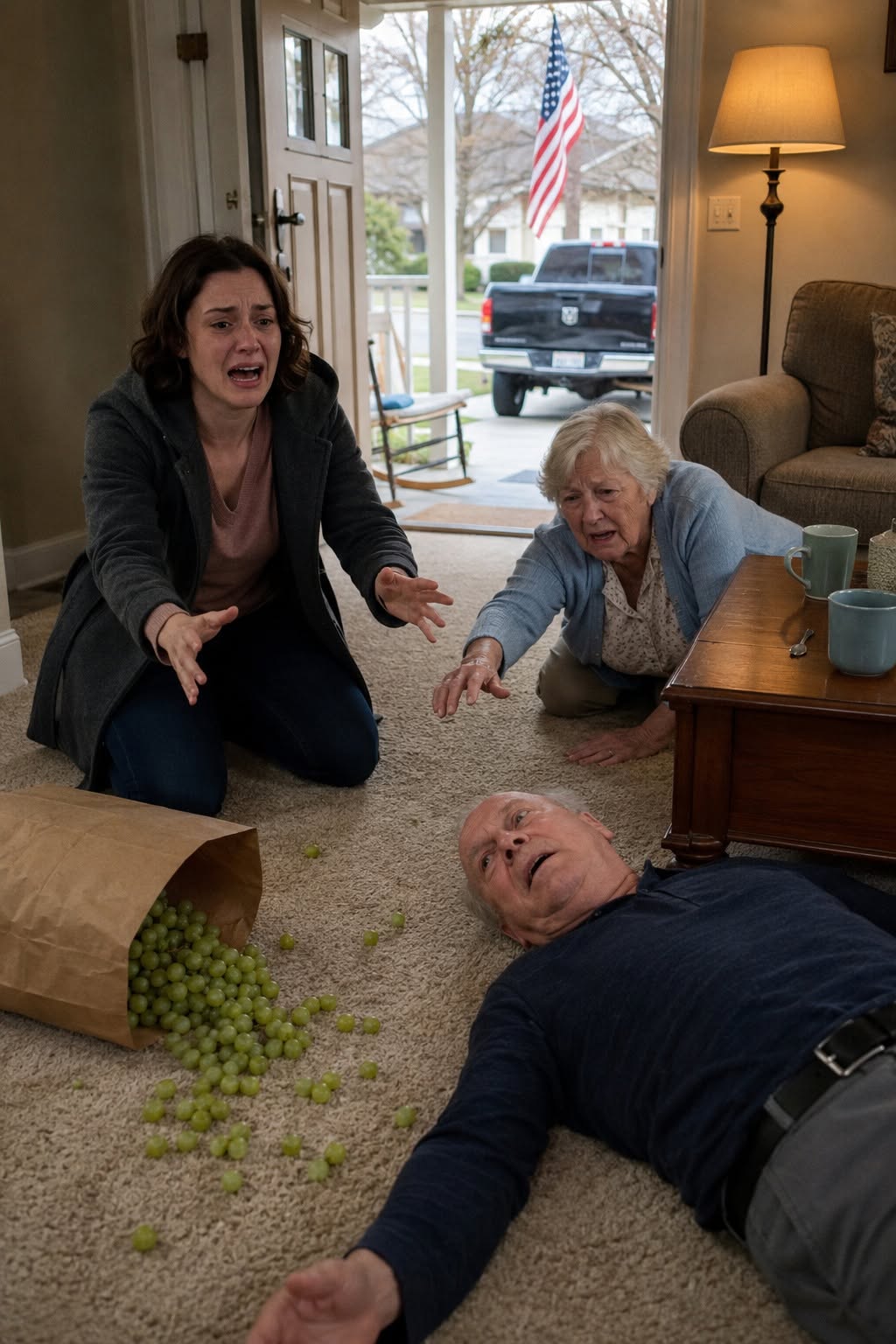
The grapes falling from the grocery bag.
My mother on the floor.
My father’s glasses crooked on his face.
I did not look at Kara.
Not once.
Then the prosecutor asked about the phone call.
The recording played.
Kara’s voice filled the courtroom.
Did they wake up?
Both of them?
If Mom wakes up, call me before you tell the police.
By the time it ended, one juror was wiping her eyes.
Kara stared at the table.
For the first time, she looked trapped.
Not sorry.
Trapped.
There is a difference.
The defense called a psychologist who said Kara had deep feelings of abandonment and resentment. He used long words. Clinical words. Words that made cruelty sound like weather.
The prosecutor stood on cross-examination and asked one question.
“Doctor, can a person feel abandoned and still know it is wrong to poison their parents?”
The psychologist hesitated.
“Yes.”
That was the trial.
That was the whole ugly truth stripped to bone.
Kara knew.
The jury deliberated for six hours.
We waited in a private room with bad coffee and plastic chairs. My mother held a rosary even though she had not been to church regularly in years. My father stared at the wall. Michael kept one hand on my knee.
When the bailiff called us back, I felt nothing.
No hope.
No fear.
Just a strange emptiness.
The foreperson stood.
Count one: guilty.
My mother closed her eyes.
Count two: guilty.
My father bowed his head.
Count three: guilty.
Michael’s hand tightened around mine.
Guilty.
Guilty.
Guilty.
Forgery.
Identity theft.
Evidence tampering.
All guilty.
Kara made a sound then.
Not a sob.
A gasp of outrage.
As if the verdict were an insult.
As if consequences had ambushed her.
At sentencing, she finally spoke.
She stood in an orange jumpsuit with her hair pulled back and read from a paper.
She said she was broken.
She said she was ignored.
She said our parents had favored me.
She said money had ruined the family.
She said she never meant for them to suffer.
Then she turned toward me.
“And Emily,” she said, “I hope one day you understand what it feels like to be unloved.”
My mother stood.
The whole courtroom shifted.
She was still weak, still fragile in some ways, but in that moment she looked taller than anyone.
The judge allowed her to speak.
My mother walked slowly to the podium. My father moved as if to help, but she lifted one hand.
She wanted to stand alone.
She faced Kara.
“No,” my mother said.
One word.
Clear.
Final.
“You were loved. You were loved when you lied. You were loved when you stole. You were loved when you screamed. You were loved when you came home after ruining every bridge and asked us to build another one. You were loved so much that we confused love with surrender.”
Kara’s face twisted.
My mother continued.
“But being loved does not mean being obeyed. Being loved does not mean being funded. Being loved does not mean being allowed to destroy everyone who refuses to disappear for you.”
Her voice trembled, but it did not break.
“You were not unloved, Kara. You were unchallenged. And we are done paying for the difference.”
The courtroom was silent.
My father cried.
I cried.
Even the judge looked down for a moment before speaking.
Kara was sentenced to decades in prison.
Not forever.
But long enough that my parents would live the rest of their lives without fearing her footsteps on the porch.
Long enough that Ryan could rebuild.
Long enough that I could stop waking at 3:00 a.m. hearing my phone ring.
When deputies led Kara away, she looked back once.
Not at our parents.
At me.
For years, that look would have hooked into my guilt and pulled me toward her.
This time, it found nothing to hold.
I watched her go.
And I let her.
One year later, we gathered at my parents’ house for Sunday dinner.
The same house.
The same porch.
The same living room.
But brighter somehow.
Michael had installed new cameras, new locks, and motion lights bright enough to make the driveway look like a baseball field. My father complained about them every week and bragged about them to neighbors every chance he got.
My mother cooked chicken soup again.
The first time she made it after the attack, she cried into the broth.
This time, she hummed.
Ryan came too.
Not as family exactly.
Not yet.
But as someone who had survived the same storm from a different room. He brought flowers for my mother and a ridiculous expensive butter for my father.
Dad held it up and squinted.
“Waste of money,” he said.
Then he put it in the center of the table like a trophy.
We laughed.
Real laughter.
Not careful.
Not guilty.
Not the kind that checks the room first.
After dinner, my mother handed me a container of soup.
Warm.
Heavy.
Familiar.
“Don’t argue,” she said.
For a second, time folded.
I was back on the porch.
She was handing me soup.
Dad was waving in his baseball cap.
I had no idea what was coming.
My throat tightened.
Mom saw it.
She placed her hand over mine.
“We’re still here,” she said.
Three words.
Small words.
The kind people say when they don’t know they are giving you a life raft.
I nodded.
Dad came up behind her and cleared his throat.
“And tell Michael not to eat all that fancy butter.”
Michael called from the dining room, “Too late.”
Dad muttered something about betrayal.
Mom laughed.
I looked around the kitchen.
At the soup.
At my husband.
At my parents.
At the table reset for people who had survived what should have ended them.
Kara had tried to turn love into a weapon.
She had tried to make one meal the end of our family.
She had tried to use my guilt as a doorway, my parents’ kindness as bait, and our history as cover.
But she had failed.
Because my father’s old broken doorbell camera had not been broken.
Because Michael had not ignored one tiny memory card.
Because my parents had held on.
Because truth, no matter how buried, still knows how to breathe.
That night, when Michael and I left, my parents stood on the porch together.
My mother wrapped in a cardigan.
My father in his old baseball cap.
The porch light glowed behind them.
For once, I did not feel guilty driving away.
I did not feel like a bad daughter.
I did not feel chased by the fear that love could vanish if I missed one visit, one call, one chance.
I rolled down the window.
“See you Saturday!” I called.
My mother smiled. “Don’t be late.”
My father waved.
Not as if I were leaving for a year.
Just as if I were coming back.
And this time, I knew I would.
The road curved under the quiet evening sky. Michael reached over and took my hand.
“You okay?” he asked.
I looked at the container of soup resting safely at my feet.
Then at the house growing smaller in the side mirror.
Then at the porch where two people who should have died were still standing, still waving, still ours.
“No,” I said honestly.
Then I squeezed his hand.
“But I will be.”
And for the first time since the night the grapes scattered across my parents’ floor, I believed it.