
“My mother testified that I had no income. My tax assessments are also attached. I had absolutely no financial motive to pressure my grandmother. My parents, on the other hand…” I picked up another document. “I request permission to cross-examine Robert Vance again, as his credibility has been undermined.”
Judge Halloway nodded. “Granted. Mr. Vance, back to the witness stand.”
My father trudged back, like a man on his way to his execution.
“Mr. Vance,” I said. “You testified that this lawsuit was about protecting the family inheritance. Correct?”
“Yes,” he muttered. “It’s a matter of principle.”
“Is it also a matter of principle that you owe casinos in places like Bad Homburg or Wiesbaden around two point one million euros?”
“Objection!” Sterling shouted. “Irrelevant!”
“It establishes motive, Your Honor. You claim I needed the money. I am showing here who was actually desperate.”
“Overruled,” the judge said. “Answer the question.” My father swallowed hard.
“I have debts. Everyone has debts.”
“Are your mortgage payments in arrears?”
“I… maybe.”
“And did Grandma Rosa know about these debts?”
“I don’t know.”
“She knew,” I said. “Because I told her after a collection agency called her looking for you.” I took a step closer. “She didn’t leave the fortune to me because I tricked her. She left it to me because she wanted it protected from you. She knew that if you got your hands on it, it would vanish at a roulette table.”
My father glanced around the courtroom and finally let his head hang. “We needed the money,” he whispered. “We’re going to lose the house.”
“So you decided to accuse your own daughter of fraud,” I said. “You called me a liar, a thief, and a failure, just to cover up your own mistakes.” I turned to the judge. “No further questions.”
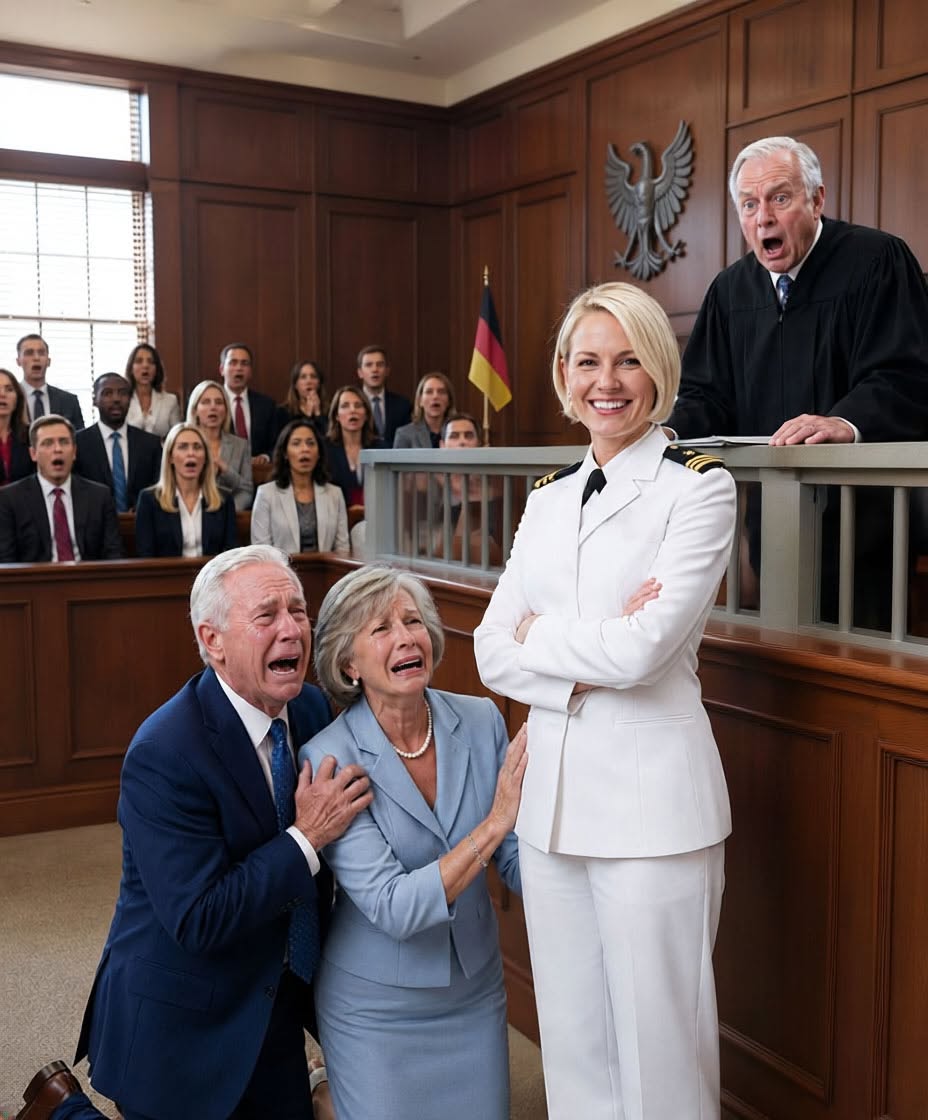
Judge Halloway ruled immediately. “The case is dismissed. The testimony given by Robert and Linda Vance is entirely lacking in credibility and bears the hallmarks of false testimony. Rosa Vance’s will is fully valid.” She brought down her gavel. “The case is dismissed with prejudice. The plaintiffs shall bear all court costs. Furthermore, I am referring the transcript of these proceedings to the public prosecutor’s office for further investigation into suspected false unsworn testimony and attempted fraud.”
My mother cried out. “Elena, stop this! We’re your parents!” She rushed toward me and grabbed my arm. I looked down at her hand and remembered every time that same hand had shoved me away. I remembered the funeral. I remembered every lie she had told just minutes earlier.
I calmly removed her hand from my arm. “I am an officer of the court, Mother. I cannot ignore a crime simply because I am related to the person who committed it.”
“But we’ll lose everything!” she sobbed.
“You lost everything when you decided that money was more important than your daughter.” I turned to my father, who had his head buried in his hands. “You said I didn’t deserve a cent,” I told him. “You were right about that. No one simply deserves an inheritance. But Grandma Rosa gave it to me because she trusted me. Today, I proved she was right.”
I walked toward the exit.
“You’re cold-blooded!” my father shouted after me. “You’ve got ice in your veins!” I paused at the doors and looked back one last time.
“No, Dad. That’s called discipline. You just never cared enough about me to notice.”
Six months later, the grand opening was a simple affair—exactly as Grandma Rosa would have wanted. I stood in the newly renovated wing dedicated to providing free legal advice for veterans in need and their families. The air smelled of fresh paint and hope. A bronze plaque gleamed on the wall: The Rosa Vance Center for Justice.
I kept just enough of the inheritance to pay off my law school loans and buy a small house near the base. The rest—nearly four million euros—went directly into this legal aid center. The foundation would provide free legal counsel to elderly veterans and their spouses who had fallen victim to financial abuse and family fraud. It was justice in its purest form. My parents had tried to steal from an old woman. Now, her money would protect others from people like them.
My phone rang. An unknown number. I already knew who it was. My parents had lost their house three months earlier. My father had avoided prison only by taking a plea deal and accepting a lighter sentence, but his reputation was ruined. My mother was now living with her sister in Bavaria. They would call every week, begging for money, asking for help, asking for “just a small loan.”
I watched a young law student helping a homeless Bundeswehr veteran fill out an application for benefits. The veteran was weeping and thanking her profusely. I glanced at my phone. Then I blocked the number.
My grandmother hadn’t left me the money because I had manipulated her. She left it to me because she knew I was strong enough to do the right thing with it. She knew I wouldn’t squander it on fur coats or gambling. She knew I would turn it into something useful. Something powerful. Something good.
Outside, the afternoon sun was shining brightly. I put on my sunglasses and walked toward the black sedan waiting at the curb. “To the airport, Lieutenant Colonel?” the driver asked.
“Yes,” I said, sliding into the back seat. “I have a flight to catch. To Stuttgart.” A new case awaited me at the command—a fraud ring targeting young soldiers. I was the lead investigator.
As the car merged onto the autobahn, I opened my laptop. The case file was already waiting for me. The courtroom family drama was finally over. The real work—the work that mattered, the work that defined me—was just beginning. I typed in my password and got to work.