I acted professionally.
And professionalism leaves damn little room for manipulation.
Rebecca reached out to me in desperation. “Please, Adrian. We’re family, after all.”
I stared at her in silence.
Funny.
Now, suddenly, family mattered.
Not when I was sleeping behind supermarkets at twelve.
Not when the winters nearly killed me.
Not when I was slaving away on construction sites at fourteen, pretending to be eighteen.
Now.
Because now I held the power.
I looked her straight in the eye.
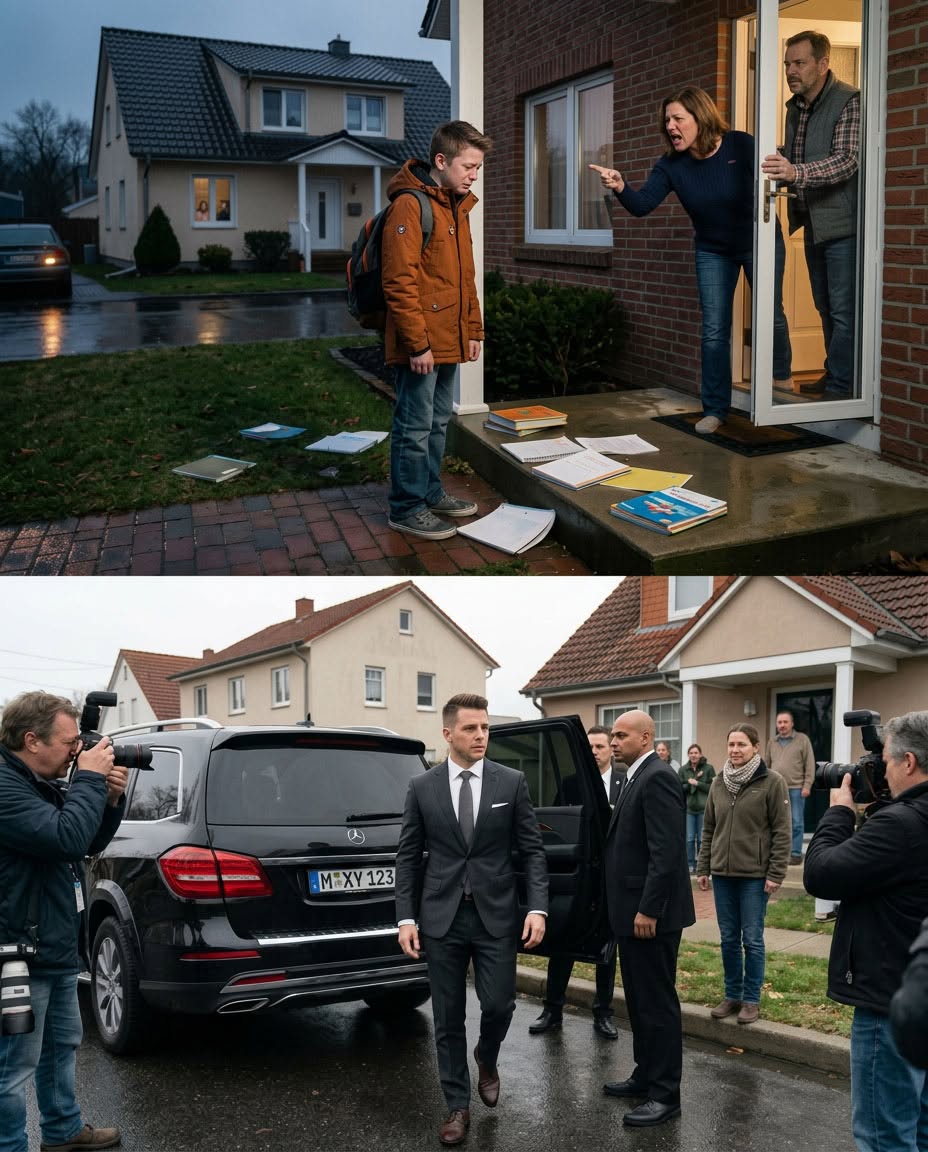
“A family protects children,” I said quietly. “Yours abandoned one.”
And for the first time in our lives…
No one in my family had an answer ready.
Part 3
Rebecca wasn’t arrested.
I had seen to that.
Even with the fraud investigation, the amounts involved were small enough to handle internally through termination and repayment agreements. A few executives questioned my decision in private.
“Why are you letting her go so quietly?” a board member asked.
Because punishment and revenge aren’t the same thing.
And honestly?
My family was already bearing a punishment that weighed far heavier than a public scandal.
They had to live with the knowledge that the child they had thrown away had survived without them.
That truth haunted them more deeply than prison ever could have.
After the confrontation outside headquarters, my parents kept trying to reach me. Calls. Emails. Letters. My mother even waited near the building twice, hoping to speak “in private.”
For weeks, I ignored it all.
But one evening, I finally agreed to meet them at a small roadside diner outside the city.
Not because I missed them.
But because I wanted answers.
My father looked older than I remembered. Smaller, too. Age and regret had finally caught up with him.
My mother started crying before anyone had even said a word.
“Adrian… we made mistakes.”
Mistakes.
An interesting word for abandoning a child.
I sat there in silence.
Then I asked the question that had lived inside me for sixteen years.
“Did either of you ever look for me?”
The silence that followed shattered the last shred of illusion.
My mother buried her face in her hands.
My father stared down at the table.
That answer hurt more than the homelessness I’d endured back then.
Because children can survive hunger, cold, and exhaustion.
But surviving the realization that your parents simply… stopped caring?
That kind of damage runs deeper.
Finally, my father whispered, “We thought you’d come back once you’d learned your lesson.”
I almost laughed.
“You threw a twelve-year-old out on the street.”
He couldn’t even look at me.
My mother sobbed softly. “We were completely overwhelmed financially… Rebecca needed help with school…”
There it was again.
Rebecca.
Always Rebecca.
The protected child.
The chosen child.
The child worth saving.
I, on the other hand, became expendable the moment I started struggling.
I leaned back slowly. “Do you know what saved my life?”
Neither of them answered.
“A homeless veteran named Markus,” I said quietly. “He found me sleeping outside a supermarket in the winter and taught me how to survive safely.”
My mother wept even harder.
“Not you,” I continued softly. “A stranger.”
That sentence completely shook them both, because deep down, they grasped a terrible truth:
Other people had shown their son more humanity than they had themselves.
Months later, Rebecca sent me a handwritten letter in which she offered a sincere apology—the first of her life. No excuses. No manipulation. Just the truth.
Unlike our parents, she finally admitted something important:
“You suffered because everyone treated me like the child worth protecting.”
That openness slowly changed things between us.
Not immediately.
But noticeably.
And as for me?
Using a portion of the profits from NexusLoop, I established a foundation to provide scholarships and housing for homeless youth across Germany. Every child accepted into the program received tutoring, therapy, and support in emergency housing.
Because no child should have to earn the right to be protected.
At the opening ceremony, reporters asked me why homeless youth meant so much to me.
I looked calmly out at the crowd before answering.
“Because the most dangerous lie adults tell children,” I said quietly, “is that having problems makes them worthless.”
And somewhere in the audience…
I saw my parents weeping in silence.
But by then, I no longer needed their remorse to heal.