
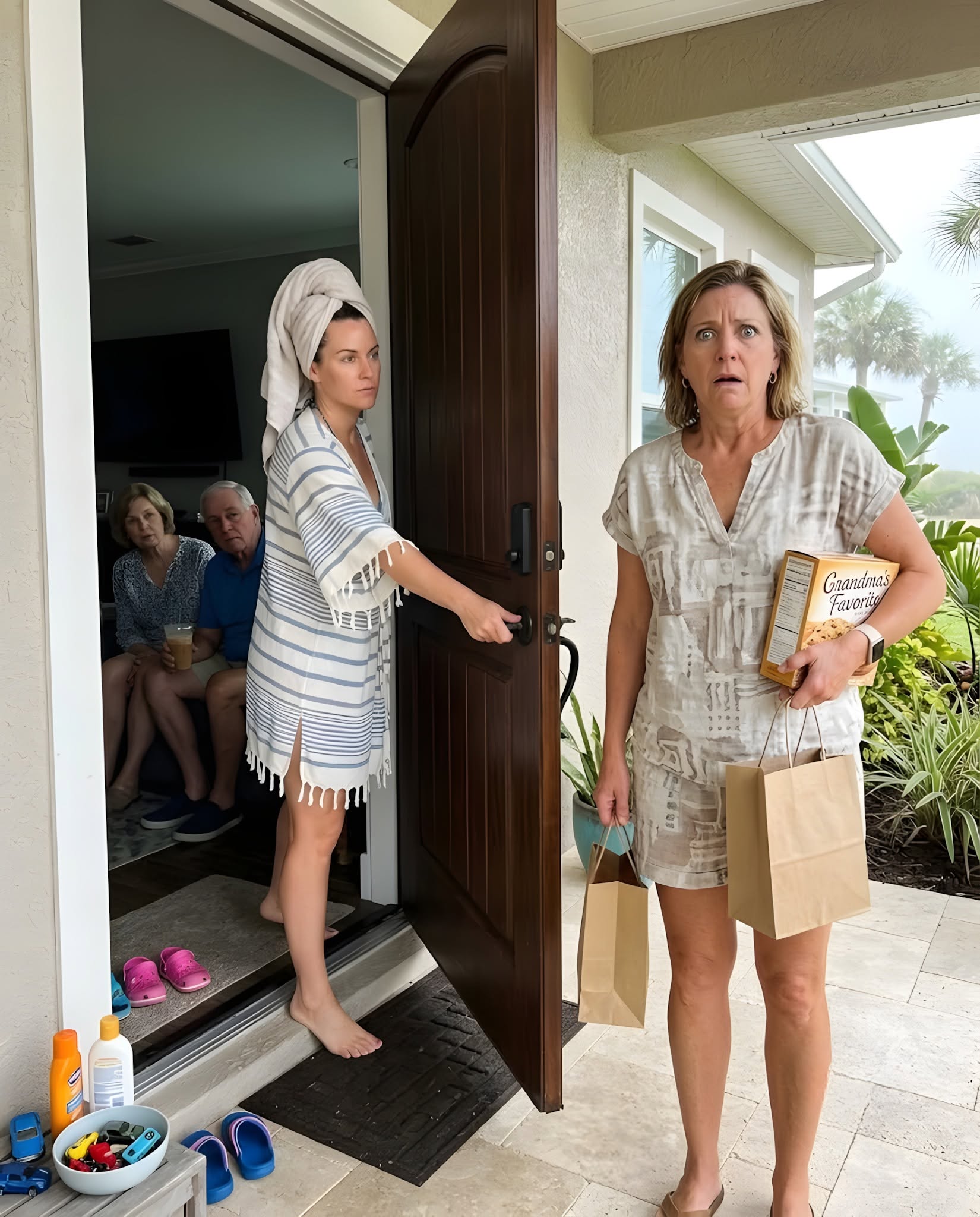
The apartment door opened before I could knock a second time, and there stood Oliver with a tired smile that did not match the life he was trying to hide from me. Behind him was a cramped place far from the beach house I had bought so he could focus on school. The room was small, the walls were worn, and his textbooks sat wherever there was space because there was barely room for a desk.
I had spent the drive there trying to prepare myself for answers. I expected anger. I expected confusion. I expected him to tell me there had been some misunderstanding.
I did not expect to see my son looking like he had been carrying a burden alone for weeks.
“Hey, Mom,” he said quietly.
That was the first thing that broke me. He was trying to act normal.
I stepped inside and looked around. A few students shared the apartment. There were basic dishes on the counter, a laundry basket near the wall, and a stack of college books on the floor. Nothing about the place looked like the future I had imagined when I bought him the beach house.
I had pictured Oliver walking out the door with his backpack, coming home after classes, making coffee in the kitchen, and having a safe place to land while he figured out adulthood.
Instead, he had been starting over somewhere else and saying nothing.
“Why are you living here?” I asked.
Oliver looked down.
For a moment, he seemed younger than eighteen. Not like a child, but like someone who had spent too much time trying to solve a problem nobody should have left him to solve alone.
He finally told me what happened.
Lindsay had needed somewhere to stay after separating from her husband. According to Oliver, the family said the beach house made more sense for her and her two boys. They told him it would only be temporary.
Temporary became longer.
Longer became uncomfortable.
Then uncomfortable became impossible.
The house that was supposed to be his safe place slowly stopped feeling like his home.
What hurt most was not just that he lost the room. It was that everyone around him acted like it was normal.
When Oliver tried to explain what was happening, he did not feel like anyone wanted to hear him. He said he did not want to bother me because he knew I had worked hard to give him that opportunity. He thought handling it alone was somehow protecting me.
That was the part I struggled to understand.
My son had spent weeks believing his problems were something he needed to hide from his own mother.
I thought about the calls we had shared. Every other day, I heard his voice. Sometimes it was only a quick conversation between classes. Sometimes he complained about cold lecture halls or joked about the socks I kept sending him.