
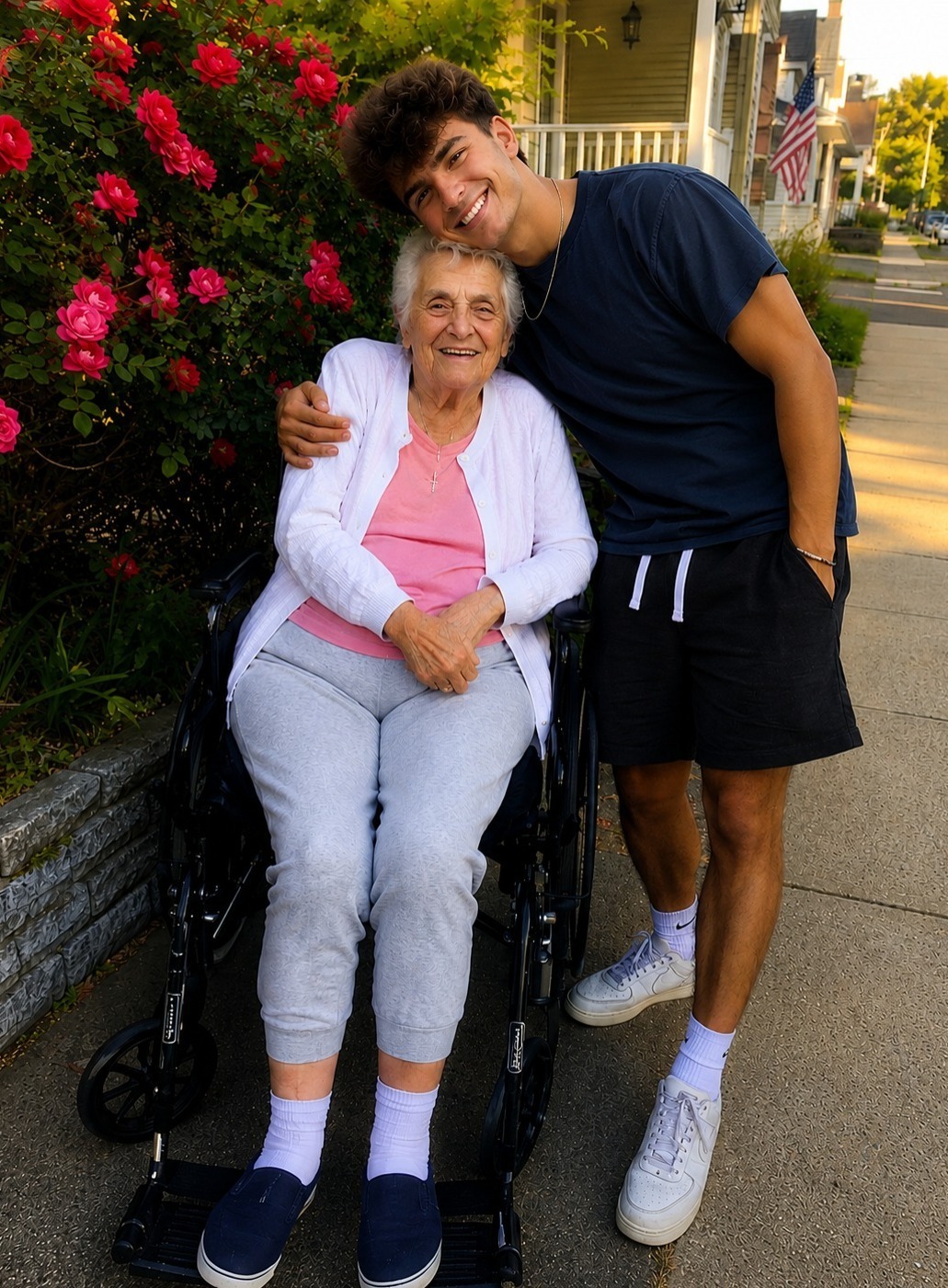
Sometimes hope appears just when you’ve given up looking for it. James had believed his whole life that people only stay for a limited time. But when his elderly neighbor made him an unusual offer, everything slowly changed. What began as simple help blossomed into a connection that shaped them both more profoundly than either of them had anticipated.
I sat across from Mrs. Rhode’s niece in a lawyer’s office. Every few seconds, she glanced at me as if I were someone she’d rather ignore.
The lawyer cleared his throat, opened a folder, and began reading aloud in a calm voice.
“The house on Willow Street goes to Saint Matthew’s Outreach Charity.”
I blinked in surprise.
“Excuse me?”
He didn’t look up.
“The personal savings will be divided between St. Matthew’s Church and several charities. The jewelry collection will go to her niece.”
I kept waiting to hear my name called.
Mrs. Rhode had promised me that one day I would get everything.
The lawyer turned a page and finally closed the folder.
“That concludes the reading.”
I stared at him.
“That’s it? But she told me something different…” A knot suddenly tightened in my chest.
Had Mrs. Rhode been stringing me along all this time?
I got up and left the office before anyone could see how close I was to tears.
When I arrived at my small rented apartment later, I felt completely empty.
I closed the door behind me and collapsed onto the bed, shoes still on.
First, there was disappointment.
Then shame.
Then that familiar feeling of having once again understood too late what was really going on.
But beneath it all lay something much heavier.
Sadness.
Because at some point, I had begun to believe that I really meant something to Mrs. Rhode.
I had grown up in foster care. Perhaps I should have been more careful.
My mother disappeared from my life shortly after my birth, and my father was never really there.
I learned early on that people can say a lot of things without meaning them.
I learned to keep my things within easy reach and to have no expectations.
When I was old enough, I stood there with two garbage bags full of clothes and no real plan.
I ended up in this city because the rents were cheap and nobody asked many questions.
Maybe I should have known better.
I took various grueling jobs just to make ends meet.
Then I got a job at Joe’s Diner.
And surprisingly, I liked the place right away.
Joe hired me because, in the middle of the breakfast rush, a waitress had suddenly left, and I happened to ask if they needed help.
He gave me a quick once-over.
“Can you carry three plates at once?”
“Not yet.”
He shrugged.
“Then you have ten minutes to learn.”
That was Joe. Direct, loud, and constantly stressed, but also one of the most honest people I’d ever met.
After long shifts, he’d often hand me a burger.
“Eat something before you collapse.”
Sometimes I stayed after work and helped with the cleaning while Joe complained about delivery drivers, broken appliances, or complicated breakfast orders.
Mrs. Rhode arrived promptly at eight o’clock every Tuesday and Thursday morning.
The first time I served her, she studied my name tag.
“James,” she said.
“You look like you could fall asleep right in my waffles.”
“Long week.”
She snorted softly.
“Try being eighty-five.”
That’s how it all started.
After that, she always asked about me.
“Do you ever smile?”
“Sometimes.”
“I doubt it.”
Another morning, she looked at my hair.
“It looks more messy every time.”
“Good morning to you, too.”
“That’s better,” she murmured.
“At least you sound half awake today.”
She was difficult in a particular way that, over time, became almost familiar.
Not particularly warm, but attentive.
And attentive sometimes meant more than friendliness.
One afternoon, she called me over her garden fence.
“Do you live around here, James?”
“A few houses down.”
She nodded slowly.
“Would you like to earn some extra money?”
I stopped.
“What’s it about?”
She opened the front door.
“Come in. I’ll explain it to you over a cup of tea.”
Inside, she poured me some tea, which, to be honest, tasted rather strange.
Then she got straight to the point.
“My health is deteriorating,” she said calmly.
I almost choked.
“Don’t look at me like that. I’m eighty-five. I need help with shopping, transportation, medication, and small things around the house.”
“And for that?”
She looked at me for a long time.
“When I’m no longer here one day, everything will be yours.”
I stared at her.
“You’re serious?”
“I know enough about you.”
It sounded crazy.
It probably was.
But I needed the money, and part of me wanted to believe her.
So I offered her my hand.
“Deal.”
At first, it was exactly as she had described it.
I drove her to appointments, did the grocery shopping, sorted medications, and did small repairs.
I fixed hinges, changed lightbulbs, and took out the trash.
And all the while, she complained about everything.
“You’re late.”
“Four minutes.”
“Still late.”
I often told her she was impossible.
Then she’d reply,
“And yet you still come back.”
Over time, something changed between us.
Slowly.
Almost imperceptibly.
She started inviting me to dinner.
Her cooking was, frankly, terrible.
Once, her meatloaf was so dry I needed several glasses of water.
“That’s really awful,” I said.
She pointed her fork at me.
“Then don’t eat anything.”
In the evenings, we sometimes watched quiz shows together.
She would yell at the contestants loudly, as if they could hear her.
And at some point, I started telling her things I never told anyone else.
About the foster families.
About the feeling of never truly belonging anywhere.
About never planning beyond the next rent payment.
One evening, she turned the TV down.
“All you ever think about is survival, James.”
I shrugged.
“Maybe someday I’d like to take on more responsibility at the diner.”
“Well, at least there’s that,” she said.
In the winter, she gave me green knitted socks.
They were, frankly, terribly ugly.
“I made them myself,” she said proudly.
“To keep your feet warm.”
At the diner, Joe eventually noticed that I disappeared immediately after every shift.
“Do you have a girlfriend now?”
“No. I’m helping Mrs. Rhode.”
Joe almost laughed the coffee pot out of his hand.
“That old lady?”
I explained our arrangement to him.
Finally, he nodded slowly.
“Well. She really does like you, it seems.”
I pretended not to care.
But I thought about it all day.
Maybe this is what family felt like.
Then came that morning.
I had been caring for her for a little over a year.
When she didn’t answer the door, I used the spare key.
The television was still on.
A cup of tea sat cold beside her armchair.
And Mrs. Rhode sat there, motionless.
Even before I approached, I knew something was wrong.
Nevertheless, I called her name.
I touched her hand and pulled my fingers back in shock.
I immediately called for help and then sank to my knees beside her armchair.
For the first time in years, I wept uncontrollably.
The days that followed blurred together.
The memorial service.
The crowds of people.
The feeling of not knowing where I belonged.
Then the reading of the will.
The disappointment.
And the thought that Mrs. Rhode might never have really taken me seriously.
The next morning, someone knocked loudly on my door.
It was the lawyer.
He was holding an old metal box.
“Mrs. Rhode left something for you.”
I took the box, puzzled.
Inside was an envelope with my name on it and a simple key.
My hands were already trembling before I even opened the letter.
James,
you’re probably disappointed that you didn’t get anything yesterday. But believe me—what I’ve prepared is more important than money.
At first, you probably only helped me because of our agreement.
But eventually, you became the son I found so late in life.
I suddenly felt dizzy.
She really did care about me.
Tap the photo to view the full article