
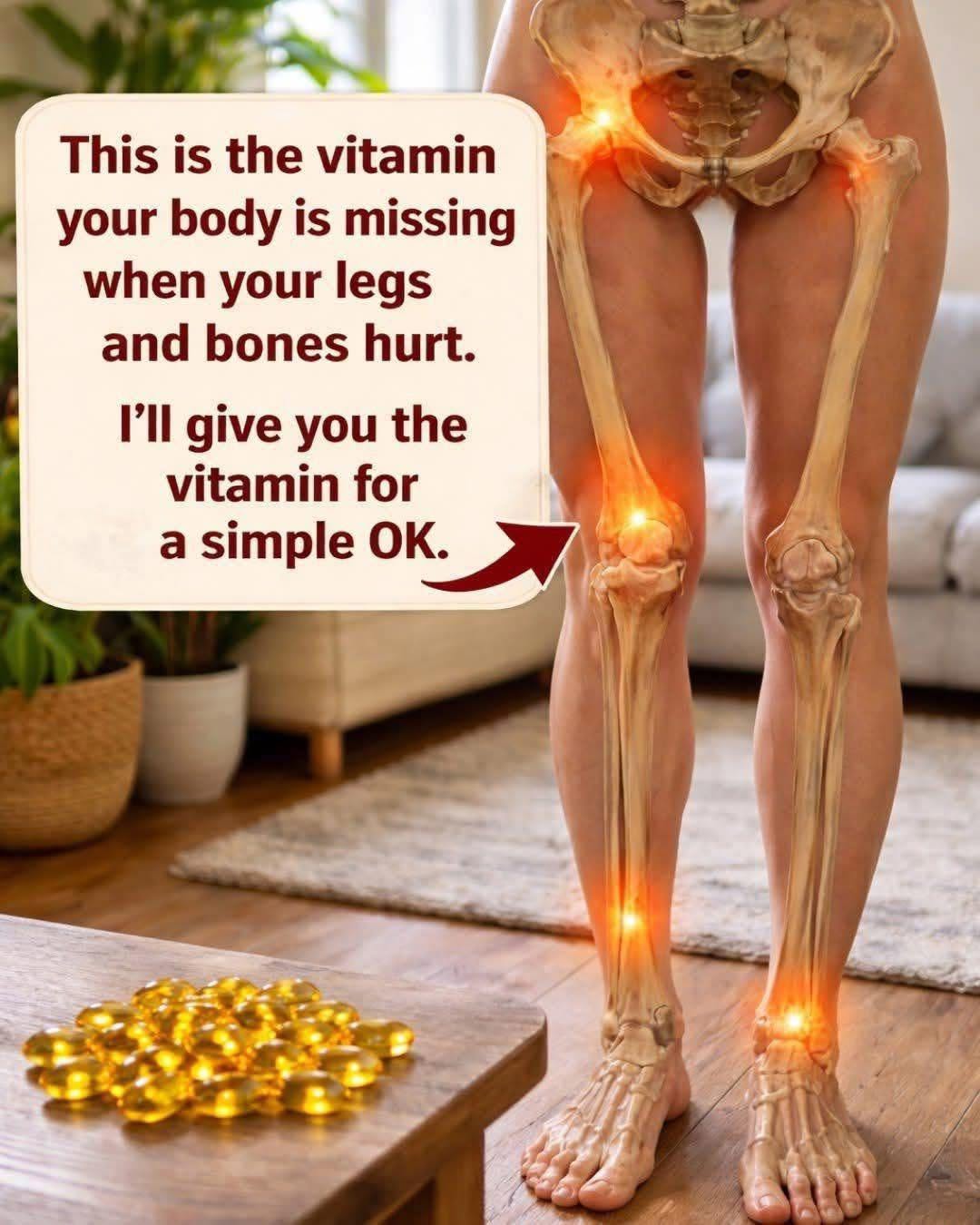
Many people assume that aching legs, sore bones, or muscle discomfort are simply part of getting older or the result of a busy lifestyle. While fatigue and physical activity can certainly contribute, persistent pain may sometimes signal an underlying nutritional deficiency.
One nutrient that often receives attention in discussions about bone health is vitamin D. This essential vitamin plays a major role in helping the body absorb calcium, maintain strong bones, and support normal muscle function.
Why Vitamin D Matters
Vitamin D is often referred to as the “sunshine vitamin” because the body can produce it when the skin is exposed to sunlight.
Its primary functions include:
- Supporting calcium absorption
- Helping maintain healthy bones
- Contributing to normal muscle function
- Supporting overall health and wellness
Without adequate vitamin D, the body may struggle to use calcium efficiently, which can affect bone health over time.
Signs That May Be Associated with Low Vitamin D
People with low vitamin D levels sometimes report symptoms such as:
- Bone discomfort
- Muscle weakness
- Tired or heavy-feeling legs
- Frequent muscle cramps
- General fatigue
- Reduced physical strength
In some cases, discomfort may become more noticeable after standing, walking, or engaging in physical activity for extended periods.
However, these symptoms can also be linked to many other health conditions, which is why proper medical evaluation is important.
Common Reasons for Vitamin D Deficiency
Limited Sun Exposure
Spending most of the day indoors can reduce the body’s ability to produce vitamin D naturally.
Factors that may affect vitamin D production include:
- Indoor lifestyles
- Seasonal changes
- Living in areas with limited sunlight
- Consistent use of sun protection
- Air pollution
Dietary Factors
Although some foods contain vitamin D, it is naturally present in relatively few foods.
Vitamins & Supplements
Sources include:
- Salmon
- Sardines
- Mackerel
- Egg yolks
- Fortified dairy products
- Fortified cereals
- Certain mushrooms
Even with a balanced diet, some individuals may still have difficulty meeting their daily needs.
Aging
As people age, the skin becomes less efficient at producing vitamin D from sunlight. This can increase the risk of deficiency and make bone health a greater concern.
How Vitamin D Supports Bone Health
Vitamin D works closely with calcium and phosphorus to help maintain strong bones.
When vitamin D levels remain low for extended periods, the body may struggle to support normal bone mineralization, which can affect bone strength and overall skeletal health.
Maintaining adequate levels helps support: