Part Three – Our Nine O’Clock Ritual
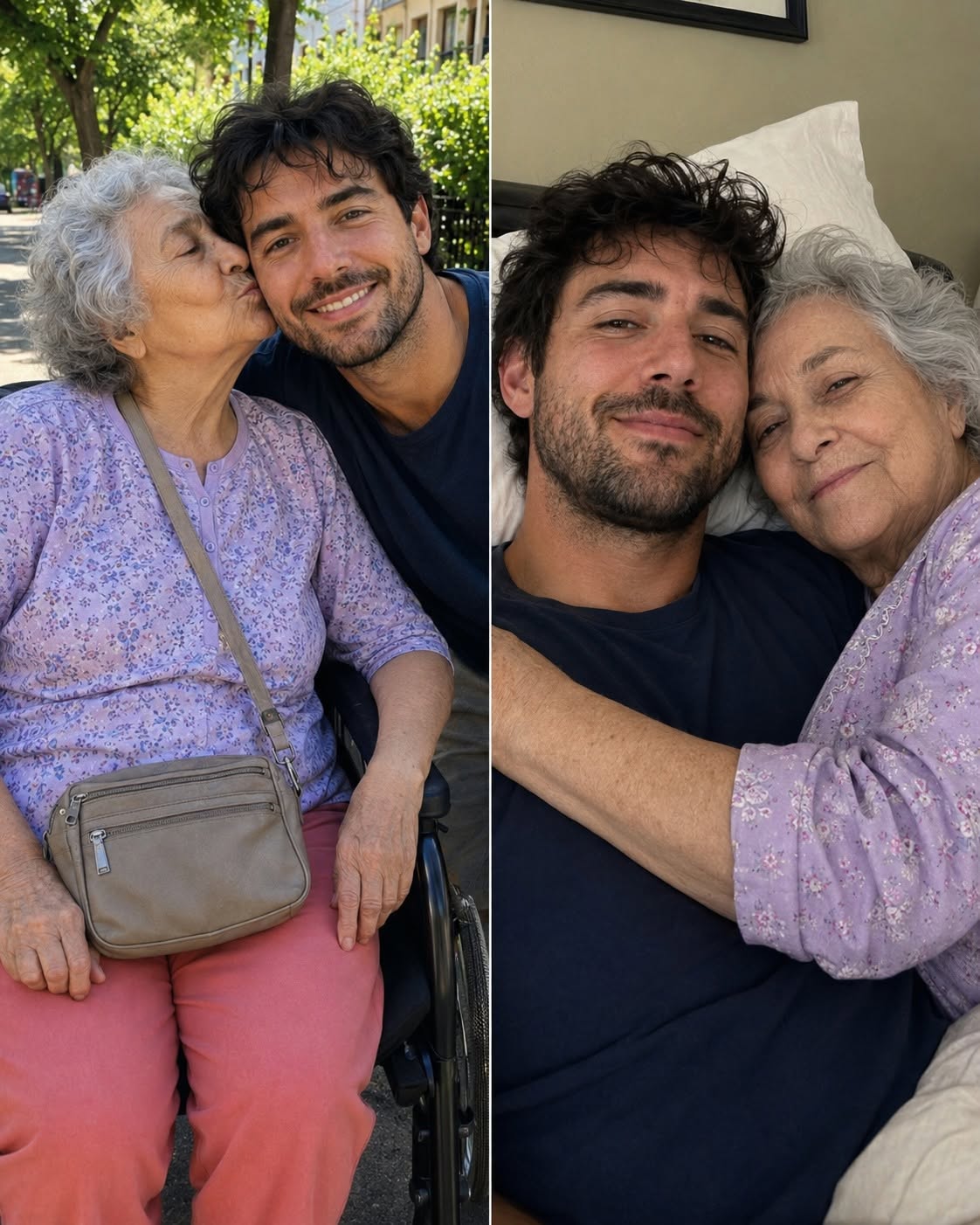
Within days, my silent house learned a different rhythm. The kettle clicked on before dawn. Pill bottles lined the counter in careful order. Clean blankets warmed in the dryer. A wooden chair moved permanently to the side of the spare bed.
Caring for Susan was not noble in the polished way people imagine kindness. It was repetitive, awkward, and exhausting. Some mornings she apologized because I had to help her sit up. Some afternoons she became angry at a body that no longer obeyed her. At night, fear made her breathing shallow, and I would sit nearby until the panic passed.
I learned that true care often looks ordinary: reheated soup, a glass of water within reach, fresh sheets, a hand held in a dark room. It asks for patience more often than courage.
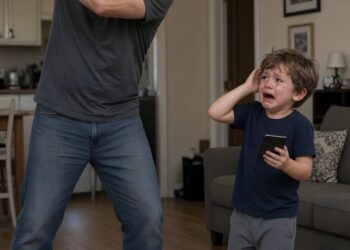
A neighbor eventually found Greg’s number. He arrived with Marcy and their daughter, Laura, already convinced that I had stolen his place beside Susan. He demanded that she return to her own house. Marcy said I had isolated her. Laura, torn between worry and shame, said very little.
The accusations soon acquired official-sounding names: manipulation, elder abuse, emergency guardianship. Greg spoke about lawyers and police. He spoke about Susan’s house often enough that I finally understood what he feared losing.
I did not waste energy defending myself. After every confrontation, I closed the door, checked Susan’s temperature, and made sure her feet were warm. What mattered was not what the street believed. What mattered was the woman in the room down the hall.
There was, however, one part of our days no one knew about.
Every evening at exactly nine, I checked Susan’s medication, lifted the water glass to her hands, and tucked the blanket around her shoulders. Then I drew the wooden chair beside her bed and leaned forward.
The first night, the words escaped before I knew I intended to say them.
“I should have gone home sooner.”
Susan did not ask whom I meant. She simply looked at me and waited.
So I told her about my mother. I admitted that I had heard fatigue in her voice and had chosen the comfort of her reassurance. I described the birthday I missed, the call I delayed, and the flight I nearly booked before allowing Mom to persuade me that the trip was unnecessary.
Susan listened without trying to rescue me from the truth. Her hand was light and nearly weightless, yet when she rested it over mine, the small touch steadied me.
“I was her son,” I whispered one night. “I should have understood what she was hiding.”
Moisture shone in Susan’s eyes, but she did not interrupt. That became our ritual. Nine o’clock arrived, I confessed, and she gave my grief a place to exist without judgment.
Night after night, I offered another memory to the room. The final one was the hardest.
“I think she left this world believing I had outgrown her,” I said. “I am afraid she thought I no longer needed her. I do not know how to forgive myself for letting her feel that way.”
My voice broke. Susan closed both hands around one of mine. Her fingers were weak, but her grip carried a sorrow that felt strangely personal.
I assumed she was crying because she pitied me. I did not yet understand that she had been holding my mother’s answer for years.
Part Four – The Blue Ribbon
The next morning, Greg returned. This time Marcy and Laura were with him, and a uniformed police officer waited at the edge of the walk. Greg carried a folder pressed to his chest like a verdict. Several neighbors appeared on their porches before I had even opened the door.
“This ends today,” Greg announced. “Bring my mother outside.”
“She is resting.”
“You have kept us away long enough,” Laura said, though her voice trembled.
“I never stopped any of you from visiting,” I replied. “You only began coming after you heard she was ill.”
Greg moved closer. He asked whether I truly expected them to believe a stranger had reorganized his life for nothing. His suspicion carried the certainty of someone who could imagine no motive except profit.
For weeks, I had swallowed my anger because Susan needed peace. That morning, it finally surfaced.
“Five years without a visit may not erase a blood relationship,” I said, “but it teaches a lonely woman how little the word family can mean when no one shows up.”
The street fell silent. Laura lowered her eyes. Greg’s jaw tightened, but before he could answer, a fragile voice came from behind me.
“Sam.”
I turned and felt my heart lurch. Susan stood in the hallway, one palm braced against the wall. Her breath came in small, careful pulls. In her other hand was the bundle of envelopes tied with the faded blue ribbon.
“You should be in bed,” I said, moving toward her.
“In a moment.” She looked past me toward her family. “Invite everyone inside. Let the officer come too.”
Greg objected that family matters should remain private. Susan’s tired eyes sharpened.
“You brought my private life onto the street,” she said. “You do not get to demand privacy now.”
No one challenged her again.
Susan lowered herself into the living-room chair. Greg and Marcy sat on the sofa, with Laura at the far end. The officer remained near the front door, explaining that he only needed to confirm Susan was safe and staying with me by choice.
She placed the letters on her lap and asked me to sit beside her. My stomach tightened as she pulled at the ribbon. The knot loosened, revealing envelopes yellowed at the corners.
Then I saw the handwriting.
I knew the slant of every letter. I had seen it on school forms, birthday cards, shopping lists, and little notes once taped to our refrigerator. My chair scraped backward as I stood.
“Where did you get those?”
Susan’s eyes filled with tears.
“Sit down, Sam,” she said. “These were written by your mother.”
The room seemed to contract around me. Greg’s folder slipped from his lap onto the carpet, but I barely heard it. I could only stare at my name written across the top envelope in the hand I had believed I would never see again.

Part Five – My Mother’s Answer
Susan told me that she and my mother had become close friends years before I ever moved into the neighborhood. They had stayed in touch through long phone calls and letters. My mother had spoken often about her children – our choices, our mistakes, and the fierce pride she felt as each of us built an independent life.
When her health worsened, Mom wrote a letter to each of us. She planned to mail them, then stopped. She feared that telling us the full truth would bring us home out of panic and guilt. She did not want obligation to shape our final memories of her.
“She asked me to keep the letters,” Susan explained, “and to give them to you only if the day came when you truly needed her words.”
“Why did you agree?” I asked. My voice sounded far away.
“Because she knew you would blame yourself. I told her the secret might hurt you, but she believed love sometimes means allowing someone to keep living.”
Susan placed the envelope in my hands. The paper trembled between my fingers as I opened it.
My mother had written that she knew I worried about her. She admitted she had hidden the worst days on purpose. She remembered every call I made, every clumsy attempt to persuade her to slow down, and every plan I shared for the future. She had not mistaken my distance for indifference. She had seen it as the life she worked so hard to help me build.
Near the end, one message appeared more than once in different words: if I ever punished myself for not being beside her at the final moment, she wanted me to stop. She had never doubted my love. Not once.
I folded over the letter and wept. The grief did not disappear; it changed shape. For years, I had imagined my mother waiting at a window, wondering why I had not come. Now her own words told me she had left this world carrying certainty, not abandonment.
Susan touched my shoulder.
“She once told me you believed loving someone meant fixing every problem for them,” she said with a small smile. “She worried you would turn something unfixable into a life sentence.”
A laugh broke through my tears. It sounded exactly like the woman who had raised me.
I asked Susan why she had never told me she knew Mom. She said she had recognized me during my first week across the street. Many times she had almost brought over the letters, but I was courteous, busy, and sealed inside myself. I could speak about loss, but I was not yet willing to release guilt.
“And now?” I asked.
Susan squeezed my hand.
“Now you have sat beside my bed every night and told me you failed her. You were finally ready to hear the truth from the only person whose forgiveness you would accept.”
I looked at the envelope again. Susan had not merely stored paper for my mother. She had protected a message until I had the courage to believe it.
Then she turned toward Greg.
“Now you understand why Sam opened his home to me,” she said.
Greg swallowed. He admitted that he thought I wanted the house.
Susan’s expression hardened with a strength her body no longer seemed capable of holding.
“You suspected him because the house was already on your mind,” she replied.
Greg could not meet her eyes.
Part Six – While I Am Still Here
Susan looked at her son, daughter-in-law, and granddaughter. Her disappointment was quiet, which made it heavier than anger.
“Five years,” she said. “For five years there was always a reason no one could visit. Then news of my illness traveled, and suddenly everyone remembered the road to my door.”
Laura began to cry. She admitted that she had postponed one visit because of work, another because of her wedding, and another after moving. Each delay had seemed temporary until the years became a history she could no longer defend.
“I am sorry, Grandma,” she whispered.
“There is always something demanding our attention,” Susan said more gently. “The danger is believing the people we love will remain available until our schedules become convenient.”
She pointed toward me. She told them that when she could no longer stand safely in her own kitchen, I had crossed the street. I had not asked about her bank account, her will, or her house. I had asked whether she had eaten.
She described the appointments, the meals, the nights I stayed awake when fear would not let her sleep. Marcy wiped at her cheek. Greg stared at the closed folder on the floor.
“We did not know,” he said.
“No,” Susan answered. “You did not ask.”
Then she addressed the officer clearly. She said no one had pressured her, taken her money, or prevented her from leaving. She was in my home because she had chosen to be there and because she felt safe.
The officer nodded. Susan had answered every question for herself. There was no crisis to investigate and no rescue she wanted from me.
Greg apologized. I remembered his voice on my porch and the ugliness that had spread through the neighborhood, but anger no longer felt like the most important thing in the room.
“I am not the person who most needs to hear that,” I told him.
He turned to his mother and began a speech. Susan lifted one hand.
“I do not want promises made because everyone is emotional,” she said. “I want my family.”
“What can we do?” Greg asked.
Susan’s eyes moved across all three faces.
“If you have enough time to argue over what happens after I die, then you have enough time to sit beside me while I am still alive.”
No one had an answer because none was needed.
They stayed that afternoon. Greg made tea and burned the first pot. Laura gently washed Susan’s hair, pausing whenever her grandmother tired. Marcy changed the spare-room sheets and asked me to show her how the medications were organized.
Their presence did not erase five empty years. Forgiveness is not amnesia, and regret is not repair. But the work of returning had finally begun.
The officer left after confirming once more that Susan was safe and there willingly. The neighbors drifted back into their homes. By dinner, the street that had been alive with gossip was quiet again.

Part Seven – A Different Kind of Confession
At five minutes to nine, Greg paused near the front door. He said the family would give Susan and me our usual time together. There was no suspicion in his voice now, only humility.
I carried the evening medicine into the bedroom. Susan swallowed it, frowned dramatically, and returned the glass.
“Still terrible,” she said.
“You make that announcement every night.”
“Then perhaps someone should improve it.”
I laughed and moved the wooden chair beside her bed. My mother’s letter rested in my pocket, warm from being handled all day.
Susan studied me expectantly.
“Well? What are you confessing tonight?”
“I do not know,” I admitted. “For once, I cannot find the accusation I want to make against myself.”
“That sounds promising.”
I asked whether the letters were the reason she had finally agreed to come stay with me. She said they were part of it. When I asked about the rest, her faint smile disappeared.
“I was frightened,” she said. “I did not want my final days to be spent listening to an empty house.”
The honesty hurt. I took her hand and told her she was not alone.
From the kitchen came the quiet clatter of containers. Greg and Marcy had returned with food for the following day, and Laura was writing down the schedule for her next visit. Susan heard them too. Relief softened the lines around her mouth.
“Your mother believed people sometimes need another chance before they understand what the first one was worth,” she said.
I touched the letter in my pocket and wished aloud that I could thank Mom.
Susan nodded toward my hand.
“You can honor her by ending the punishment,” she said. “Be kinder to the son she loved.”
My eyes filled, but this time I did not turn away. For years, I had believed my mother died waiting for proof that I cared. Now I understood that she had died knowing. Through Susan, she had placed that truth in my hands when I was finally able to hold it.
I could not return to the past and sit beside my mother. I could not answer the postponed call or take the flight I had canceled. But I could remain beside Susan. I could keep her warm, listen when she was afraid, and make sure the people who loved her did not waste the time still available to them.
The next evening, nine o’clock came again. I checked the medicine, adjusted the blanket, and took my familiar place in the wooden chair. Yet the room felt different. It no longer seemed like a courtroom in which I prosecuted myself. It felt like a place where two lonely people had helped each other come home.
I leaned close to Susan and spoke the one sentence grief had kept from me for years.
“My mother knew I loved her.”
Susan’s fingers tightened around mine. Her eyes shone, and the smallest smile touched her face.
“Yes, Sam,” she whispered. “She never doubted it.”
Outside the room, Susan’s family had gone quiet. They had heard her answer, and when I stepped into the hallway, all three of them were weeping.
Not because the past had been repaired, but because, for the first time, none of us was running from it. In that small house, across the street from years of silence, we had been given something rarer than a perfect ending: enough truth, enough love, and enough time to begin again.
Note: This story is a work of fiction inspired by real events. Names, characters, and details have been altered. Any resemblance is coincidental. The author and publisher disclaim accuracy, liability, and responsibility for interpretations or reliance. All images are for illustration purposes only.