Ingredients
This recipe creates a beautifully rustic, no‑knead loaf that develops a crispy, golden crust and a chewy interior packed with melted cheese. The ingredients are simple and easy to find:
· 3 cups bread flour (all‑purpose flour works as a softer substitute)
· 2 tsp instant yeast (active dry yeast can be used after proofing)
· 1½ tsp kosher salt
· 1½ cups very warm water (~120°F / 50°C)
· 2½ cups freshly shredded Colby Jack cheese (or any meltable cheese like cheddar, mozzarella, or gouda)
Why fresh shredding matters: Pre‑shredded cheese often contains anti‑caking agents that hinder smooth melting, so grating your own ensures that gooey, luscious texture throughout the bread.
Instructions & Methods
This no‑knead method is wonderfully hands‑off—perfect for both beginners and experienced bakers.
Step 1 – Mix the dough
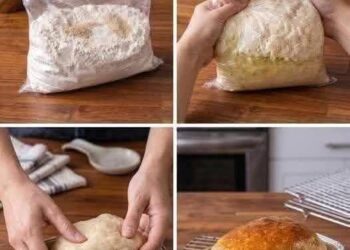
In a large bowl, whisk together the flour, yeast and salt. Stir in the warm water until a sticky, shaggy dough forms. Fold in the shredded cheese gently, then cover the bowl and let the dough rise at room temperature for 1.5 to 2 hours, until it has doubled in size.
Step 2 – Preheat the oven
About 30 minutes before the dough is finished rising, place a Dutch oven (with its lid on) inside your oven and preheat to 450°F (230°C). The Dutch oven creates a steamy environment that mimics a professional bread oven, giving the loaf a superb crispy crust.
Step 3 – Shape the loaf
Once the dough has risen, scrape it onto a floured piece of parchment paper. Gently shape it into a rough ball—don’t worry about perfection; rustic is best.
Step 4 – Bake
Carefully lift the dough on the parchment paper and place it into the hot Dutch oven. Cover and bake for 30 minutes. Then, remove the lid and bake for an additional 10‑15 minutes, until the bread is deep golden and sounds hollow when tapped.
Step 5 – Cool and serve
Remove the bread and let it cool on a rack for 15‑20 minutes before slicing. This resting period allows the cheese to set slightly, preventing a gooey mess and ensuring clean, beautiful slices.
Storage tip: Wrap leftover bread tightly and store at room temperature for up to 2 days. For longer storage, freeze slices in an airtight container and reheat by toasting or warming in the oven.
History
The story of cheese bread is as rich and layered as the bread itself. The earliest cheese breads emerged independently in several ancient civilizations—Romans, Greeks and Middle Eastern cultures all incorporated cheese into their flatbreads as a savory filling or topping.
Perhaps the most fascinating origin story belongs to Brazil’s pão de queijo. Its genesis begins in the south‑eastern state of Minas Gerais, where the indigenous Guarani people had been using cassava flour long before Portuguese colonists arrived in the 1500s. When slavery was introduced, enslaved Africans began making small bread rolls from inexpensive cassava flour. By the late 1800s, after the abolition of slavery, cheese and eggs were added to those rolls, and pão de queijo as we know it was born. The recipe is thought to have been developed around 1750, when farms in Minas Gerais started producing milk and dairy; leftover, hardened cheeses were used in the dough.
In Italy, meanwhile, nuns at the Convent of Santa Maria Maddalena in Ancona invented a cheese bread for Easter during the Middle Ages. The Neapolitan casatiello (whose name derives from the Neapolitan word for cheese) has been attested since the 17th century and remains a beloved Easter staple.
From these humble and sometimes sorrowful beginnings, cheese bread grew into a global phenomenon, carried by immigrants, adapted by home cooks, and now celebrated in countless forms across continents.
Benefits
Cheese bread offers a surprising range of benefits, particularly when made with wholesome ingredients
Nutritional perks: The cheese provides a good source of protein, essential for muscle repair and growth, as well as calcium, which supports strong bones and teeth. For those with celiac disease or gluten intolerance, traditional Brazilian pão de queijo made with cassava (tapioca) flour is naturally gluten‑free.
Glycemic advantage: Studies have shown that adding curd cheese to gluten‑free bread can reduce the glycemic response by around 35%, resulting in an intermediate glycemic index (GI 55‑69)—a promising strategy for managing blood sugar levels, especially for celiac patients and individuals with irritable bowel syndrome.
Energy boost: The calorie‑dense nature of cheese bread provides a quick source of energy, making it a popular choice for breakfast or as a pre‑exercise snack.
Moderation is key: As with any indulgent food, it’s wise to enjoy cheese bread in moderation. Commercial versions can be high in saturated fat and sodium. To make a healthier version, consider using low‑fat cheese, reducing portion sizes, or pairing the bread with fresh vegetables to increase fiber and essential nutrients.
Formation – The Science Behind the Perfect Loaf
The “formation” of cheese bread is a delightful interplay of chemistry and technique. In a yeast‑based loaf like our no‑knead recipe, the instant yeast consumes the sugars in the flour and releases carbon dioxide gas. That gas becomes trapped by the gluten network (formed when flour proteins absorb water), causing the dough to rise and creating the bread’s airy crumb structure.
When the dough enters the hot Dutch oven, several things happen simultaneously:
The intense steam trapped by the lid gelatinizes the starches on the dough’s surface, which later hardens into that satisfying crispy, crackly crust.
· The cheese melts and its fats coat the surrounding dough, creating pockets of gooey richness and contributing to the bread’s tender interior.
· The Maillard reaction—a chemical reaction between amino acids and reducing sugars—produces the deep golden‑brown color and complex, nutty aromas we associate with well‑baked bread.
If you’re making a gluten‑free version with cassava flour, the process differs: cassava starch does not form gluten, so the dough relies on eggs and cheese for structure. The result is a chewy, puffy texture that is uniquely satisfying.
Nutrition
The nutritional profile of cheese bread varies considerably depending on the recipe and ingredients used. Here is a general guide:
Component Per 100g (General Cheese Bread) Per Serving (Brazilian Pão de Queijo)
Calories 273 kcal 91 kcal
Protein 8.5 g 1.2 g
Carbohydrates 48.1 g 10.5 g
Fat 4.8 g 5.2 g
Saturated Fat 1.7 g 1.0 g
Sodium 678 mg 160 mg
Calcium ~471 mg (varies) ~146 mg
Sources: General cheese bread values are from the USDA nutrition database; Brazilian pão de queijo values are based on a typical homemade serving. Pandebono, a Colombian cheese bread, contains approximately 257‑321 kcal per 100g depending on the recipe.
Note: These values are approximations. Actual nutrition can differ based on specific ingredients, portion sizes, and preparation methods.
Lovers – Why Cheese Bread Has a Place in So Many Hearts
Cheese bread enjoys passionate followings around the world, each with its own beloved tradition:
Brazil – Pão de queijo is a daily staple, often enjoyed with morning coffee and marking the beginning of the day for millions of Brazilians.
· Colombia – Pandebono and cuñapé are cherished as breakfast items and afternoon snacks, their soft, chewy texture perfectly paired with hot chocolate.
· Georgia – Khachapuri is considered a national dish; the boat‑shaped bread filled with melted cheese and topped with a runny egg is so iconic that it has its own inflation index tracking its price over time.
· Italy – From Easter casatiello to crispy focaccia di Recco, Italians have mastered the art of combining cheese and bread in countless regional forms.
· United States – The classic cheddar cheese loaf is a potluck and holiday favorite, while Cheddar Bay Biscuits have become a beloved restaurant icon.
A Second Helping of Methods – Alternative Techniques for Perfect Cheese Bread
If you’d like to explore other approaches, here are two beloved alternative methods:
- The Blender Method (for Brazilian Pão de Queijo)
This is the fastest route to authentic Brazilian cheese bread. Simply toss 2 cups tapioca flour, 1 cup milk, ½ cup oil, 1 cup grated Parmesan and 2 eggs into a blender. Blend until smooth, pour into greased mini muffin tins, and bake at 400°F (200°C) for 15‑20 minutes until puffed and golden. The result is crispy on the outside, chewy and cheesy on the inside—all in under 20 minutes of active work.
- Quick Baking Mix Method
For an even speedier option, combine 1 egg, ¼ cup milk, 1½ cups baking mix, 1 cup shredded cheddar, and poppy seeds. Blend into a soft dough, shape in a pan, top with remaining cheese and melted butter, then bake at 400°F for 20‑25 minutes. This biscuit‑like bread is perfect for busy weeknights.
Whichever method you choose, remember to always shred your own cheese from a block for the smoothest melt, and let the bread rest for 10‑15 minutes before cutting to help the cheese set beautifully.
Final Conclusion
Cheese bread is far more than a simple baked good; it is a culinary ambassador that carries within its golden crust the stories of indigenous peoples, African slaves, European colonists and countless home cooks across generations. From the gluten‑free puffs of Brazil to the boat‑filled khachapuri of Georgia, each bite connects us to a rich global heritage. Yet for all its history and complexity, cheese bread remains wonderfully accessible—with just a few ingredients and a little patience, anyone can bring this timeless comfort to their own table. So preheat your oven, shred your favorite cheese, and discover the joy of making—and sharing—a perfect loaf of cheese bread.Eggs
A Second Note for Lovers – A World of Cheesy Variations to Explore
For those who have truly fallen for cheese bread, the adventure has only begun. Here are a few irresistible variations to try:
· Georgian Khachapuri Adjarian – Shape the dough into an oval boat, fill with a blend of mozzarella, feta and sulguni, then crack an egg into the center during the last few minutes of baking. Tear off pieces of the crust and dip into the molten center.
· Italian Casatiello – This Neapolitan Easter bread incorporates salami, cheese, cracklings and hard‑boiled eggs into a rich, savory dough—a true feast for special occasions.
· Colombian Pandebono – A quick, no‑yeast cheese bread made with cassava flour, cheese and eggs, rolled into balls and baked until golden. It is naturally gluten‑free and wonderfully chewy.
· Cheesy Garlic Pull‑Apart Bread – For a decadent twist, brush the dough with garlic butter before baking, then sprinkle with fresh parsley and extra Parmesan.
Each of these variations honors the same timeless principle: that good bread and good cheese, when brought together with care, create something truly unforgettable.