When I called my mother to tell her I had breast cancer, she answered on the third ring, lowering her voice as if I were interrupting something very important.
“Ceyda, we’re right in the middle of your cousin Jale’s bachelorette party,” she said. In the background, I could hear laughter, glasses clinking, and someone shouting for ribbon scissors. “Can’t this wait?”
I stood in the hospital parking lot with a file and a biopsy report that divided my entire life into “before” and “after.” My knees were shaking so violently I had to lean against my car.
“No,” I said. “It can’t wait. I have cancer.”
There was a silence, but not the kind of silence I had imagined. There was no horror, no grief. Just an unease, like a plumbing problem during dessert service.
“Oh my God,” she murmured. “Are you serious?”
“Yes.”
Another muffled burst of laughter came from the phone. Then she sighed. “Okay, what do you want me to do right now? We have guests here.”
I remember staring at the concrete under my shoes and feeling something freeze inside me. “I thought maybe you’d say you were coming.”
“Not tonight,” she said quickly. “If you want someone with you, call your sister.”
My sister Melis didn’t reply. Twenty minutes later she texted: “Mom said you were upset. I’m at a party, we’ll talk tomorrow.”
Those tomorrows turned into the following week. And the following week into the start of chemotherapy.
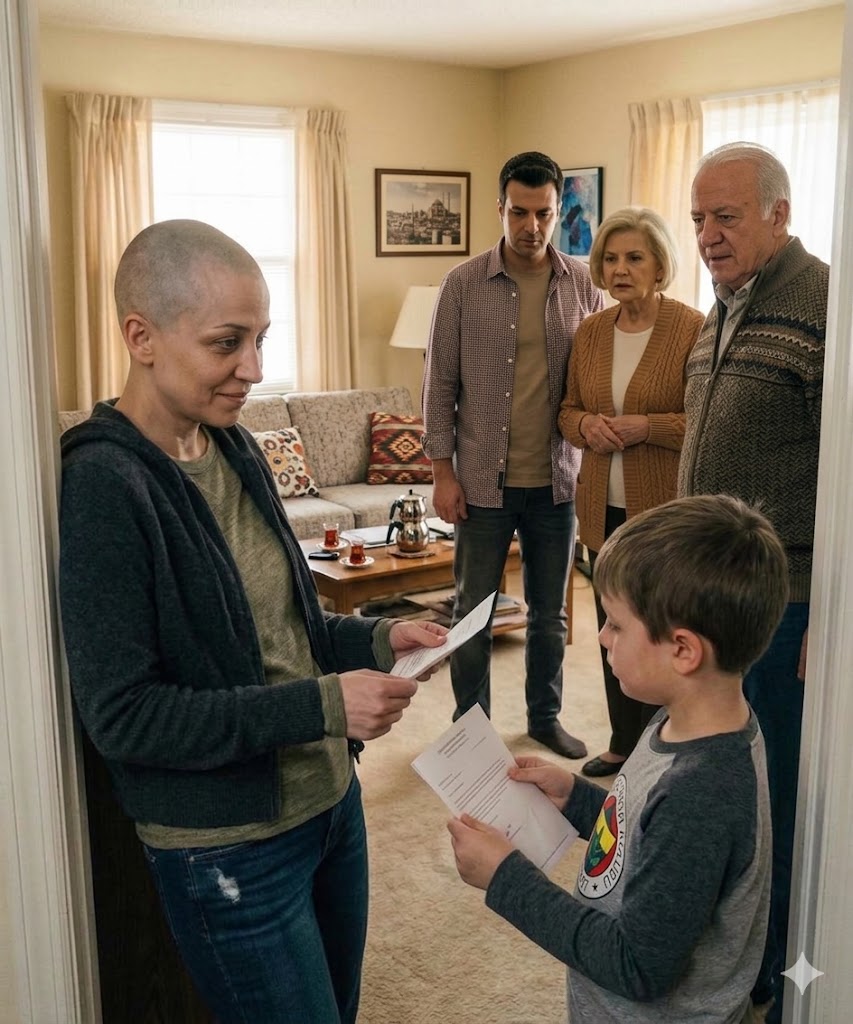
Except for the day my neighbor Deniz took time off work saying, “No one should sit alone at their first session,” I drove myself to every appointment. She held my coat when I threw up in a paper bag in the parking lot. She shaved my head in her kitchen when my hair started falling out in thick, humiliating strands. My mother sent flowers once, but the card read: “Stay strong! Sorry we missed your call. Love, Family.” “Family”—as if they were some kind of association.
Then, four days after my second chemotherapy session, they arrived.
My mother, Melis, and my stepfather, Rıza. They were smiling. They were carrying a fruit plate bought from the market; they looked as if they were auditioning for the role of “goodness.”
As I lay on the sofa, under the blanket, pale and in pain, Melis sat on the armrest and said, “You look better than I expected.”
I almost laughed.
My mother clasped her hands together and looked at me with that cautious expression people have before asking for something they know they shouldn’t.
(continued on the next page…)