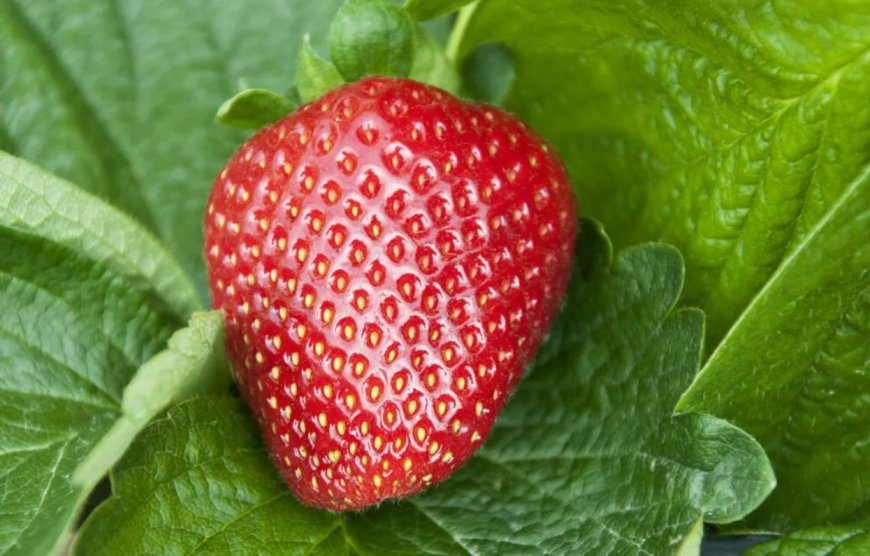
So, you fill a bowl with water, add a little salt, and place the strawberries inside. At first, nothing happens. The fruit floats calmly in the water, glistening in the light, looking completely innocuous. But after a few minutes, you notice movement. Tiny, barely visible, whitish objects detach themselves from the strawberries and rise to the surface. In that moment, the mood shifts. Anticipation turns to unease—perhaps even disgust. What are they? Where do they come from? And above all: Were they inside the fruit you were about to eat the whole time?
This is exactly the experience many people have had recently and shared online. Reactions range from surprise to genuine concern. After all, even though strawberries are among the most popular fruits, moments like these remind us that natural foods aren’t always as “perfect” as they appear at first glance. There can be more hiding beneath that glossy surface than we expect—and that raises questions.
I soaked strawberries in salt water
I soaked strawberries in salt water, and these white things came out.
Picture this: a sun-drenched kitchen, a bowl full of glistening strawberries, and you, eagerly anticipating summer’s sweet, juicy fruit. To treat yourself to a refreshing snack, you soak the strawberries in salt water—a method circulating on social media as a surefire way to “clean” them. To your surprise, tiny white “worms” suddenly appear on the water’s surface.
This unexpected discovery has sparked concern among many strawberry lovers. What are these white objects, and why do they appear in strawberries?
The tiny white organisms that emerge from strawberries after soaking in salt water are most likely fruit fly larvae. They are extremely small (usually 1–3 mm), pale, and translucent, so they often go unnoticed inside the fruit.
Fruit flies lay their eggs directly into ripe or damaged fruit flesh. After hatching, the larvae feed on the strawberry from the inside. The salt water simply causes them to detach from the tissue and become visible—it does not “create” them.
Crucially, this means the larvae are not introduced by the salt water; they were already present in the fruit.
Is it dangerous?
Generally, no. Fruit fly larvae are considered harmless to health, even if the idea is unpleasant. They are not a sign of chemical contamination, but rather indicate very ripe fruit or fruit that has not been stored optimally.
What can you learn from this?
Check strawberries for bruises or over-ripeness before buying.
Store in a cool place and consume quickly.
Rinse thoroughly under running water before eating (salt water is optional but not strictly necessary).
Even though the idea is off-putting, this is usually a natural phenomenon associated with the fruit’s ripening process rather than a safety issue in the traditional sense.