
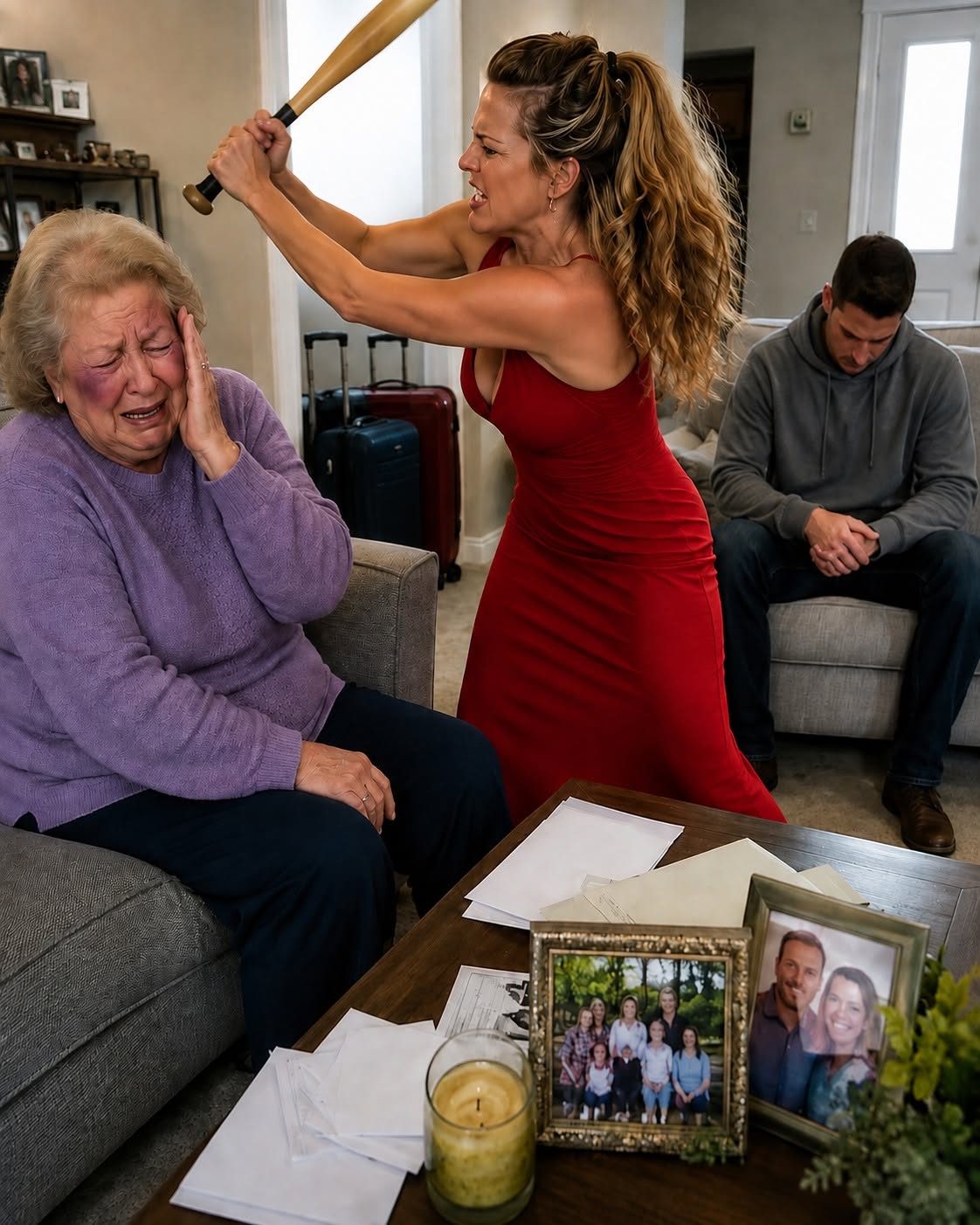
PART 3 — THEY BOARDED MY SHIP AS GUESTS… THEN THE TRUTH WALKED INTO THE BALLROOM
For several seconds, nobody moved.
The ocean slid black and endless beyond the glass.
Music continued somewhere below us.
A waiter passed carrying champagne as though my family had not just cracked open in the middle of Deck Twelve.
Daniel looked at Lillian.
“What card?”
She answered too quickly.
“There must be a mistake.”
The crew member remained professional.
“The payment processor flagged the transaction after the cardholder contacted their bank.”
Daniel’s face changed.
“Lillian.”
She turned on him.
“Not here.”
“What card did you use?”
“I said not here.”
I stepped between them.
“Take this to the guest-services office.”
The employee nodded.
“Of course, Mrs. Rose.”
Lillian looked at me.
“Why is everyone asking you?”
I did not answer.
Not yet.
Harrison appeared from the corridor, wearing a black dinner jacket.
He looked from me to Daniel and immediately understood that something had happened.
“We’re waiting downstairs,” he said quietly.
“I’ll be there.”
He nodded toward Daniel.
“Everything all right?”
“No.”
One word.
No pretending.
No protecting.
No smoothing the tablecloth over a family disaster.
Harrison looked at the crew member.
“Handle the account according to standard policy.”
“Yes, sir.”
Lillian’s eyes moved between us.
Then she looked at Harrison.
“Who are you?”
He smiled without warmth.
“Harrison Cole.”
Her face went blank.
Daniel whispered, “Cole?”
Even people who knew little about Harbor Crown knew the name.
Lillian looked at me.
Then at Harrison.
Then back at me.
“What is going on?”
I picked up my evening bag.
“The reception starts in seven minutes.”
“Mom.”
Daniel stepped closer.
“Reception for what?”
I met his eyes.
“You’re welcome to come and find out.”
The Crown Ballroom occupied the front of Deck Seven.
It had two levels, a curved staircase, and windows stretching almost from floor to ceiling.
A string quartet played near the stage.
Executives, investors, senior officers, and department heads stood beneath soft golden lights.
I entered beside Harrison.
June walked behind us.
I could feel Daniel and Lillian somewhere near the back.
For once, I did not turn to check.
Harrison stepped onto the stage.
He gave a brief speech about the Aurora Meridian.
About new routes.
New employees.
New standards.
Then he said, “But tonight I’m more interested in the future of Harbor Crown than in this ship.”
The room quieted.
“For too long, this company has rewarded speed over care, appearances over accountability, and hierarchy over uncomfortable truth.”
He glanced toward me.
“That changes tonight.”
My pulse thudded.
I had told him I did not want a grand announcement.
Apparently Harrison and I had different definitions of grand.
“Several weeks ago,” he continued, “I found someone I should have thanked thirty-six years earlier.”
People turned toward me.
My hands felt cold.
“She was working in an accounting office when she caught an error that helped keep my first company alive. Her supervisor took the credit. She got nothing.”
A murmur moved across the room.
“Life gave me another chance.”
He smiled.
“So this time, I intend to get it right.”
He held out his hand.
“Mrs. Eleanor Rose.”
I walked onto the stage.
Applause rose around me.
Not thunderous.
Not theatrical.
Just genuine.
It was somehow harder to bear.
Harrison handed me a small folder.
“Effective this week, Eleanor becomes Harbor Crown’s operating partner for financial integrity and guest protections.”
The applause grew louder.
I looked toward the back.
Daniel stood perfectly still.
Lillian’s mouth was open.
For three weeks, they had believed I had left their house with nothing but two suitcases.
Now I stood beneath the Harbor Crown emblem as part owner of the company carrying them across the Caribbean.
And strangely, victory did not feel the way I thought it would.
There was no sweetness in humiliating them.
Only clarity.
I took the microphone.
“I wasn’t planning to speak.”
Harrison whispered, “Neither was I.”
People laughed softly.
I looked around the room.
“I spent a large part of my life believing being useful was the same as being valued.”
The room quieted.
“They are not the same.”
My eyes found Daniel.
“When you spend decades giving to people, you can accidentally teach them that your giving is an obligation instead of a choice.”
Daniel lowered his head.
“I learned that lesson late.”
I breathed slowly.
“But late is not the same as never.”
Then I looked toward the employees gathered near the side doors.
“So my first priority here will be simple. Nobody—guest, employee, vendor, or family member—gets to treat generosity like entitlement.”
Harrison started applauding.
Others followed.
Lillian turned and walked out.
Daniel stayed.
I did not see him again until almost midnight.
There was a knock on my cabin door.
I expected June.
Instead, Daniel stood there alone.
His face looked exhausted.
“Can I come in?”
I hesitated.
Then stepped aside.
He entered slowly.
His eyes immediately found my suitcases beside the wardrobe.
His expression changed.
“You still have those?”
“They work.”
He touched one frayed handle.
“I remember this one.”
“You should.”
“You packed my clothes in it when I went to college.”
I said nothing.
He sat in the chair by the balcony.
For several moments, neither of us spoke.
Finally he whispered, “I didn’t know.”
“About Harbor Crown?”
“About any of it.”
I remained standing.
“Explain.”
He rubbed both hands over his face.
“The cruise payment.”
I waited.
“Lillian told me her mother paid the final balance as an anniversary gift.”
“She didn’t?”
“No.”
“What card did she use?”
Daniel looked sick.
“My company card.”
I frowned.
“Your employer’s?”
He nodded.
“She had access because I used it once to book a hotel when we traveled for a conference. She saved the number.”
“How much?”
“Seven thousand four hundred, including excursions.”
I stared.
He gave a humorless laugh.
“So much for needing five thousand from you.”
The irony was ugly.
“What happens now?”
“My employer froze the card. Their accounting department called tonight.”
His voice cracked.
“I may lose my job.”
I sat opposite him.
“Did you know she used it?”
“No.”
“Can you prove that?”
“I think so.”
“Then tell the truth.”
He looked at me.
“I should have done that sooner.”
“Yes.”
The word hurt him.
I did not soften it.
He swallowed.
“Mom, when she sl/@pped you…”
I felt my spine stiffen.
“I froze.”
“You did.”
“I keep replaying it.”
“So do I.”
“I should have stopped her.”
“Yes.”
“I should have taken you somewhere safe.”
“Yes.”
“I should have carried those suitcases.”
My throat tightened.
He looked down.
“And I should never have asked for your savings.”
For the first time, there was no “but.”
No excuse.
No mention of Lillian’s feelings.
No marriage problems.
Just responsibility.
“I don’t expect you to forgive me,” he said.
“Good.”
He nodded.
“I don’t even know if I forgive myself.”
“That isn’t my job.”
“I know.”
Silence settled between us.
Then I asked the question I had carried since the observation deck.
“Why did you let her speak to me that way for so long?”
Daniel stared through the balcony doors.
“When I married Lillian, everything about her felt confident.”
“That isn’t an answer.”
He nodded.
“She made decisions quickly. She knew what restaurant we should go to, which house we should buy, which people were good for us.”
“And eventually which mother was inconvenient?”
His eyes filled.
“Yes.”
I hated seeing him cry.
He was still my child.
That was the cruelty of motherhood.
A son can become a grown man capable of hurting you, and some hidden part of your heart still remembers tying his shoes.
He continued.
“Every time I disagreed with her, there was a fight. So I started giving in.”
“You chose peace with her over dignity for everyone else.”
He nodded.
“Yes.”
“That isn’t peace.”
“I know that now.”
I stood.
“I’m tired.”
He rose immediately.
“Of course.”
At the door, he stopped.
“Mom?”
“Yes?”
“I’m sorry.”
I looked at him.
“An apology is a beginning, Daniel.”
His face tightened.
“Not an ending.”
He nodded.
“I understand.”
Then he left.
The next morning, Lillian was waiting outside the executive dining room.
She looked nothing like the woman who had stood over me in her living room.
No red nails curled around a brochure.
No satisfied smile.
No superiority.
Just fury.
“You turned him against me.”
I nearly walked past.
She blocked my way.
“Excuse me?”
“Daniel spent the night accusing me of ruining his life.”
“I wasn’t in your cabin.”
“You didn’t have to be.”
Passengers passed us.
I lowered my voice.
“Move.”
“You think because you own three percent of a cruise company you’re suddenly important?”
I smiled.
“There it is.”
“What?”
“The mistake you keep making.”
Her eyes narrowed.
“I don’t need to be important to deserve respect.”
She laughed bitterly.
“You have always looked down on me.”
“I helped pay for your wedding.”
“You held it over us.”
“I never mentioned it until you called me a burden.”
“You were living in our house.”
“I paid rent.”
“You were always there!”
Her voice cracked.
And suddenly I saw something beneath the anger.
Not justification.
Fear.
“You wanted Daniel to yourself,” she whispered.
I stared at her.
“No, Lillian. I wanted my son to remain recognizable.”
Her face hardened again.
“Well, congratulations. You win.”
“This isn’t a game.”
“It obviously is. You have the ship. The money. Harrison. Everybody staring at you like some inspirational grandmother.”
That last word almost made me laugh.
“I don’t have Daniel.”
She blinked.
“He is not property.”
“He’s your son.”
“Yes.”
“And he’ll choose you now.”
I looked at her for a long moment.
“Do you know what would frighten you most?”
“What?”
“If Daniel learned to choose for himself.”
She flinched.
I stepped around her.
This time she did not stop me.
By midday, the company card issue had grown more serious.
Harbor Crown’s legal team had no authority over Daniel’s employer, but because the card had been used through our booking platform, our finance department preserved the transaction records.
I removed myself from the matter.
That was important.
If I was going to build a department around integrity, I could not manipulate policy for family.
Harrison agreed.
“Good call,” he said.
“You sound surprised.”
“I’m surprised by everyone.”
I smiled.
“What happens to their cabin?”
“If the original payment is reversed, they’ll need another valid method.”
“And if they can’t pay?”
“They disembark at the next port under ordinary contract terms.”
I looked out toward the sea.
I had dreamed, during some angry nights, of watching Lillian lose something.
Now that it might happen, I felt no joy.
“Can Daniel pay separately?”
“If he wants.”
“Make sure the team tells him.”
Harrison watched me.
“You still love him.”
“Yes.”
“That must be inconvenient.”
“Extremely.”
The ship docked in Nassau the following morning.
Daniel found me on the promenade deck before breakfast.
“I paid my half.”
I turned.
“What?”
“Of the cruise.”
“With what money?”
“My own.”
He gave a faint smile.
“I sold the watch.”
“What watch?”
“The one you gave me when I turned thirty-five.”
I remembered.
My father’s old watch.
Daniel had barely worn it.
“You sold Grandpa’s watch?”
His face fell.
Then he pulled something from his pocket.
The watch.
“I almost did.”
I stared.
“I went to the jeweler. He offered enough.”
“But?”
“I couldn’t.”
He looked at it.
“So I sold my golf clubs instead.”
I laughed before I could stop myself.
Daniel smiled.
It was the first real smile between us in months.
“What about Lillian?”
“She refused.”
“Refused what?”
“To pay her part.”
“How could she?”
“She has money.”
I frowned.
“What money?”
Daniel shook his head.
“I don’t know. More than she told me.”
That answer bothered me.
“Where did it come from?”
“She won’t say.”
Before I could respond, Lillian appeared across the deck.
She wore sunglasses though we were in shade.
“Daniel.”
He turned.
“We need to talk.”
“We are talking.”
“With her?”
“With my mother.”
Lillian looked at me as though I had personally moved the sun.
“Fine.”
She removed her glasses.
“I’m leaving.”
Daniel’s face tightened.
“At Nassau?”
“Yes.”
“With what?”
“My sister wired me money.”
“You said your sister couldn’t help.”
“She changed her mind.”
Daniel stared.
Then asked quietly, “How long have you had a separate account?”
Lillian froze.
I immediately knew this conversation did not belong to me.
“I’ll go.”
Daniel shook his head.
“No.”
“Daniel.”
“No, Mom. Please.”
Lillian laughed.
“Of course. Let’s perform our marriage problems for your new business partner.”
Daniel looked at her.
“How much is in the account?”
“None of your business.”
“We’re married.”
“You kept things from me too.”
“Like what?”
“Your mother helping with the SUV.”
His eyes narrowed.
“I told you that.”
“No, you said she loaned us money.”
“I said she gave me the down payment.”
Lillian looked away.
Daniel went still.
“You told your parents we paid for it ourselves.”
“So?”
“And the electric bills?”
“Daniel—”
“You told people you were covering Mom’s expenses.”
Lillian’s voice sharpened.
“I was embarrassed!”
“By what?”
“By needing her!”
The words burst out.
People nearby glanced toward us.
Lillian lowered her voice.
“You don’t understand what it’s like.”
Daniel stared.
“What what is like?”
“Watching everybody else have more.”
The anger drained from her.
For the first time, she looked less cruel than hollow.
“My sister married a doctor. My parents talk about her house constantly. Everyone we know travels. Everyone has better cars. Better kitchens. Better everything.”
Daniel shook his head slowly.
“So you lied.”
“I wanted people to think we were doing well.”
“We were doing fine.”
“That isn’t the same.”
“It should have been.”
She crossed her arms.
“You never cared how I felt.”
“I spent years trying to keep you happy.”
“Yes, and look how badly you did.”
Daniel flinched.
I almost intervened.
Then I stopped myself.
He needed to stand in his own life.
Lillian picked up her bag.
“My sister booked me a flight.”
Daniel said, “If you leave, don’t expect me to pretend nothing happened.”
She looked at him.
“Is that a threat?”
“No.”
He breathed slowly.
“It’s the first boundary I’ve given you.”
Her face changed.
She looked at me.
“This is because of her.”
Daniel shook his head.
“No.”
Then he said something I had waited years to hear.
“This is because of me.”
Lillian stared at him.
A few minutes later, she walked away.
Daniel did not follow.
She disembarked that afternoon.
I thought that would be the end of it.
I was wrong.
That evening Harrison entered my office carrying a document.
“You need to see this.”
“What now?”
“Remember the vendor overbilling you caught?”
“Yes.”
“One of the shell companies connected to the supplier has a familiar name.”
He handed me the page.
I read it.
My stomach tightened.
LILLIAN ROSE.
“No.”
“Keep reading.”
The shell company was called Bracken Events.
According to state records, Lillian had established it eighteen months earlier.
It had received consulting payments from the same supplier whose invoices I had challenged.
“Harrison.”
“Yes.”
“Are you saying she was involved?”
“I’m saying her company received payments.”
“For what?”
“We don’t know yet.”
I felt suddenly cold.
“How would she even know this supplier?”
Harrison sat down.
“Daniel works in corporate purchasing.”
I looked at him.
“No.”
“His employer buys conference packages through some of the same hospitality networks.”
“No.”
“Eleanor, I’m not accusing your son.”
“Good.”
“But we need to investigate.”
I closed my eyes.
The cruise.
The company card.
Lillian’s hidden money.
The vendor.
A pattern was forming.
And I hated every line of it.
By the time Daniel returned from dinner, Harrison had arranged a private meeting with outside counsel.
I asked Daniel one question before anyone else spoke.
“Has Lillian ever asked you about vendor contacts?”
His face went still.
“Yes.”
“When?”
“Last year.”
“Which vendors?”
He named three.
One was the overbilling supplier.
My heart sank.
“Why?”
“She said she was helping a friend plan luxury events.”
“Did you give her contact information?”
“Yes.”
“Pricing?”
“A little.”
“Internal rates?”
He looked frightened.
“I don’t know.”
Harrison leaned forward.
“Daniel, this matters.”
Daniel went pale.
“I emailed her a spreadsheet once.”
“What was in it?”
“Negotiated rates. Contact names. Some rebate structures.”
The attorney beside us stopped writing.
Daniel looked at me.
“Mom, I didn’t know.”
“I believe you.”
The relief on his face nearly broke me.
“But believing you isn’t enough.”
He nodded.
“I know.”
“Your employer needs to know.”
His shoulders fell.
“If I tell them, I’m finished.”
“Maybe.”
“I could lose everything.”
I remembered the gas station parking lot.
The cold steering wheel.
The two suitcases.
“You can lose a job and still keep yourself.”
He looked at me.
“If you hide this, you may lose both.”
For a long time, he said nothing.
Then he took out his phone.
“Who do I call?”
That was the moment I knew my son might actually be coming back.
Not to me.
To himself.
The investigation took months.
There were no dramatic arrests on the ship.
No handcuffs beneath chandeliers.
Real consequences are often slower than stories make them look.
Daniel cooperated fully with his employer.
He lost his position anyway.
He also lost his marriage.
Lillian’s secret company had been receiving improper referral payments tied to hospitality contracts she accessed through information Daniel carelessly shared.
The conduct triggered a formal fr/@ud investigation involving several companies.
She denied intentional wrongdoing.
Her attorneys argued that she believed the payments were legitimate consulting fees.
I did not follow every hearing.
I did not need to.
I had spent enough of my life inside her choices.
Daniel moved into a small apartment.
For the first time since college, he lived alone.
He sold the SUV.
Bought a used pickup.
Found work six months later at a smaller firm.
Less money.
Less prestige.
When he told me, he looked almost embarrassed.
“You know what’s strange?” he said.
“What?”
“I sleep better.”
I smiled.
“That’s expensive information.”
He laughed.
“Apparently.”
Our relationship did not repair itself overnight.
I refused that fantasy.
Trust is not a light switch.
It is brickwork.
One piece at a time.
Daniel began with small things.
He called without asking for money.
He came to dinner when invited.
He listened when I said no.
The first Christmas after the cruise, he handed me a box.
Inside was the antique watch.
Grandpa’s watch.
Professionally restored.
“I know it was already working,” he said.
“I wanted to fix something I actually could.”
I cried.
So did he.
I hugged him.
But I did not tell him everything was forgotten.
It wasn’t.
Forgiveness became a road we walked instead of a door I opened.
As for Harbor Crown, I stayed.
Three percent became four after two years.
Not because Harrison gave it to me.
Because I bought additional shares.
With my own money.
I built the Financial Integrity Office from four employees to twenty-three.
We created transparent vendor reviews.
Guest refund protections.
Stronger employee reporting rules.
And a hardship program for older passengers traveling alone.
June claimed the last one was secretly about me.
She was probably right.
I moved out of her garage apartment eventually.
Not because I wanted to.
Because she raised my rent by one dollar and called it “market pressure.”
I bought a small house three streets from the water.
Nothing grand.
Two bedrooms.
A porch.
Enough garden for tomatoes.
When Daniel first visited, he stood in the kitchen looking around.
“This is nice.”
“It’s mine.”
He smiled sadly.
“I’m glad.”
Then he reached for the grocery bags before I could.
That small gesture nearly meant more than the house.
Harrison remained my business partner.
People constantly assumed we became romantically involved.
We did not.
At least, not immediately.
We were both old enough to understand companionship did not need to sprint toward a label.
We ate dinner.
Argued over contracts.
Walked decks after sunset.
He learned I hated overcooked fish.
I learned he pretended not to like jazz.
Three years after we met in the diner, he asked whether I wanted to spend Christmas in Lisbon.
“As business partners?” I asked.
He smiled.
“Absolutely not.”
I laughed so hard I had to sit down.
We went.
At seventy-six, I kissed a man beneath Christmas lights in a city I had never imagined seeing.
Life had not ended when my son put two suitcases beside the door.
It had widened.
Lillian and I saw each other once more.
Five years after the cruise.
I was leaving a bookstore when I heard my name.
“Mrs. Rose.”
I turned.
She stood near the entrance.
Older.
Quieter.
No designer handbag.
No sharp smile.
For a moment, neither of us spoke.
Then she said, “I heard Daniel is doing well.”
“He is.”
“I’m glad.”
I nodded.
She looked down.
“I owe you an apology.”
I waited.
“For the night at the house.”
Her voice trembled.
“I was cruel.”
“Yes.”
“I was jealous of you.”
That surprised me.
“Why?”
“Because Daniel always knew you loved him.”
She looked toward the street.
“I never believed anybody loved me without wanting something back.”
I felt sadness.
Not absolution.
Sadness.
“That explains things,” I said.
“It doesn’t excuse them.”
Her eyes filled.
“No.”
For several seconds, we simply stood there.
Then she whispered, “Do you forgive me?”
Years earlier, I might have believed the good answer was yes.
Age had taught me something better.
“I don’t carry hatred for you.”
She swallowed.
“But?”
“But forgiveness does not mean returning to what was.”
She nodded.
“I understand.”
I hoped she did.
We parted without hugging.
That was okay.
Not every repaired ending requires reunion.
Sometimes peace means the wound no longer chooses your direction.
On the tenth anniversary of the Aurora Meridian’s first sailing, Harbor Crown invited employees, partners, and their families aboard for a celebration voyage.
Daniel came with me.
He had remarried by then.
Her name was Grace.
She was a public-school counselor who wore comfortable shoes and laughed with her whole face.
The first time I offered to help pay for their honeymoon, she said, “Absolutely not. Take yourself somewhere wonderful.”
I liked her immediately.
Daniel and Grace had a little girl named Sophie.
My granddaughter.
Real this time.
She was six when she boarded the ship.
The moment she saw me, she ran across the terminal shouting, “Grandma!”
I crouched before she reached me.
She nearly knocked me over anyway.
Daniel grabbed my elbow.
“Careful.”
“I’m fine.”
Sophie looked up at the ship.
“Is this really yours?”
I smiled.
“About four percent of it.”
She frowned.
“Which part?”
Daniel laughed.
I pointed toward the upper decks.
“See that lifeboat?”
Her eyes widened.
“You own the lifeboat?”
“Possibly half.”
She thought this was magnificent.
At dinner, Harrison raised a glass.
“To Eleanor.”
I groaned.
“No speeches.”
“Too late.”
He stood.
Ten years had made his hair whiter.
Mine too.
“Ten years ago, this woman joined Harbor Crown after one of the worst weeks of her life.”
Daniel lowered his eyes.
I touched his hand under the table.
He looked at me.
I smiled.
Harrison continued.
“She taught this company how expensive entitlement can be.”
Laughter moved around the table.
“And how valuable the word no can become.”
He raised his glass.
“To second acts.”
Everyone repeated it.
Second acts.
I looked around the table.
At June, still wearing purple glasses.
At Harrison.
At Daniel.
Grace.
Sophie.
At people I had not known when I slept in that parking lot.
I remembered gripping the steering wheel with both hands, believing my life had narrowed to two suitcases and seventy-one dollars.
I had been wrong.
Sometimes losing the room where you are tolerated is how you finally find the place where you belong.
Later that night, Daniel and I stood on the same observation deck where he had first discovered I was part owner.
The sea was dark.
The wind warm.
“You remember this spot?” he asked.
“Yes.”
“I wanted to disappear.”
“I noticed.”
He leaned against the railing.
“Mom?”
“Yes?”
“I’ve always wondered something.”
“What?”
“When you saw our names on the passenger list, did you ever think about canceling us?”
I smiled.
“Harrison suggested it.”
Daniel laughed.
“Of course he did.”
“I said no.”
“Why?”
“Because I needed you to make your own choices.”
He looked at me.
“What if I hadn’t?”
“Hadn’t what?”
“Changed.”
The question stayed between us.
I answered truthfully.
“Then I would have loved you from farther away.”
His eyes filled.
“That would have been fair.”
“It would have been necessary.”
He nodded.
For a while we listened to the water.
Then he said, “I’m glad you didn’t save me.”
I turned.
“What?”
“Back then.”
He looked toward the horizon.
“If you had paid for everything again, defended me again, fixed the job problem again… I probably would have stayed the same.”
He smiled sadly.
“You spent my whole childhood saving me.”
“I was your mother.”
“I know.”
He touched my hand.
“But eventually you had to stop so I could become a man.”
I looked at the son beside me.
Not perfect.
Not innocent.
But accountable.
Present.
Kind.
For the first time in many years, I recognized him.
“I love you,” I said.
His voice broke.
“I love you too, Mom.”
Then Sophie burst through the deck doors wearing pajamas beneath a tiny robe.
“Grandma!”
Grace followed, apologizing.
“She escaped.”
Sophie ran into my arms.
“Can I sleep in your cabin?”
Daniel laughed.
“Apparently boundaries end at the next generation.”
I looked down at my granddaughter.
“Only tonight.”
She whispered loudly, “Daddy says you always say no first.”
I stared at Daniel.
He lifted both hands.
“I said no such thing.”
Sophie giggled.
I laughed.
And beneath a sky full of stars, with the sea stretching farther than I could see, I realized I no longer needed revenge.
I had something better.
Choice.
My money was mine.
My home was mine.
My work was mine.
My forgiveness was mine.
And my love, finally, was something people could receive only if they understood it was a gift.
Not a debt.
Not an inheritance.
Not a cruise ticket.
A gift.
Ten years earlier, Lillian had raised her hand because I refused to give her five thousand dollars.
Daniel had watched me walk out with two suitcases because he believed losing me would make his life easier.
Weeks later, they stepped onto a ship thinking they were entering a luxury vacation.
They had no idea the woman they discarded had already become one of the people helping steer it.
But that was never the real surprise.
The real surprise was what happened after.
I did not destroy them.
I did not use my position to humiliate them.
I did not spend my second chance trying to make their lives smaller.
I made mine larger.
And eventually, Daniel chose to do the same.
That was how I won.
Not because my daughter-in-law learned I was the new partner.
Not because my son finally understood how badly he had failed me.
I won because the woman who slept in a gas station parking lot believing she had nowhere to go discovered that an ending can sometimes be nothing more than a doorway you were too frightened to walk through before.
I entered with two old suitcases.
I walked out with my life.
THE END