
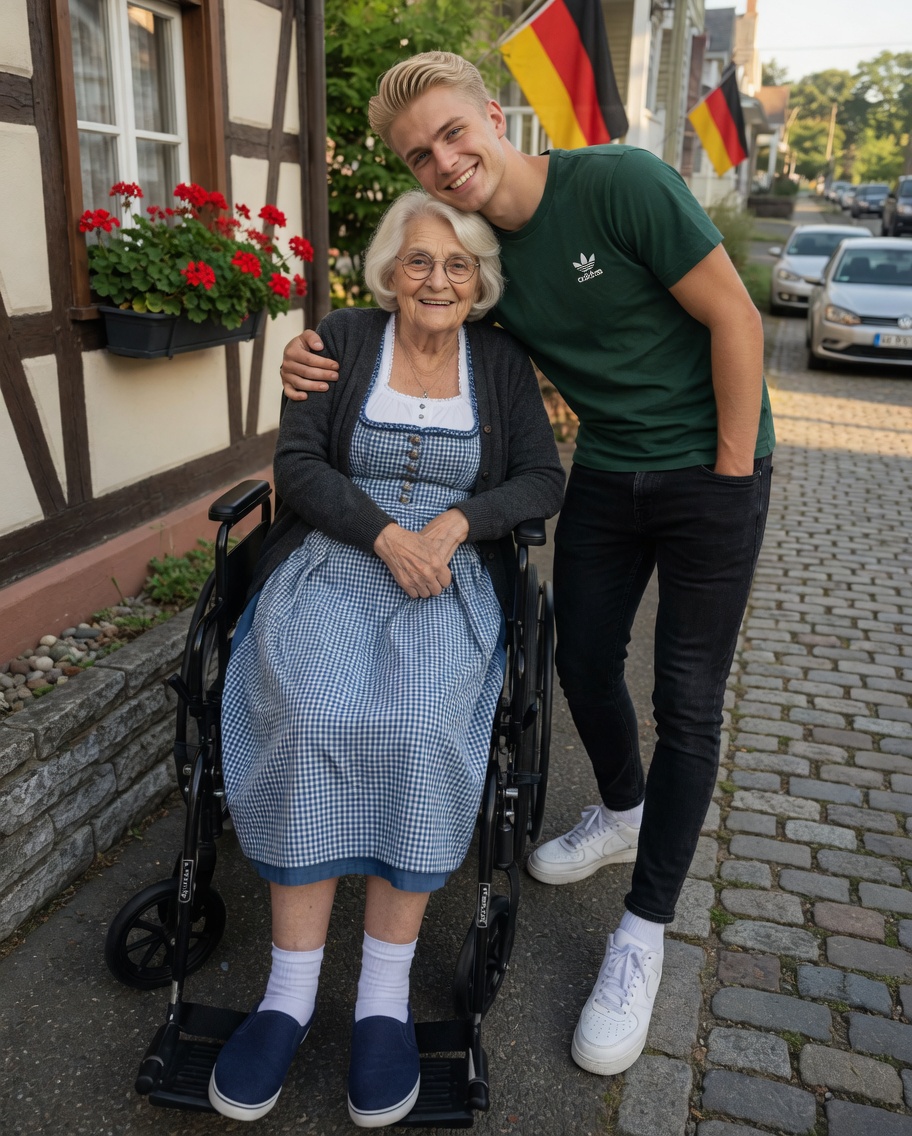
Part 1
I was sitting in a lawyer’s office across from Mrs. Rohde’s niece, and every few seconds she would glance at me as if I were dirt caked to the sole of her shoe. The lawyer cleared his throat, opened a folder, and began reading in a flat, indifferent voice.
“The house on Weidenstraße is to be donated to the St. Matthew Homeless Shelter.” She blinked at me in confusion. “What?”
He continued reading without looking at me. “Her personal savings will be divided between St. Matthew’s Church and several charitable organizations. She is leaving her jewelry collection to her niece.”
I sat there completely motionless, waiting for my name. Mrs. Rohde had promised me everything. She had told me that if I took care of her during the last years of her life, everything she owned would belong to me after her death. But the lawyer turned the last page, closed the folder, and looked up. “That concludes the reading.” I stared at him. “That’s it? But she promised me…” The words stuck in my throat as a terrible thought struck me. Had Mrs. Rohde lied to me? I stood up and walked out before either of them could see me crying. When I arrived back at my small rental apartment, my chest ached. I went inside, closed the door, and collapsed onto the bed without taking off my boots. At first I felt anger. Then humiliation. Then that old, familiar shame at the thought that I had been the fool in a story that everyone else had already understood before me. But beneath it all lay something worse: grief. Because somewhere along the way, I had started to believe that I meant just as much to Ms. Rohde as she did to me.
I grew up in foster care, so I really should have known better. My mother left me when I was a baby, and my father spent my childhood behind bars. I learned early on that adults can make promises that mean nothing. I learned to pack quickly, keep my important things together, and not cry in front of strangers.
When I’d outgrown the child welfare system, I left with two trash bags full of clothes and no plan. I ended up in this town because the rent was cheap and no one asked too many questions. I worked at lousy jobs for even lousier bosses until I finally walked into Josi’s Village Pub during the morning rush and asked if they needed help. A waitress had just quit, and Josi eyed me up and down. “Have you ever carried three plates at once?” “No.” He shrugged. “You have ten minutes to learn.”
That was Josi—rough, direct, built like a refrigerator, and yet one of the most decent people I’d ever met. At the end of long shifts, he’d shove a burger and fries my way and grumble. “Eat before you pass out and give me paperwork.” Sometimes I’d stay after closing to wipe down the counters while he complained about suppliers, food prices, broken freezers, and people who ordered their eggs in a way that should really be illegal. Mrs. Rohde came in every Tuesday and Thursday morning at eight o’clock sharp. The first time I served her, she narrowed her eyes and looked at my name tag. “Jakob. You look tired enough to fall face-first into my waffle.” “Tough week.” She snorted. “Try being eighty-five.”
That was how it started. After that, she always asked for me. She was sharp-tongued, difficult, and exhausting in a way that somehow became almost funny once you got used to her. One morning she looked at me over her coffee. “Do you ever actually smile, young man?” “Sometimes.” “I dare say I doubt it.” Another day, she wrinkled her nose at my hair. “It gets worse every time I see you.” “Good morning to you, too.” “Hmm. Better. You almost sound alive today.”
She wasn’t exactly warm, but she noticed things. And when you’ve spent your whole life feeling invisible, being found can feel dangerously close to love.
Part 2
One afternoon, I was walking home with grocery bags when Mrs. Rohde called out to me from the other side of her fence. “Do you live around here, Jakob?” I stopped. “A few houses down.” She studied me closely. “Do you want to make some decent money, young man?” I hesitated. “Doing what?” She opened her front door and beckoned me inside. “Come in and help me. We’ll work something out. I’ll explain it to you over a cup of tea.”
Inside, she poured tea that tasted like boiled weeds and got straight to the point. “I’m dying.” I nearly choked. She rolled her eyes. “Oh, don’t be