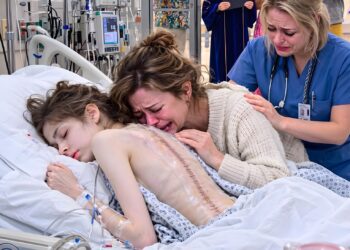
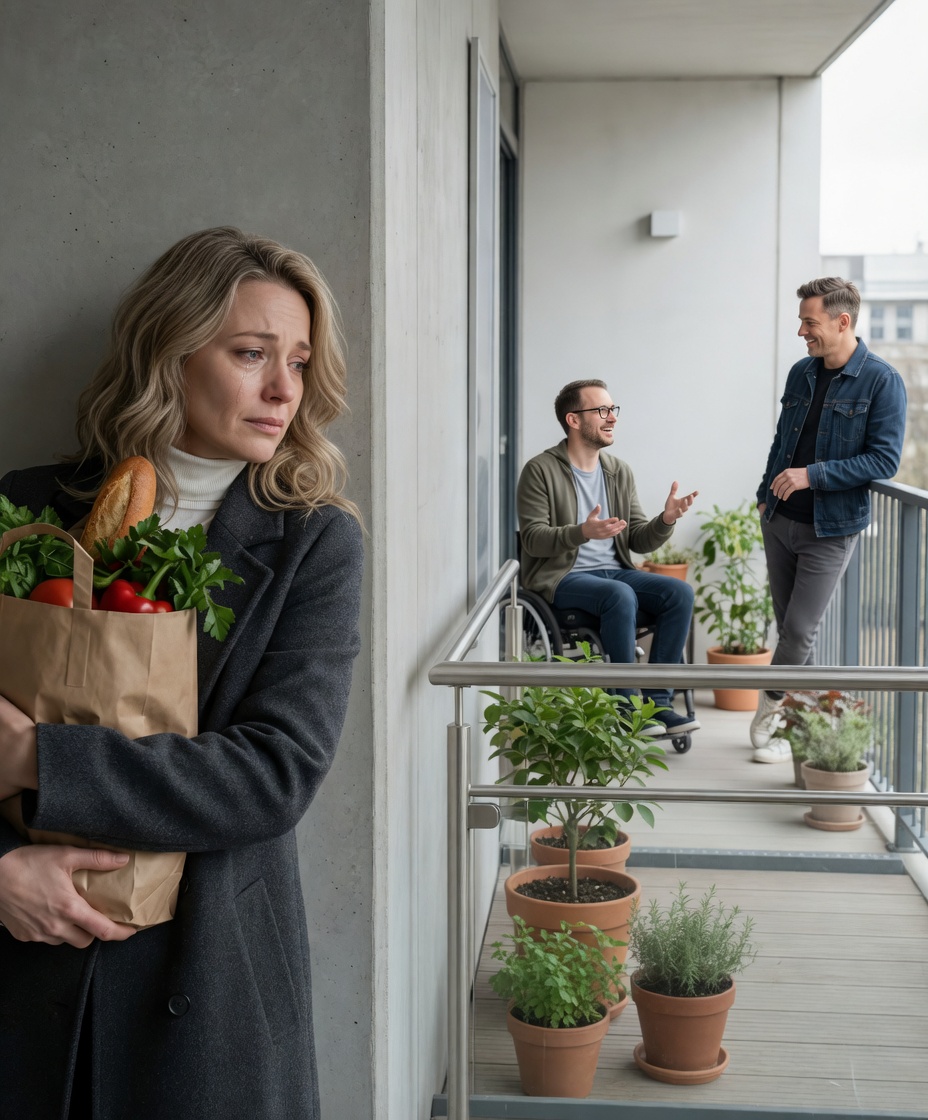
When people hear the phrase “five years,” it sounds insignificant—like a short passage, a few pages easily skimmed. But when those years aren’t marked by seasons or holidays, but instead counted in fluorescent hospital corridors, pillboxes, and the sharp, pungent smell of disinfectant, time behaves differently. It becomes viscous. It weighs heavily on the lungs. It transforms into a burden to be dragged along, rather than a space to inhabit.
My name is Marianne Weber. I am thirty-two years old, and the woman in my reflection feels like a stranger. Her posture is hunched inward, as if she’s constantly bracing herself against something. Dark shadows frame eyes that radiate a calmness she never truly achieves. And my hands—my hands betray everything. Sore from constant washing. Calloused from lifting a body never meant to be carried alone. Shaped by wheelchair handles and hospital bed rails.
Once, my life was simple. Hopeful, even. I met my husband, Lukas Weber, at a charity event in Bonn. He had an easygoing manner that made people feel seen, special. When he spoke, attention followed. When he smiled, it felt personal. We married quickly, driven by plans that seemed solid and forged together—children, travel, a bigger house somewhere in the countryside. A future that felt earned.
That future ended on a curve on the highway near Garmisch, a spot everyone warned about and everyone thought they could navigate. Lukas was on his way home from a regional sales conference when a drunk driver crossed the median barrier. The impact destroyed the car, spared his life, and robbed him of the mobility in his legs.
At the Isar Clinic, the neurologist calmly and clinically explained the damage. His words carried certainty. When he finished, silence filled the room so completely it felt physical. I didn’t cry. I held Lukas’s hand and promised I wasn’t going anywhere. I said we would find a way forward. I believed love meant perseverance.
What I didn’t realize was how quiet self-sacrifice can hollow a person out. The years blurred into endless repetition. Alarm clocks before dawn. Medication schedules stuck to the refrigerator. Phone calls to the health insurance company that led nowhere. Sleeping on the couch so I could hear him if he needed me. I learned how to lift without hurting myself, how to smile despite exhaustion, and how to swallow my resentment while strangers praised my strength.
On a Tuesday—indistinguishable from countless others—my alarm clock rang at 4:30. The city was dark, cold, and quiet enough to amplify every thought. I dressed practically, not ostentatiously, and mentally ran through the day’s tasks. Lukas had requested pastries from a bakery near the hospital. He said the hospital food made him feel like a burden. I told myself that something warm and familiar might help.
The bakery glowed warmly when I arrived. The scent of butter and sugar filled the air, and for a moment I pretended to be just another woman buying breakfast for someone she loved. The saleswoman smiled. “What can I get you?” “Two cinnamon rolls, a bag of Danish pastries, and a black coffee,” I said.