
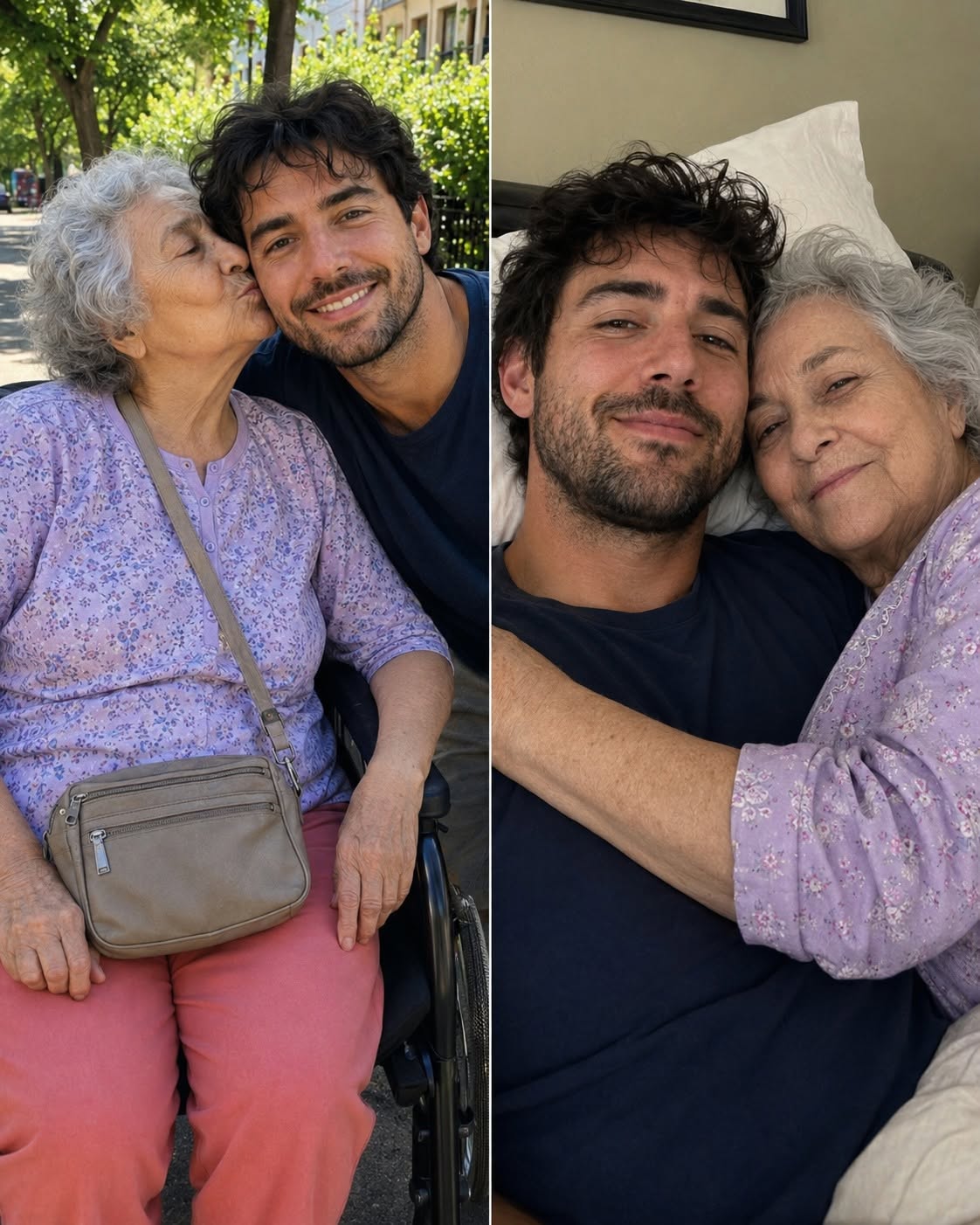
Part One – The Accusation on My Porch
The first time Greg came to my house, he did not knock like a worried son. He struck the door with the side of his fist and began shouting before I had even stepped onto the porch.
“You expect us to believe this is kindness?” he demanded. “You brought a dying woman into your home because you want her property. You want her savings. We should call the police right now.”
His voice carried all the way across the street. Curtains shifted. Two neighbors wandered onto their front steps, pretending to check the weather while watching every movement at my door.
I kept one hand on the frame and the other clenched at my side. Somewhere behind me, down the narrow hall, Susan was asleep in my spare room. At least I prayed she was. She had barely rested the night before, and I did not want another argument to wake her.
Greg’s wife, Marcy, stood beside him with folded arms. Her expression was not frightened; it was suspicious. She looked past my shoulder as though she expected to see legal papers scattered across the floor and Susan’s valuables packed into boxes.
“You moved my mother-in-law without telling us,” she said. “What kind of person does that?”
“The kind who could not find any of you when she needed help,” I answered.
Greg’s face tightened. He told me I had not tried hard enough. Perhaps he expected me to apologize. Instead, I thought of the nights Susan had awakened gasping and disoriented, of the soup I had cleaned from her nightgown, and of the way she lowered her eyes whenever she needed help standing. None of them had seen those moments. None of them had been there to protect what little dignity illness had left her.
“Susan chose to stay here,” I said.
Greg laughed without humor. He said his mother was too sick to understand what she wanted. The words landed harder than the accusation about money. Susan’s body was failing, but her mind was clear. She knew precisely where she was, who had come to see her, and who had not.
My name is Sam. I was thirty-one, unmarried, and working from home in a life so quiet that I could hear the refrigerator humming from the other end of the house. Three weeks earlier, the spare bedroom had held nothing but unopened boxes. Now it held medicine bottles, clean towels, a lamp that stayed on through the night, and a seventy-six-year-old woman who had been almost completely forgotten by her family.
Greg had not visited her in five years. I knew because I had lived across from Susan for most of that time. I had watched holidays come and go without a car stopping at her curb. I had seen her carry groceries in alone, sweep her own porch, and sit beside her front window on Sunday afternoons with no one beside her.
By that evening, the confrontation had become neighborhood entertainment. By the following morning, it had become a scandal. One person claimed I was pressuring Susan to change her will. Another said I had poisoned her against her family. Someone told my closest friend, Joel, that Susan had already signed her house over to me.
Every version was false, yet each retelling sounded more certain than the last.
Joel arrived that afternoon with two bags of groceries. He placed them on my kitchen counter, studied the dark circles beneath my eyes, and asked the question everyone else seemed to be asking.
“Why are you putting yourself through this?”
“Because she was alone,” I said.
“That does not make her your responsibility.”
I looked down at the carton of broth in my hands. Joel meant to protect me, but his words opened a door inside me that I had spent years trying to keep shut.
Responsibility. That was the same word I had once used to excuse myself from going home when my own mother needed me most.
Part Two – The Woman Across the Street
My father left when I was still young, and from then on my mother carried our family almost entirely by herself. She worked until her hands ached, stretched every paycheck, and somehow made sacrifice look ordinary. My siblings and I reached college because she quietly surrendered things she never told us she wanted.
When we grew older, we scattered. I studied in another state. My brother and sister built lives in distant cities. Mom encouraged every move, every promotion, every fresh beginning. She had spent so many years appearing unbreakable that we forgot strength could be a disguise.
Her health began to fail slowly. During our calls, I sometimes heard exhaustion hiding beneath her cheerful voice. I would ask if she had seen a doctor. She would laugh, tell me not to worry, and insist she was doing fine. Because believing her was easier than confronting what I feared, I accepted the answer.
I postponed visits. I let work swallow evenings. I promised I would call back after one meeting and then remembered two days later. By the time my siblings and I understood how ill she had become, time had already narrowed to almost nothing.
After she died, one thought followed me everywhere: she had given me her entire life, and when hers was ending, I had not come home soon enough. Grief was painful, but guilt was worse. Grief said I missed her. Guilt said I had no right to.
Susan knew my mother had passed away, though I had never told her the whole story. We had been friendly neighbors for years. She waved when I checked the mail, delivered muffins when she baked too many, and once stood in my kitchen laughing until she cried because I was trying to loosen a pipe while holding the wrench backward.
She was not a dramatic woman. She did not complain, and she rarely asked for anything. That was why I became uneasy when her curtains remained closed one bright morning. They were still closed the following afternoon.
I crossed the street and knocked. At first, there was only silence. Then I heard furniture scrape and a voice so faint I almost mistook it for the television.
“Sam?”
When the door finally opened, I hardly recognized her. Her robe hung from her shoulders as though it belonged to someone larger. Her skin had a gray cast, and one hand trembled against the wall. Still, she tried to smile.
“I suppose I look dreadful,” she murmured.
“You look ill,” I said.
“You were always terrible at polite lying.”
I helped her to the sofa. The days that followed blurred into medical appointments, prescriptions, schedules, and calls that went unanswered. Her condition was serious, and her strength was fading faster than either of us wanted to admit.
When I asked whether her family could come, she turned her face toward the window.
“They have busy lives,” she said.
“You cannot stay here alone.”
“I will find a way to manage.”
The sentence went through me like a blade. My mother had used almost the same words. For years, I had wished someone had ignored her insistence and gone to her anyway.
I had a spare room. My job kept me at home. More importantly, I could not walk back across the street and pretend I had not seen how frightened Susan was.
“Come stay with me,” I said. “Only until we know what you need.”
She refused immediately. I asked again. She told me she did not want to become a burden. I pulled a chair close to hers and admitted that someone I loved had once said the same thing, and I had made the mistake of listening.
Something in Susan’s expression softened. She studied me for a long time, as if she recognized more in my confession than I had intended to reveal.
“All right, Sam,” she whispered at last. “For a little while.”
That evening, I carried a small suitcase across the street. I did not know that Susan was bringing something else with her: a bundle of old letters tied with a faded blue ribbon, hidden at the bottom of her bag.